Top All-Court Pickleball Paddles Ranked After Hands-On Testing and Lab Metrics
Braydon's freshly updated paddle guide blends court feel with lab-style data to find the true all-court performers worth your money.

Finding a paddle that genuinely holds up across every situation on the court, from reset dinks at the kitchen line to aggressive drives from the baseline, is harder than the marketing copy makes it sound. Braydon, the reviewer behind Pickleball Effect, set out to cut through that noise with an updated guide published March 12, 2026, combining hands-on play-session feedback with lab-style metrics to rank the best all-court options available right now. The methodology matters here: this isn't a spec-sheet comparison or a sponsored rundown. It's the kind of testing that actually tells you how a paddle behaves when your third shot drop needs to land soft and your next swing needs to generate pace.
The research notes provided don't include the full ranked list from the guide, but the framework Braydon built deserves its own examination. Here's what the testing approach and the category itself reveal about what separates a genuinely great all-court paddle from one that's merely marketed as one.
1. The all-court designation actually means something specific
Not every paddle deserves the "all-court" label. True all-court paddles sit in a performance window that doesn't sacrifice control for power or vice versa. The paddles Braydon evaluated for this guide had to demonstrate competence across multiple playing scenarios, not just excel in one dimension. That balance point is the whole game: a paddle weighted and textured in a way that lets a 3.5 banger and a 4.5 dinking specialist both find something useful in the same frame.
2. Lab metrics give the rankings a foundation that feel alone can't provide
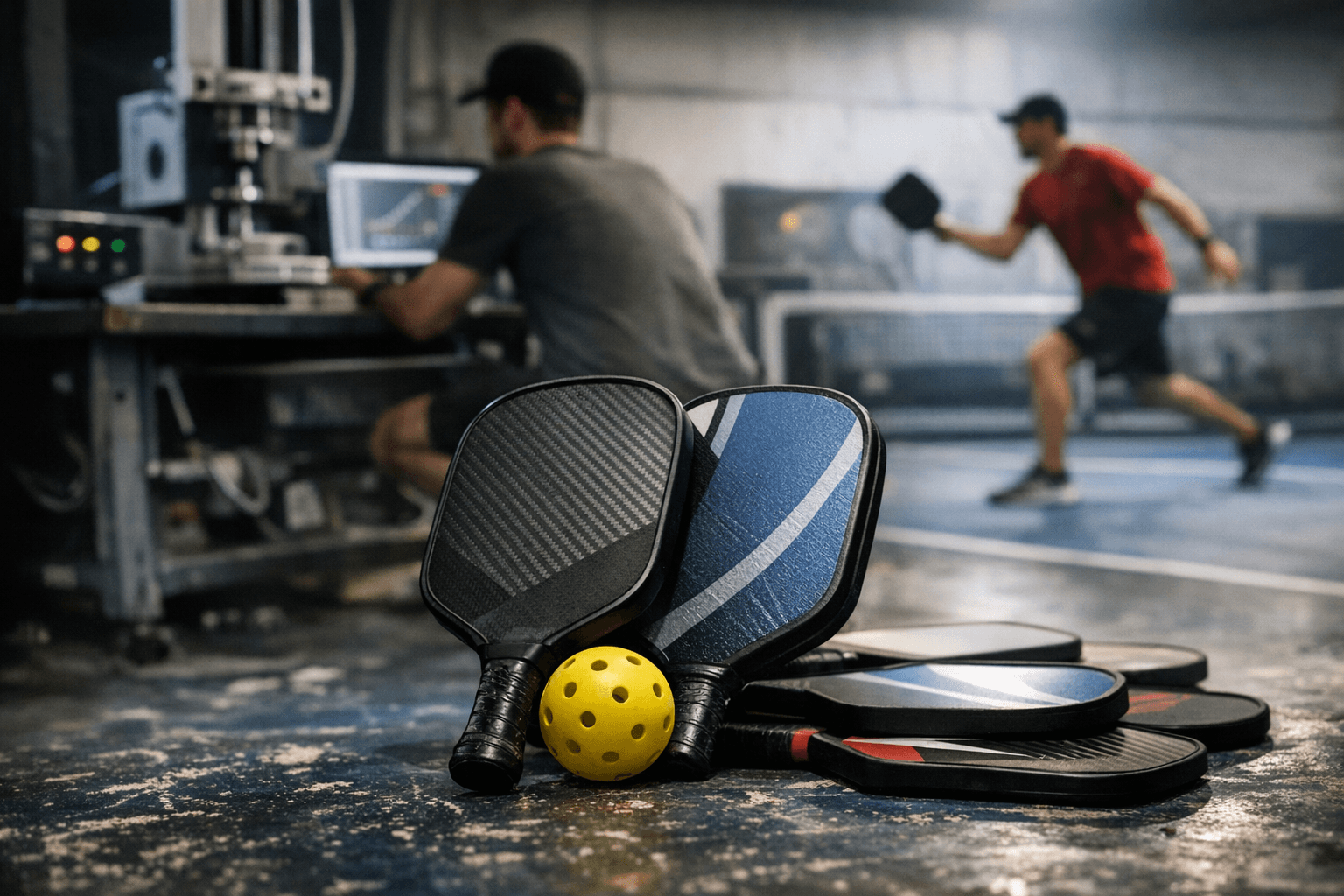
Play-session feedback is essential, but it's also subjective. Braydon's testing at Pickleball Effect incorporates lab-style metrics alongside court time, which means swing weight, deflection, surface texture measurements, and similar data points are informing the rankings rather than just vibes. That dual approach is rare in amateur pickleball coverage, where most gear reviews are effectively first impressions dressed up as analysis. When a paddle ranks highly here, there's a measurable reason behind it.
3. Updated rankings on March 12, 2026 reflect a market that moved fast
The paddle market has shifted dramatically over the past 18 months. Thermoformed construction became the dominant technology, surface grit regulations tightened, and a wave of new releases from both established brands and newcomers changed what "best" looks like. Braydon's guide being updated as recently as March 12 means it's accounting for paddles that didn't exist in earlier versions of this list, and it's retiring older picks that no longer hold up against current competition.
4. All-court versatility is the most practical category for recreational and competitive amateurs alike
Tournament players often game-plan their equipment around specific opponents or surfaces. Most amateurs don't have that luxury, and even those playing USAPA-sanctioned events at the 4.0+ level benefit from a paddle that doesn't demand a gear swap between singles and doubles. The all-court category is, in practical terms, the most useful one to optimize. A paddle that earns a top spot in Braydon's ranked list isn't just a good all-around stick; it's the kind of equipment choice that raises your floor across every format you play.
5. Hands-on testing separates paddle behavior from manufacturer claims
Surface texture, edge guard weight distribution, and core thickness all behave differently in live play than they appear on a product page. The hands-on component of Pickleball Effect's methodology means Braydon is evaluating how a paddle actually responds to a two-handed backhand drive, whether the sweet spot is forgiving enough for off-center contact, and how the face holds up after extended rallies rather than just measuring it out of the box. That gap between claimed performance and lived performance is where amateur players get burned most often.
6. The Pickleball Effect guide represents a growing standard for amateur gear journalism
Equipment coverage in pickleball is still maturing. For a sport that went from niche backyard game to multi-million-player community in under a decade, the infrastructure around serious gear evaluation is catching up in real time. A guide that combines quantitative lab testing with narrative play feedback is exactly the kind of resource the community needed five years ago and is only now consistently getting. Braydon's work at Pickleball Effect is part of that shift toward accountability in equipment recommendations.
The bottom line is straightforward: the best all-court paddle on a ranked list built this way earned its position through actual performance data and court time, not because a brand paid for placement. For players trying to make a confident gear decision without spending weeks down a Reddit rabbit hole, that distinction is the whole point.
Know something we missed? Have a correction or additional information?
Submit a Tip