Backyard chickens go mainstream as owners seek eggs and companionship
The real backyard-chicken decision happens before the coop goes up: zoning, flock size, space, and budget decide whether hens fit your life.
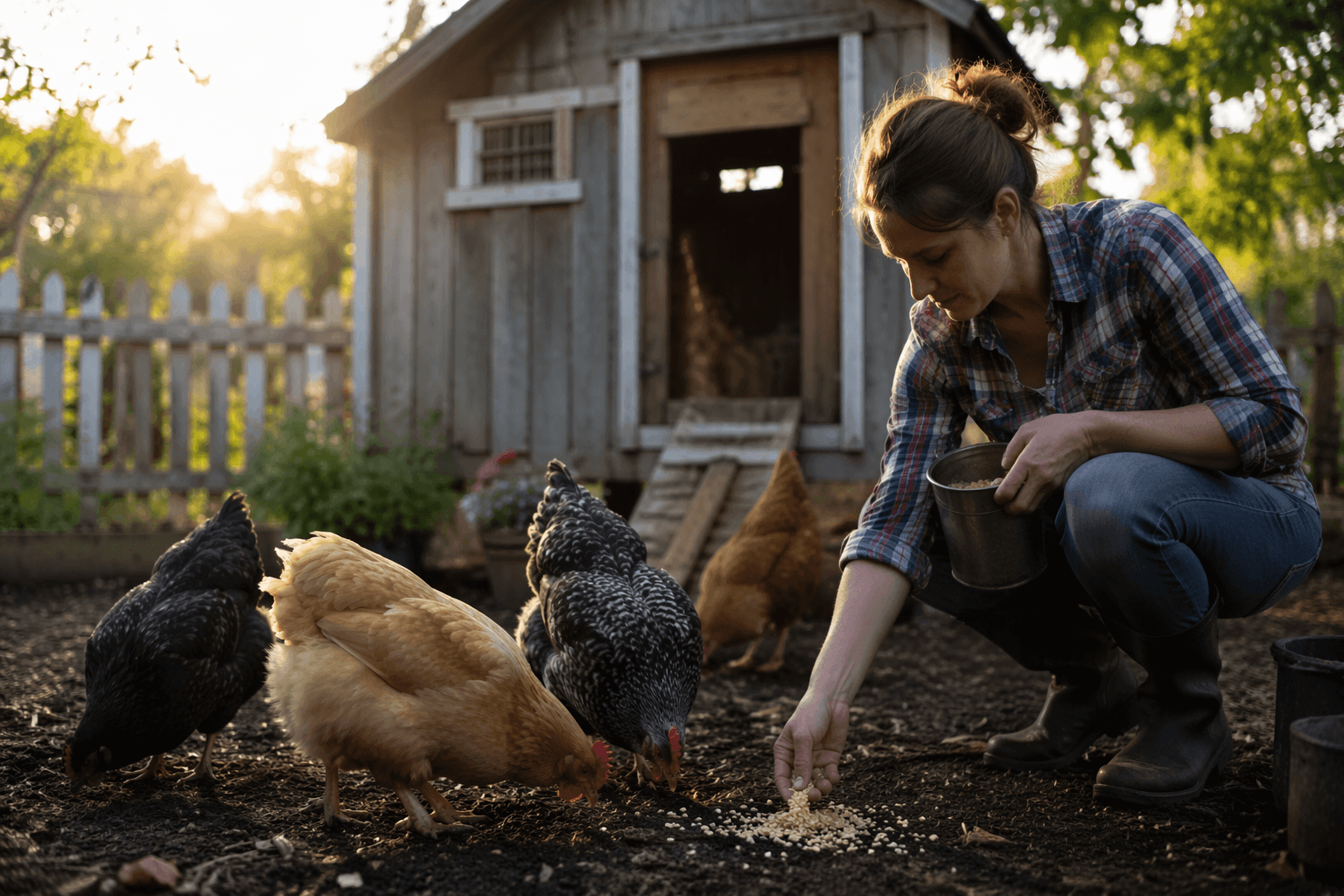
Roughly 11 million U.S. households kept pet chickens in 2025, nearly double the number in 2018. But the first real test is still the same: can your property, your neighbors, and your budget actually support them? The hard part is clearing the hurdles that make a flock workable.
Start with the rulebook, not the lumber
Before you sketch a coop, check local ordinance and HOA rules. Many cities ban roosters, cap flock size, or set coop standards, and some places get far more restrictive than new keepers expect. Philadelphia’s 17-year-old ordinance was written to address neighborhood complaints about noise and odor, and the city limits chicken-raising to properties of at least three acres. Philadelphia is also unusual because it prohibits female hens, while many other municipalities mainly target roosters because of crowing.
In Plymouth, Massachusetts, residents have complained about roosters crowing as early as 4 a.m., and Miami-Dade County, Florida, treats roosters as livestock that are not allowed in residential neighborhoods. A quick conversation with neighbors before birds arrive can prevent the kind of friction that turns a backyard flock into a blockwide argument.
Choose a flock size that fits the yard you actually have
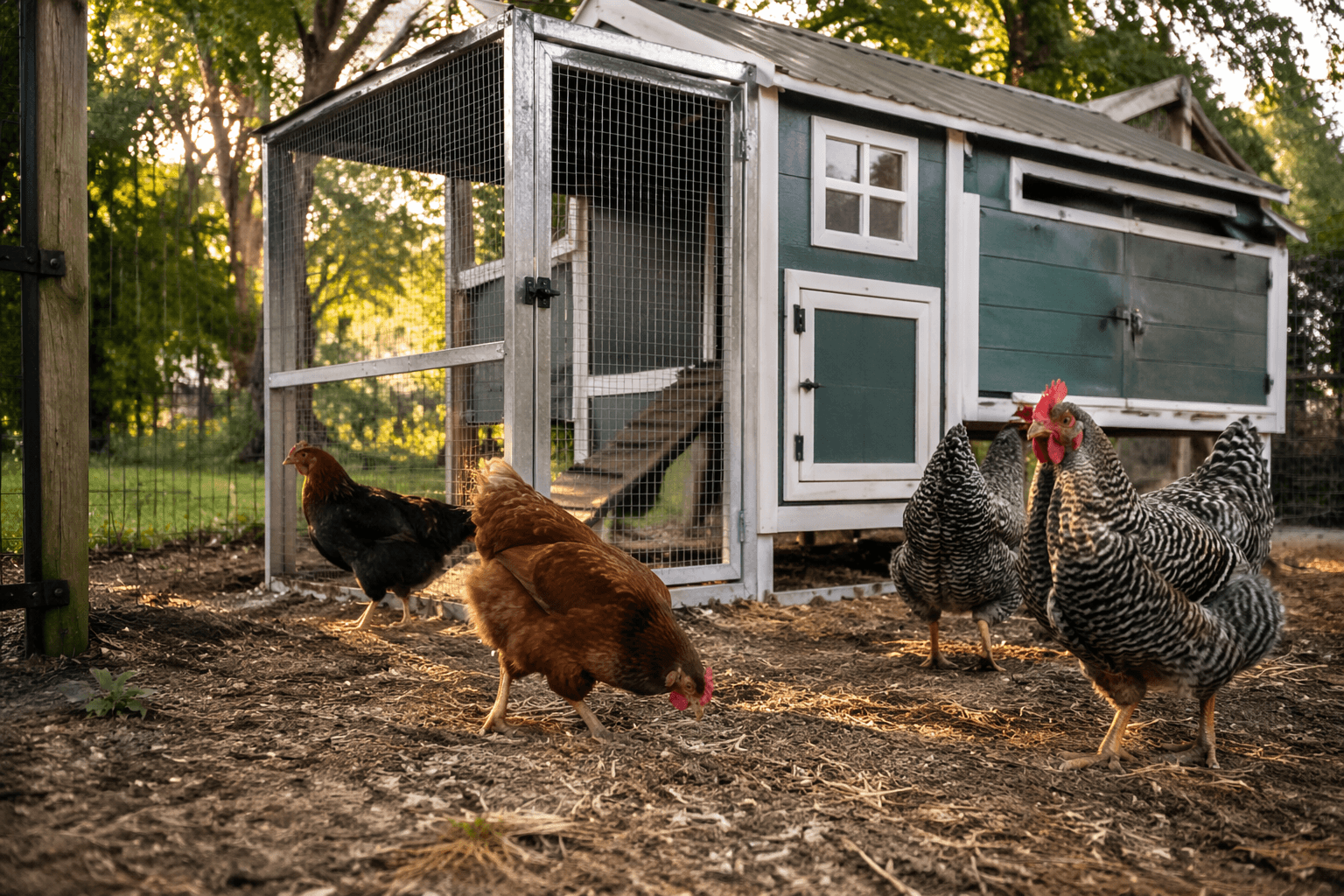
The safest way to start is with at least three birds, and four to six is the practical sweet spot for most beginners. That range gives you a real flock without forcing you into a coop and run that are too small to stay clean, dry, and manageable.
The site itself is part of the decision. A good chicken area has partial shade, good drainage, wind protection, and enough distance from the house to reduce odor and noise complaints. Those details shape where water sits after rain, how hot the birds get in summer, and whether your coop becomes a nuisance instead of a neighborly corner of the yard.
- Partial shade keeps birds more comfortable in warm weather.
- Good drainage keeps the run from turning into mud.
- Wind protection helps in cold, exposed yards.
- Distance from the house gives you and your neighbors a little breathing room.
Size the coop honestly
The coop math is where a lot of first-time buyers get tripped up. A simple 4-by-8-foot coop with an attached run can house four to six standard hens comfortably, but only if the space is treated as living space, not marketing copy. Penn State Extension warns what happens when the numbers are stretched too far: a 2-foot by 2-foot indoor box with a 3-foot by 4-foot run advertised for 6 to 8 laying hens would leave only half a square foot of indoor space per bird, and that is not acceptable.
Penn State Extension recommends at least 1.5 square feet of floor space per laying hen, and small-scale poultry housing can often be adapted from existing buildings. Ventilation and cleaning access are not luxury features. If you cannot reach into corners, open the coop easily, and keep air moving, the daily job gets harder fast, and so does keeping the flock healthy.
Build for chores, not just appearances
A good coop is easy to clean, easy to close at dusk, and hard for trouble to get into. That is where predator pressure belongs in the conversation, right alongside airflow and bedding management.
USDA Animal and Plant Health Inspection Service treats biosecurity as key to keeping poultry healthy, and its Defend the Flock materials are built around that idea. Backyard poultry still face highly pathogenic avian influenza risk, and CDC warns that chickens can carry Salmonella even when they look clean and healthy. That is why dedicated shoes or boots, handwashing, and a disciplined routine matter so much, especially around young children, older adults, and people with weakened immune systems.
Run the numbers before you buy the birds
A rough startup budget lands between $500 and $2,000 for the coop, run, feeders, waterers, bedding, and birds, and that is before you start thinking about replacements or upgrades. The ongoing costs never disappear either. In Philadelphia, feed alone worked out to about 10 cents a day per chicken, while a carton of large organic eggs averaged about $3.99 nationally at the time.
Chickens do not automatically save money. Many owners keep them because the payoff is broader than the grocery bill: fresh eggs, the rhythm of care, and the simple pleasure of raising animals that become part of the household. Hens can live five to 10 years, but they usually lay productively for only two or three, so this is a long-term commitment, not a seasonal experiment.
This article was produced by Prism’s automated news system from verified source data, official records, and press releases, then run through automated quality and moderation checks before publishing. The system is built and supervised by the people who set the standards it runs under. Read our full AI policy.
Did this article answer your question?