Backyard chickens need grit and oyster shell for different jobs
Grit helps chickens grind food; oyster shell supplies calcium for egg shells. Offer each separately, at the right stage, or you can throw digestion and laying off balance.
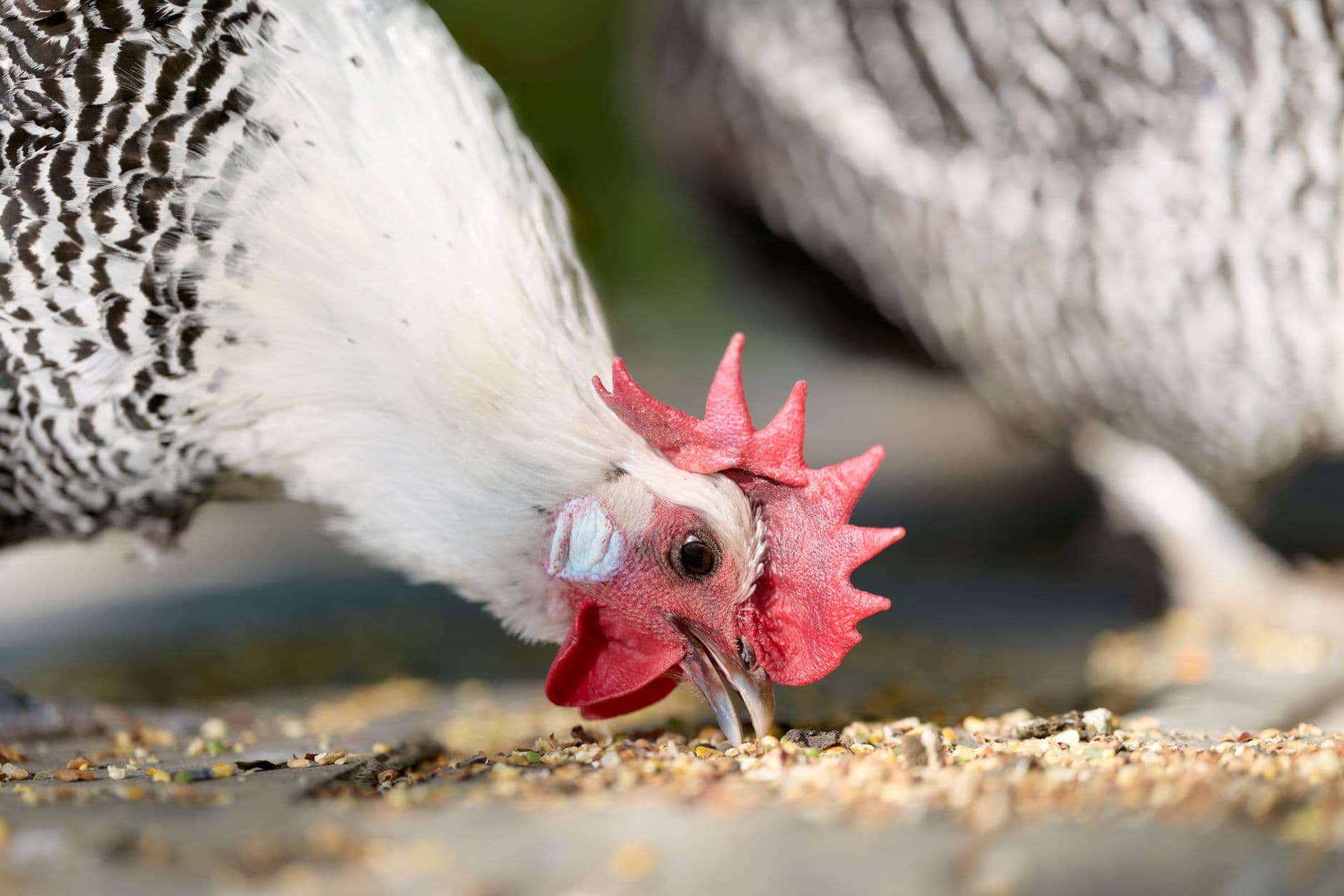
Thin, weak eggshells and poor digestion can start with the same backyard-coop mistake: mixing up grit and oyster shell. Grit helps a bird digest feed in the gizzard; oyster shell supplies the calcium laying hens need for strong eggshells. If you treat them like interchangeable extras, you can end up with poor digestion on one side and thin, weak shells on the other.
Why grit is not calcium
Grit is a mechanical aid, not a nutrient supplement. Chickens use small stones in the gizzard to grind feed, especially when their diet includes grass, weeds, seeds, scratch grains, kitchen scraps, or other fibrous material that a pellet or crumble does not fully break down. Backyard Poultry puts it plainly: if in doubt, put it out.
A free-range flock may peck at plenty of roughage and still need grit available, because the issue is not whether they can find food, but whether they can process it efficiently. If birds are eating anything beyond a fully formulated feed, grit belongs on hand.
Why oyster shell is for laying hens
Oyster shell does a completely different job. It is a calcium source for laying hens, and that calcium is what supports eggshell strength. Purina Animal Nutrition ties it directly to shell quality. Nutrena and Scratch & Peck Feeds separate it from regular feed so hens can take what they need.
Chicks and growing pullets do not belong on the same high-calcium plan as actively laying hens, because their needs are different. Once pullets are mature enough to lay, that is when oyster shell becomes relevant, and that is when thin, misshapen, or weak-shelled eggs start to become a warning sign that the ration is off.
Which birds need what
The easiest way to manage a mixed-age flock is to start with age-appropriate feed and add supplements only where they fit. Oregon State University Extension Service’s PNW 477 guide, “How to feed your laying hens,” published in August 2016 and reviewed in 2024, tells small-flock producers to match rations to their birds’ needs across many feed options. Poultry Extension’s “Feeding Chickens for Egg Production in Small and Backyard Flocks” is aimed squarely at small and backyard poultry keepers.
- Chicks: do not put them on layer-level calcium.
- Growing pullets: keep calcium lower until they are ready to lay.
- Laying hens: offer oyster shell as a separate calcium source.
- Birds eating fibrous foods, scratch grains, seeds, kitchen scraps, or forage: offer grit.
Use this as the basic split:
Roosters and non-laying birds do not need the same calcium support as hens in production, which is why a one-size-fits-all supplement plan causes trouble in backyard coops.
How to offer them separately
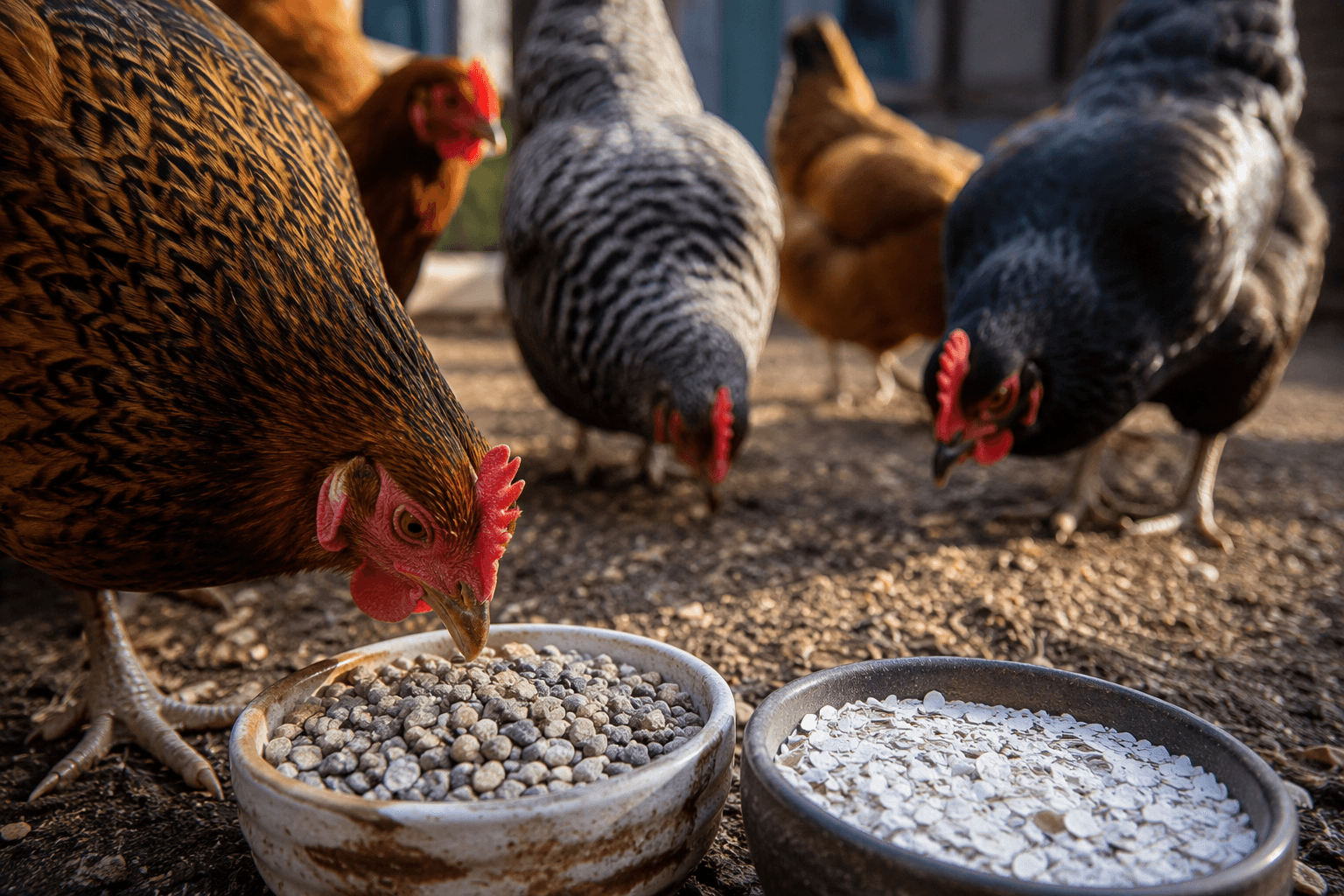
The best setup is straightforward: keep the base ration balanced for the bird’s age and production stage, then offer grit and oyster shell in separate containers. That way, hens can self-regulate their oyster-shell intake instead of eating calcium they do not need, and birds that need grit can take it without forcing it on birds that do not.
Nutrena places bags of grit and oyster shell right beside chicken feed, but they are not just extras. The products look similar in the aisle, yet they solve different problems in the coop.
Warning signs you picked the wrong supplement
The first sign of a mistake is often in the eggs. Thin shells, misshapen shells, and fragile shells point toward a calcium problem in laying hens, while digestive trouble suggests birds are not getting enough grit for the foods they are eating. Those symptoms can overlap in a mixed flock, which is why it helps to watch the birds by age and laying status instead of assuming one supplement covers everything.
There is also a longer-term risk if laying hens do not get enough calcium: they may pull calcium from their own bones to keep laying, which is why oyster shell belongs with layers, not chicks or birds still growing.
This article was produced by Prism’s automated news system from verified source data, official records, and press releases, then run through automated quality and moderation checks before publishing. The system is built and supervised by the people who set the standards it runs under. Read our full AI policy.
Did this article answer your question?