Oregon backyard chicken owners face ongoing avian flu rules and reporting
Oregon backyard flocks are still under avian-flu reporting rules. Sick birds mean fast calls, tighter biosecurity, and an understanding that quarantine can follow.

For sick or dead domestic birds in Oregon, call 503-986-4711 immediately. Oregonians with backyard chickens are living inside an active avian-flu system, and the first move is not guessing from coop symptoms but knowing who to call, what to report, and how quickly state rules can kick in. If your birds look off, Oregon treats that as a compliance issue as much as a health problem.
What Oregon wants you to do first
The Oregon Department of Agriculture is the main state agency handling avian-flu response for poultry owners: sick or dead domestic birds should be reported immediately by calling 503-986-4711. If you suspect HPAI, the State Veterinarian should be contacted right away at the same number. Oregon also requires veterinarians to immediately notify the State Veterinarian when they see reportable abnormalities or suspect an exotic or high-mortality disease.
A small flock is not outside the system just because it lives behind a house instead of on a farm. If HPAI is on the table, the response can include mandatory quarantine and depopulation.
HPAI is the urgent one, but LPAI is reportable too
The terminology matters because it changes what happens next. Highly pathogenic avian influenza, or HPAI, is the version that can wipe out birds quickly, with Oregon warning that some poultry species can see up to 100% mortality within 48 hours. Low pathogenic avian influenza, or LPAI, is less severe, but Oregon still treats it as an immediately reportable disease.
Both forms belong on the state’s radar quickly, and the regulatory consequences are much heavier for HPAI.
How the virus moves through a backyard flock
Avian influenza can move through fecal droppings, respiratory secretions, and contaminated surfaces or materials, including egg flats, equipment, clothing, shoes, and hands.
Wild birds, especially waterfowl, can carry and spread the virus without showing illness, which is why biosecurity remains central in backyard settings. USDA is still leading a continuing national response to HPAI in commercial and backyard poultry flocks, and APHIS links detections rising in fall and spring to migratory birds moving the virus around.
The backyard checklist Oregon is really asking for
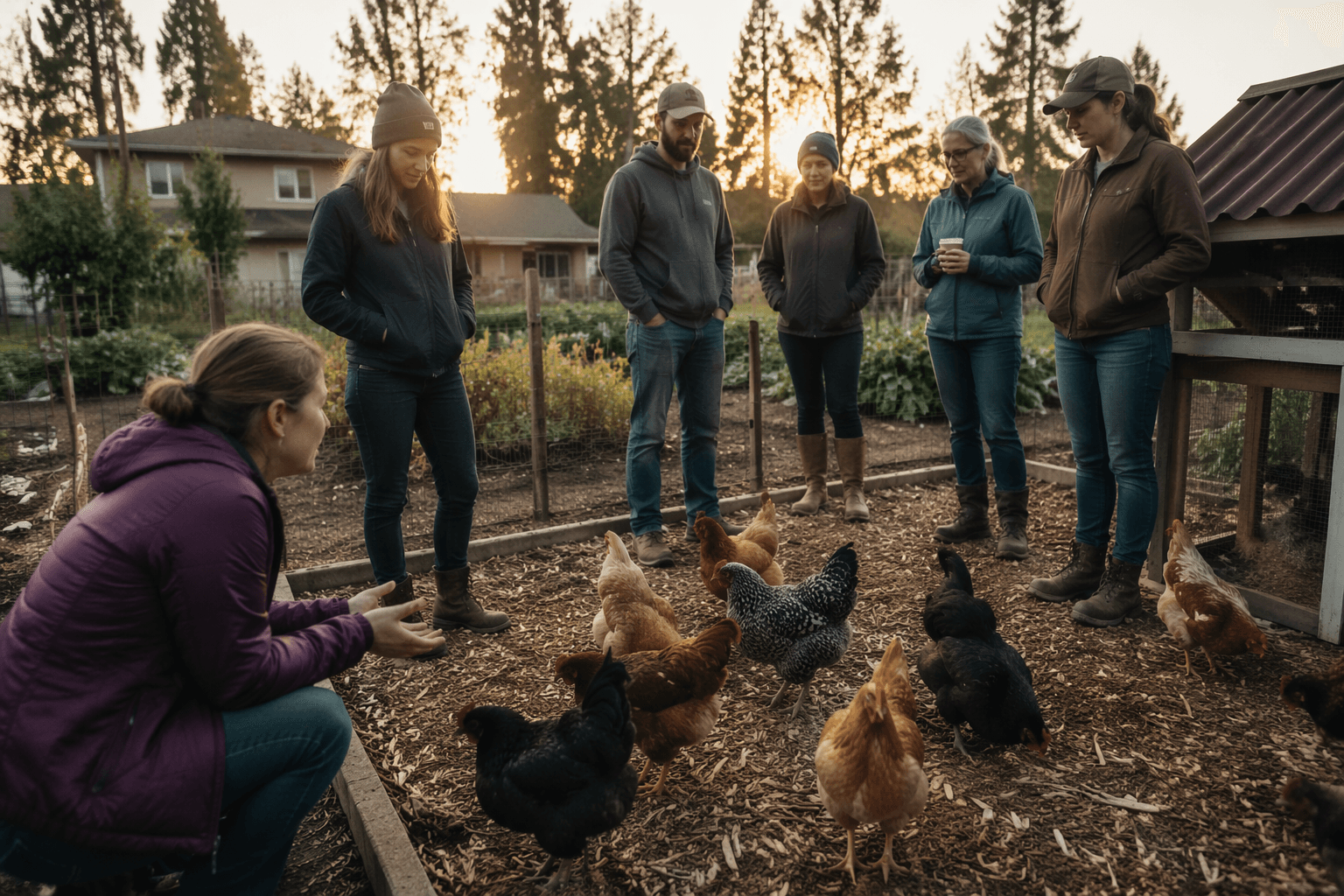
For hobby keepers, Oregon’s fall biosecurity guidance is less about big-farm machinery and more about daily habits that fit a small flock. The state tells backyard bird keepers to keep birds away from wild birds, clean and disinfect equipment, and separate new birds for at least 30 days.
- keep feeders and waterers where wild birds cannot reach them
- use clean, dedicated gear for the coop
- disinfect anything that moves between birds or pens
- quarantine newcomers before they join the flock
In practical terms, that means the familiar backyard routines still need discipline:
Why Oregon’s case history matters for your coop
Oregon has already documented how far HPAI can reach beyond chickens. On December 24, 2024, the state announced H5N1 in a domestic cat in Washington County and linked the case to recalled raw pet food. On October 30, 2024, USDA and Oregon officials announced positive H5N1 cases in a backyard farming operation that included swine. On February 20, 2025, Oregon reported HPAI in domestic cats in Multnomah County.
In its March 31, 2026 situation update, Oregon recorded 68 HPAI cases across 23 counties since 2022. Those cases were broken down as 3 commercial poultry flocks, 58 backyard flocks, 6 feline premises, and 1 other avian premises. Earlier in 2026, Oregon also logged poultry cases in Umatilla and Tillamook counties, even as a later state update recorded no additional positive premises after April 1, 2026.
If you find a sick bird, the sequence matters
If you are dealing with wild-bird deaths, Oregon wants those reported to the Oregon Department of Fish and Wildlife instead of being handled directly by the public. If HPAI is suspected, the State Veterinarian should be contacted immediately.
This article was produced by Prism’s automated news system from verified source data, official records, and press releases, then run through automated quality and moderation checks before publishing. The system is built and supervised by the people who set the standards it runs under. Read our full AI policy.
Did this article answer your question?