Bath bomb making classes help beginners master ingredients and technique
A bath bomb class pays off fastest when your mix keeps cracking, crumbling, or fizzing early. It turns wasteful guesswork into repeatable technique, especially with moisture, scent, and molding.

The mold is not the bottleneck, the moisture is
A bath bomb class makes sense the moment your kitchen starts eating ingredients. If you have already watched baking soda, citric acid, oils, and fragrance turn into a cracked puck, a soft blob, or a fizzing mess in the bowl, the class fee starts looking smaller than the cost of another ruined batch. SoapMinistry treats that as the real question, not whether bath bombs are cute, but whether you want to keep paying for trial and error.
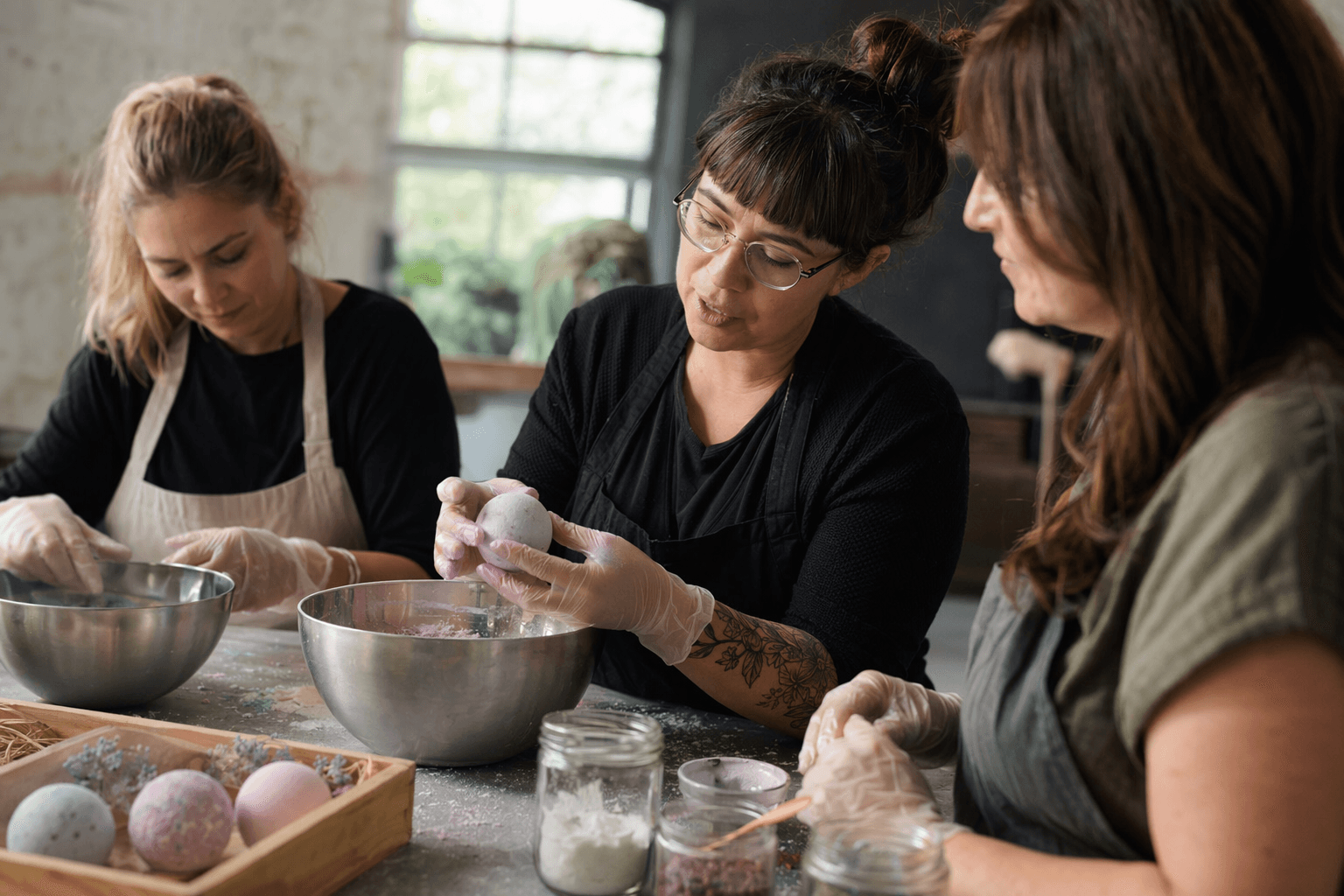
The strongest case for a class is speed. YouTube can show the motion, but it rarely tells you what the mix should feel like in your hands, or how fast humidity can ruin a good batch before it even reaches the mold. A hands-on workshop gives you the timing, pressure, and texture that turn a pretty idea into something that holds together after unmolding.
What you actually learn, ingredient by ingredient
A well-run class starts with the base formula: baking soda, citric acid, oils, fragrance or essential oils, colorants, and optional add-ins like clays, botanicals, or skin-softening ingredients. That list sounds simple until you try to balance it yourself and discover that bath bombs are very sensitive to moisture, pressure, and proportion. Too wet, and the mixture expands, cracks, or starts activating too early. Too dry, and it will not pack cleanly into the mold.
That is where the class format earns its keep. Instead of guessing from a recipe card, you feel the correct consistency in real time and learn what changes when you add liquid too fast or press too hard. SoapMinistry’s point is practical: workshops do not just hand you a recipe, they show you how to press, unmold, and dry the finished bath bomb without losing the shape you just made.
The part YouTube cannot smell for you
Scent balance is another place where a class saves money. A batch can look perfect and still land wrong if the fragrance is too strong, too faint, or clashes with the color and additives you chose. In a room full of other makers, you can compare scent blends immediately and adjust before you buy the wrong bottle twice.
That matters because bath bombs are controlled chemistry as much as they are craft. Citric acid and sodium bicarbonate react in water to create the fizz, which means the experience depends on how well you preserve that reaction until the tub, not the mixing bowl. A class compresses that learning curve, so you spend less time decoding why one batch swelled and another fell apart.
Humidity is the hidden enemy
If your bath bombs crumble in one room and work in another, humidity may be the real culprit. Bramble Berry says a common starting ratio is 2:1 baking soda to citric acid, and it also flags moisture and humidity as major variables. Its guidance says humidity below 60 percent is ideal for making and storing bath bombs, which is the kind of detail most beginners only learn after wasting ingredients.
That one fact explains why classes help faster than solo experimentation. You are not just learning a recipe, you are learning environmental control: when to stop misting, how firmly to pack, and why a batch that seemed fine on a dry day may fail on a damp one. A good instructor can spot a crumbly mix before it becomes a broken one, and that kind of correction is hard to get from a screen.
Why makers keep coming back to bath bombs
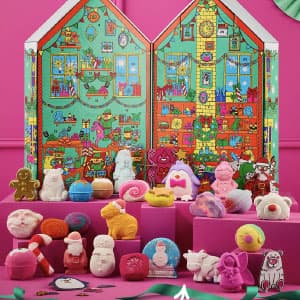
Bath bombs are not a passing novelty. Lush says Mo Constantine invented the first bath bomb in 1989 in her garden shed, and the company first received a trademark for bath bombs on April 27, 1990. Lush says it has sold over 350 million bath bombs globally and now produces more than 40 million a year across seven factories, which gives the category a real commercial backbone.
That history matters because it tells you bath bombs sit at the intersection of handmade craft and mass appeal. They are a familiar entry point for people who want to make something attractive, scented, and usable, not just decorative. The market numbers back that up too: Fortune Business Insights estimates the category at USD 2.12 billion in 2025 and USD 3.76 billion by 2034, while Grand View Research projects USD 2.84 billion by 2030. Grand View also points to Instagram and TikTok as major demand engines, which makes sense for a product that photographs well and vanishes in a swirl of color.
When a class is worth it for your stage
If you are brand new, a class is most useful when you want a clean first win instead of a drawer full of failed experiments. It is especially helpful if you are the kind of maker who learns by touch, or if you are trying to make bath bombs for a birthday outing, a date activity, a small group event, or team bonding. SoapMinistry frames those workshop settings as practical and social, not gimmicky, which is exactly why they work.
If you are already making bath products, the class still has value when you keep hitting the same problems. Crumbly edges, premature fizzing, and weak scent throw are usually not signs that bath bombs are beyond you. They are signs that one variable, usually moisture, ratio, or pressure, is off enough to derail the whole batch.
The safety and selling question
Once you move from hobby to product, the rules get stricter. The U.S. Food and Drug Administration says people and companies marketing cosmetics are legally responsible for product safety, and small or home-based cosmetics businesses carry that responsibility too. The agency also says cosmetic ingredients generally do not need premarket approval except for color additives, and it maintains inventories and lists for permitted cosmetic color additives.
That does not mean a bath bomb class turns you into a compliant cosmetic business overnight. It does mean the class can be a smart first step if you ever plan to sell, because it teaches you how ingredients behave before you put your name on a finished product. Visual appeal matters, but so does staying within the rules for color use and product safety.
A bath bomb class is worth it when you want fewer ruined batches, better control over your mix, and a faster path from messy guesswork to repeatable results. It gives you the feel of the formula, the discipline of drying and unmolding, and the confidence to adjust for humidity before your ingredients disappear into the trash.
This article was produced by Prism’s automated news system from verified source data, official records, and press releases, then run through automated quality and moderation checks before publishing. The system is built and supervised by the people who set the standards it runs under. Read our full AI policy.
Did this article answer your question?