Budget Bath Bomb Supplies Found at Dollar Stores Without Sacrificing Quality
Dollar Tree stocks Epsom salt, food coloring, and silicone molds that bring each bath bomb in under $1 — here's exactly which supplies clear quality tests and which ones need a specialty swap.
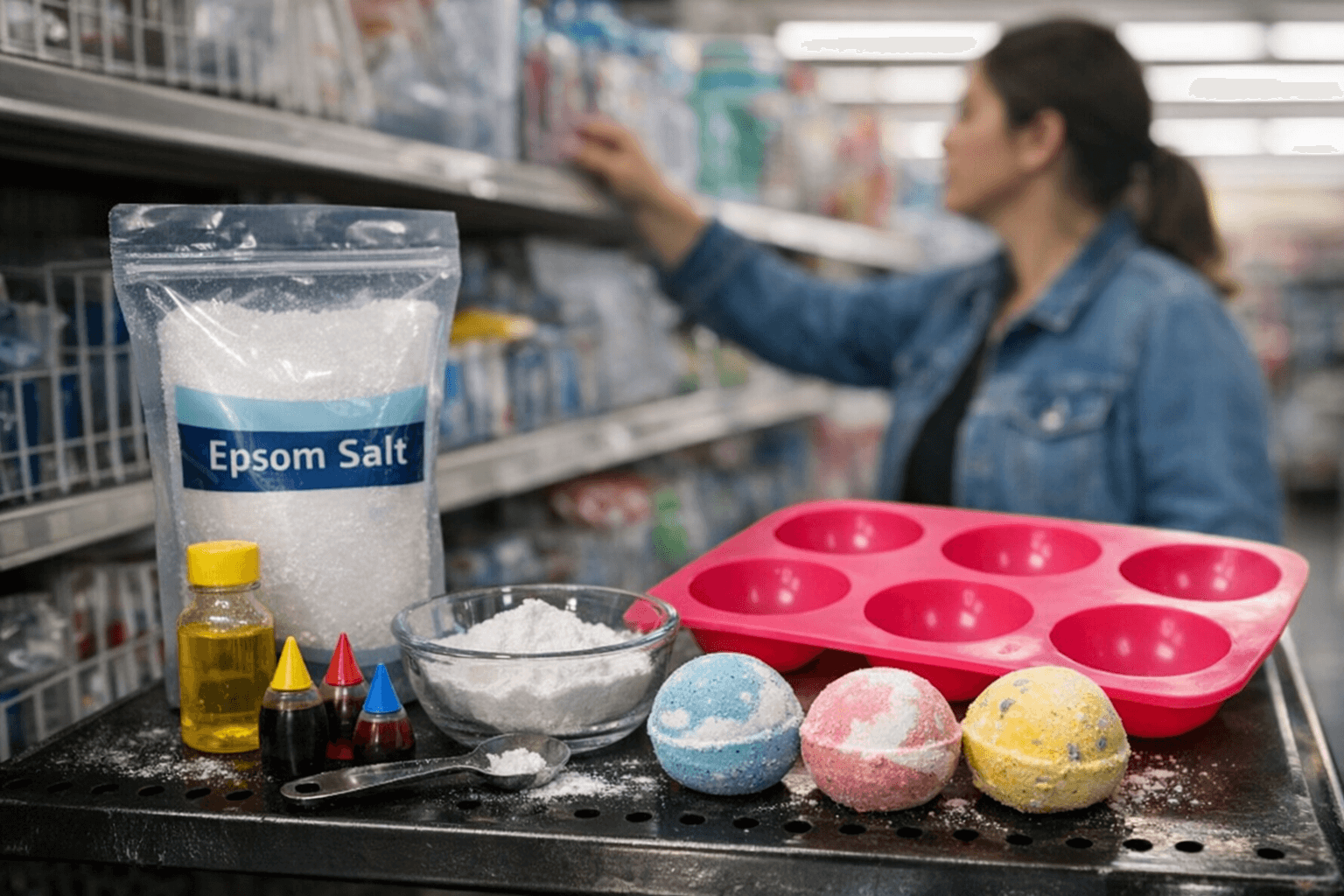
Pulling together a bath bomb haul used to mean a trip to a craft supply shop, an online order from a specialty supplier, and a bill that adds up fast before you've pressed a single bomb. The good news: most of the ingredients and tools that power a quality fizzy can live in your dollar store cart. The key is knowing which line items genuinely hold up and where the one or two non-negotiable upgrades are worth the extra mile.
The core recipe and what dollar stores actually cover
The general rule for bath bombs is a 2-to-1 ratio of baking soda to powdered citric acid, and the main ingredient that powers a fizzy bath bomb is sodium bicarbonate, also known as baking soda. Baking soda is one of the easiest wins at any dollar store: standard 1-pound boxes are routinely stocked and perform identically to grocery store equivalents in bath bomb applications.
A proven dollar-store-forward recipe calls for 1 cup baking soda, 1/2 cup Epsom salt, 2-3 tsp olive oil, 1 tsp water, food coloring, and 15 drops of essential oil, all of which Dollar Tree carries. That covers the bulk of your shopping list in a single pass.
Beyond baking soda and a dry acid, bath bombs typically contain a modulator such as cornstarch, which prevents the two active ingredients from fizzing before the bath bomb hits the tub and slows the fizzing reaction so it lasts several minutes once it's in the water. Cornstarch is another dollar store staple that pulls full weight here.
The one ingredient that requires a detour: citric acid
Citric acid is where dollar store sourcing hits its real limit. The citric acid and baking soda in bath bombs neutralize each other and create the fizzing action, and food grade citric acid is commonly available online if you can't find it in your local store, often with the canning supplies. Walmart's Ball canning section is a reliable brick-and-mortar option. This is the one ingredient worth tracking down specifically.
If you genuinely cannot find it, there is a workaround, though it comes with a trade-off. You can substitute 1/4 cup cream of tartar and 1/2 cup cornstarch in place of citric acid for a fully dollar-store recipe, but these will NOT have the same bath bomb fizz. For casual gifting or a low-stakes first batch, that tradeoff is acceptable. For anyone who wants the full Lush-style fizz, source the real thing.
Molds: dollar store Christmas ornaments are a legitimate hack
Specialty bath bomb molds run $5 or more at craft stores. Dollar Tree's clear plastic Christmas ornaments are a well-tested substitute, and the community has validated them repeatedly. Plastic molds for bath bombs can be Christmas-ornament molds, cut-open tennis balls, or plastic Easter eggs, and empty heart boxes from the dollar store also work.
The ornament approach has one practical upside beyond cost: press the mixture firmly and compactly into the molds and let them dry overnight, then twist the ornament halves apart the next day for a clean release. Silicone molds, also sometimes found at dollar stores, are another strong option. Metal molds tend to give sharp edges and firm shapes, while silicone ones are flexible and easier to release.
Color and scent on a dollar store budget
Food coloring from Dollar Tree works perfectly for basic color. The main thing to know: using witch hazel to wet bath bombs instead of water is preferable because water can set them off early and they won't fizz as much in the tub; if the food dye is water-based, you'll want to skip it too. Dollar Tree food coloring is typically water-based, so apply it sparingly and incorporate it into your oil component rather than adding it straight to the dry mix.
For scent, Dollar Tree's scented Epsom salt is a useful two-for-one: it provides both the muscle-soothing mineral content and a built-in fragrance that eliminates the need for essential oils in some batches. If you want to add essential oils regardless, remember that a little goes a long way and you'll only need a few drops, because using too much essential oil can be overpowering or cause the bath bombs to remain soft instead of hardening.
Oils and binding agents
The oil component is where you have the most flexibility. Any grade of olive oil works, even the extra virgin olive oil you get at the grocery store. Dollar Tree carries basic olive oil regularly, and 2-3 teaspoons per batch is all you need. Coconut oil, when available at discount stores, also works well; just melt it before mixing.
For the binding liquid, witch hazel outperforms plain water. Witch hazel is a wetting agent that doesn't make your fizzy start to fizz the way water would. It's sold in many dollar stores and pharmacies in the first aid section, and a small bottle goes a long way when you use a spray bottle to apply it one mist at a time.
Mixing and drying: the process tips that protect your budget
Getting the technique right is what separates a bath bomb that holds its shape from a crumbly, expensive pile of powder.
1. Whisk all dry ingredients together first and break up every clump.
Sift your dry ingredients or really work out any clumps with your fingers; if there are clumps in your mixture, your bath bombs can develop "warts," which look like little protruding growths on the surface.
2. Mix your wet ingredients (oil, essential oil, coloring) in a separate small bowl, then add them to the dry mix slowly.
3. Lightly mist the mixture with witch hazel using a spray bottle, one spritz at a time, and stop when the mixture holds its shape when squeezed, like damp sand.
4. Pack the mixture firmly into bath bomb molds or silicone molds and press the two halves together tightly if using round molds.
5. Let your bath bombs dry for 24-48 hours at room temperature.
Humidity is the silent enemy. Premature fizzing happens if wet and dry ingredients meet too soon or if you add liquids too quickly; fix it by using a spray bottle to mist liquids gently, stir quickly but lightly, and work in a low-humidity area.
What a dollar store batch actually costs
Each bath bomb in a Dollar Tree-sourced batch comes in at under $1. Compare that to commercial bath bombs from specialty retailers, which typically run $6 to $10 each. A single batch using dollar store supplies for baking soda, Epsom salt, oil, food coloring, and ornament molds, plus a separately sourced bag of citric acid, will yield eight to ten bath bombs for a total outlay most makers report well under $10.
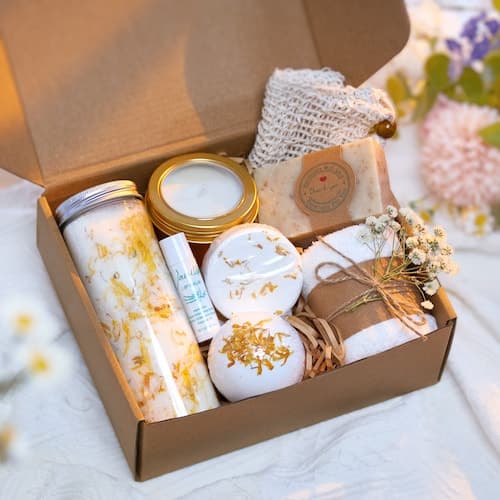
The savings math holds up even when you're making gifts. A dozen budget bath bombs packaged in cellophane bags, sourced almost entirely from dollar store shelves, lands at a fraction of what a boutique gift set costs without any detectable drop in fizz performance. The one upgrade that earns its price every single time is real citric acid. Everything else on the supply list can come from the dollar store aisle without apology.
This article was produced by Prism’s automated news system from verified source data, official records, and press releases, then run through automated quality and moderation checks before publishing. The system is built and supervised by the people who set the standards it runs under. Read our full AI policy.
Did this article answer your question?