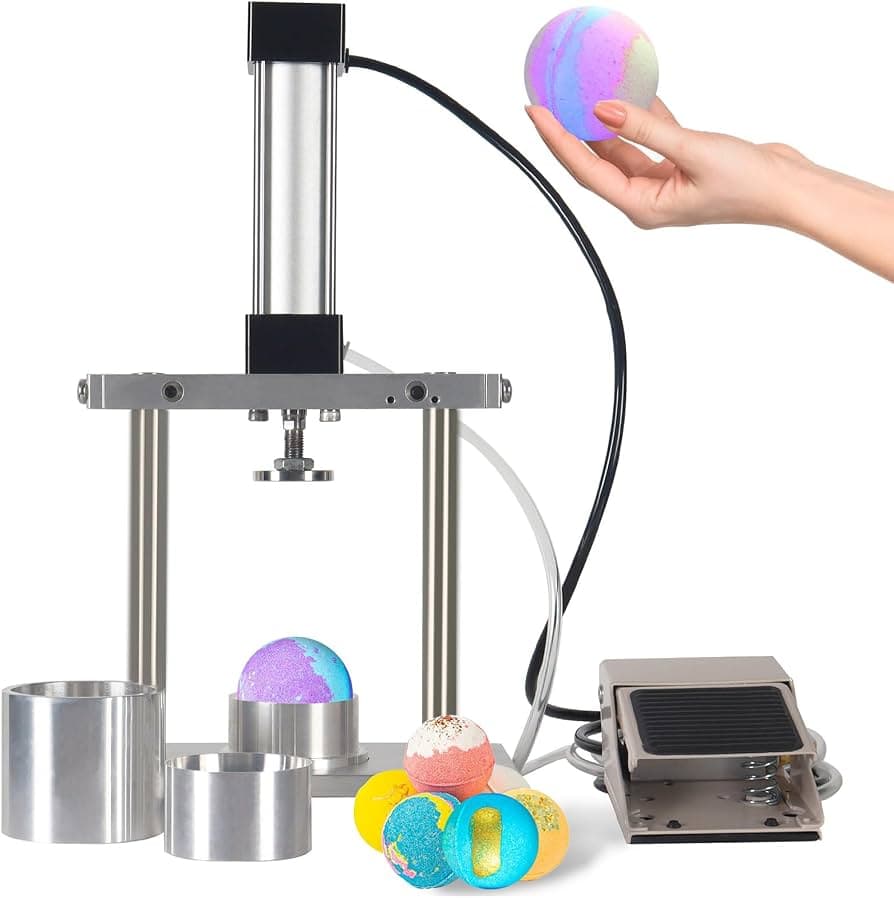
Furis unveils compact 49-cavity press for scaling bath bomb production
Furis’s compact pneumatic press promised 49 uniform bath bombs per cycle, aiming to help small brands scale without a factory footprint.
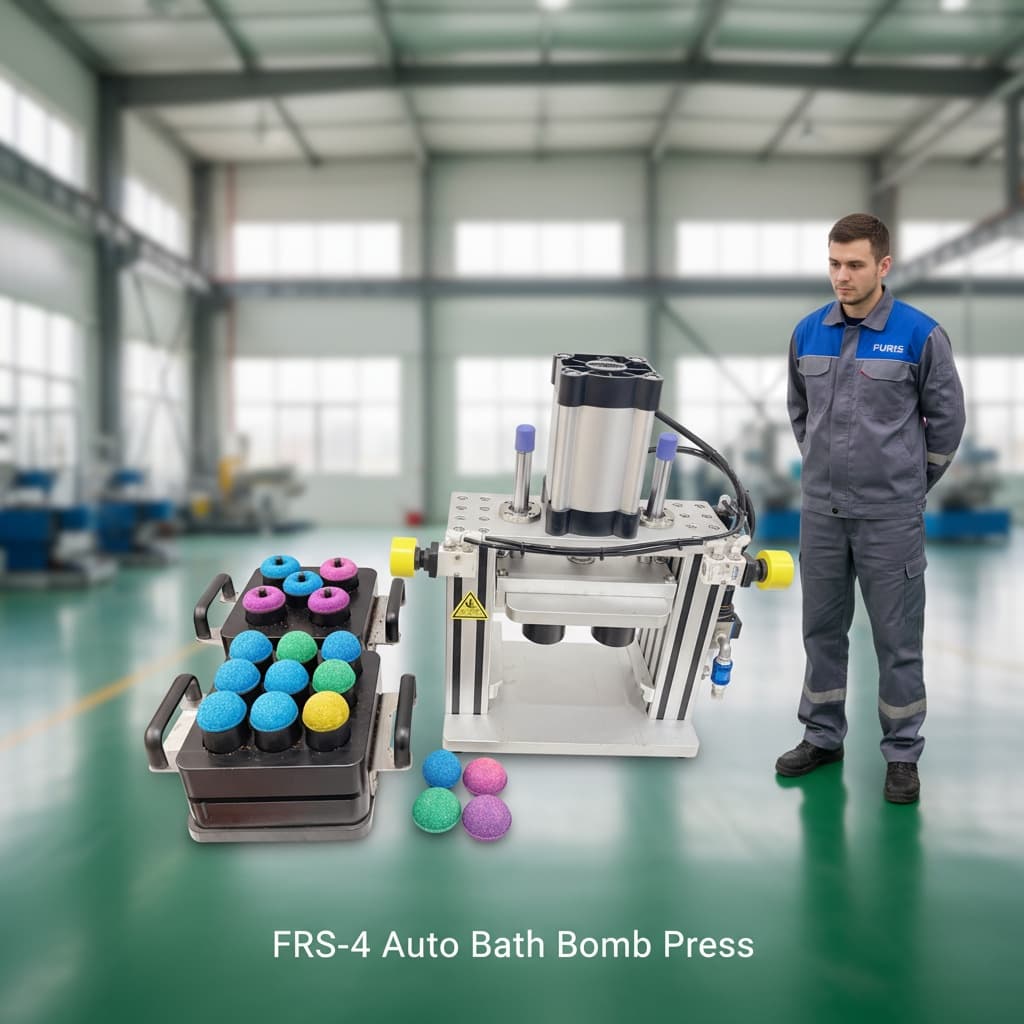
Furis moved straight at the bottleneck small bath bomb brands know best: hand production. Its new pneumatic press was pitched as a compact way to produce 49 uniform bath bombs in a single cycle, giving indie makers a faster path from kitchen-table batches to small-run commercial output without jumping into a full factory setup.
The company framed the machine around labor savings and consistency. By using an air compressor for repeatable pressure, Furis said the press could deliver denser, more professional-looking bath bombs with less variation from one batch to the next. The quick-change mold system was another selling point, with swaps between round bombs, heart shapes, bath bomb bars, shower steamers, custom logo designs, and seasonal shapes taking about five to 10 minutes.
That flexibility matters in a market where one brand may need to serve gift buyers, self-care shoppers, and private-label customers at the same time. Furis positioned the press for home-based businesses, small workshops, and startup facilities, the kind of operation that has outgrown hand-pressing but does not need the scale, space, or overhead of industrial lines. The machine was also described as suitable for shower steamers and soap bars, widening its use beyond one product format.
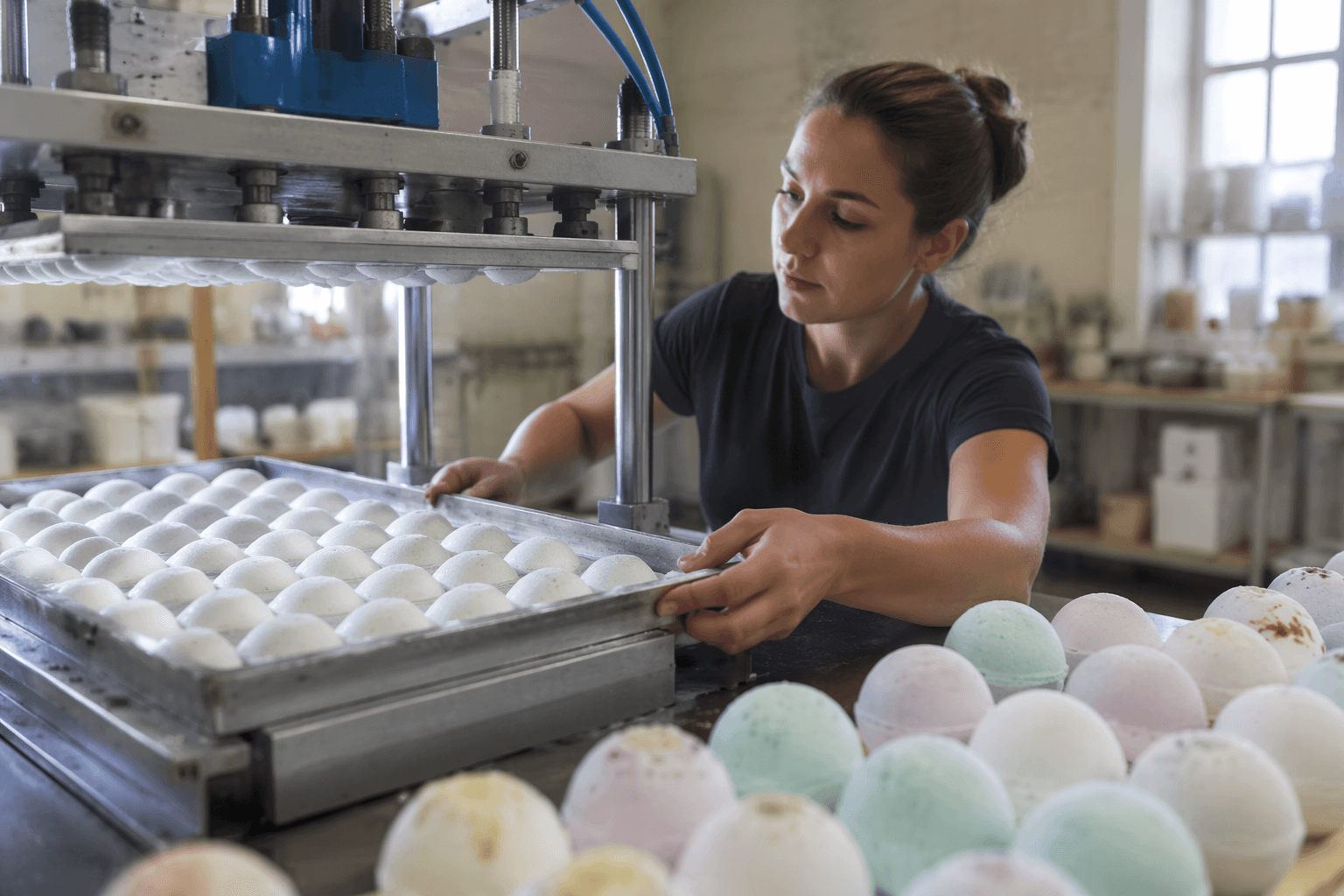
The timing lines up with a category that keeps expanding. Market research pegs the global bath bomb market at $1.268 billion in 2024 and projects it to reach $3.717 billion by 2035. Another report puts the United States at about 85% of bath-bomb market share in 2023, while synthetic bath bombs held roughly 60% of the market that year, showing how dominant the category has become in North America and how much room there is for standardized production.
That growth has a long backstory. Lush Cosmetics is widely credited with inventing bath bombs in 1989, turning a niche novelty into a mainstream self-care staple. Today’s makers are trying to keep the handcrafted look while raising output, and that is exactly where equipment like Furis’s press is aimed.

The bigger test is not whether it can make 49 pieces at once, but whether that kind of consistency helps small brands scale without creating new headaches. The Food and Drug Administration says cosmetic marketers are responsible for product safety and labeling, including identity, net contents, and the business name and place of business, while the Federal Trade Commission requires Made in USA claims to follow federal origin rules. If a bath product is aimed at children or includes small accessories, U.S. Consumer Product Safety Commission small-parts rules can also come into play, a reminder that scaling bath bombs is as much about compliance as output.
This article was produced by Prism’s automated news system from verified source data, official records, and press releases, then run through automated quality and moderation checks before publishing. The system is built and supervised by the people who set the standards it runs under. Read our full AI policy.
Did this article answer your question?