How bath bombs fizz, the chemistry behind the bubbles
A good bath bomb is just dry chemistry waiting for water. Citric acid, baking soda, and careful formulation explain the fizz, the crumbles, and the skin-sensitivity traps.
Citric acid and sodium bicarbonate can sit inert in a bath bomb on the shelf, then release carbon dioxide as soon as bathwater hits. If the mix is dry and balanced, you get the clean carbon-dioxide release that makes the bomb fizz, bloom, and break into bubbles. If moisture sneaks in too early, the same formula can crumble in your hands, lose punch in the bath, or irritate skin with a heavy load of fragrance and dye.
What actually makes the fizz
The core reaction in a solid bath bomb pairs citric acid with sodium bicarbonate, better known as baking soda. Water dissolves those ingredients and starts the reaction, releasing carbon dioxide gas. That gas is what you see as bubbles and fizz, and it is the reason the drop feels so lively instead of just turning into colored bathwater.
The American Chemical Society treated that reaction as serious classroom material in its December 2021 teacher’s guide for *Bath Bombs: The Chemistry Behind the Fizz*. Bath bombs fit into high-school chemistry because they can teach acid-base reactions, strong versus weak acids and bases, and the way a solvent changes what a solid mixture can do. Water is the trigger, citric acid and baking soda are the reacting ingredients, and carbon dioxide is the payoff.
The Chicago Section of the American Chemical Society puts it bluntly: "As it's submerged in water, it bubbles. This is the result of the release of CO2 also known as carbon dioxide."
Why the recipe has to stay dry
The ingredients have to sit inert on the shelf, then wake up all at once in the tub, which means moisture control matters as much as the acid-base pairing itself.
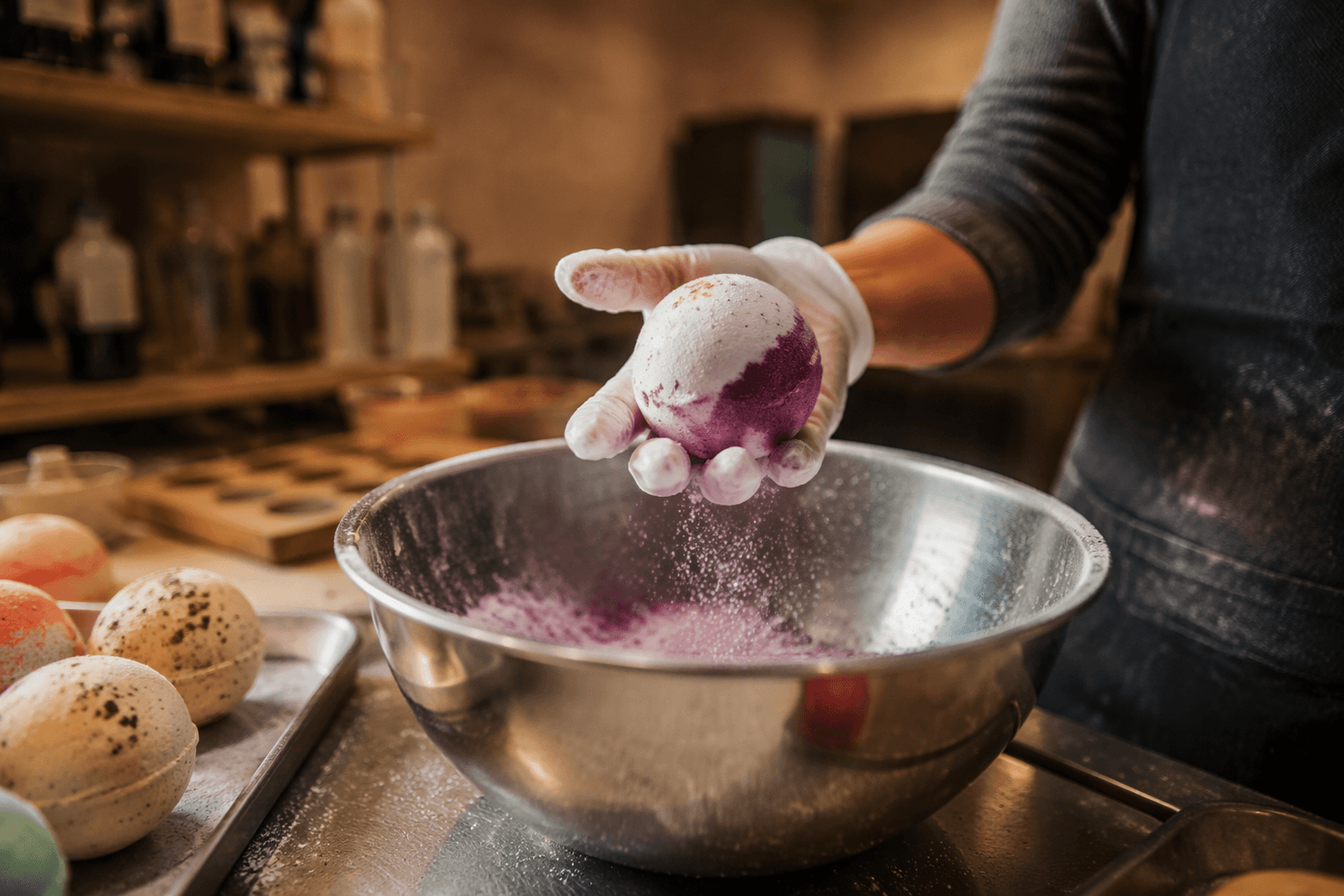
That is why dry mixing matters so much in DIY recipes. If the citric acid and baking soda start reacting before the bomb ever reaches the bath, you lose the fizz where you wanted it most. A binder or filler can help the mixture hold together as a compact shape, but the bomb still has to stay dry until use or the chemistry starts early.
A 2020 ACS Journal of Chemical Education paper, *Sizzle and Fizzle of Bath Bombs: An Inexpensive and Accessible Kinetics Experiment*, shows bath bombs can be used as a kinetics experiment, which means you can measure how fast the reaction happens rather than just admiring the foam. That makes the bath bomb useful for teaching reaction type and reaction rate, not just for making a pretty bath.
Decode the ingredient list
Once you know the main reaction, the rest of the ingredient list starts to make sense. Citric acid and sodium bicarbonate are the engine. Everything else usually shapes the look, feel, scent, or stability of the bomb.
- Fragrance adds scent, but it is also one of the first things to watch if your skin is sensitive.
- Dyes create the vivid color swirl many people want, but they can also be the part most likely to stain the tub or leave a stronger residue behind.
- Cream of tartar shows up in some formulations and can change how the mix behaves.
- Sodium laureth sulfate appears in some patent-style formulations and can boost the foamy, cleanser-like feel.
A Google Patents bath bomb composition listing includes sodium bicarbonate, citric acid, fragrance, cream of tartar, and sodium laureth sulfate in one formula. Commercial bath bombs often aim for foam, scent, color, and skin feel all at once.
Why some bombs crumble, stain, or feel harsh
When a bath bomb crumbles, the problem is usually not the fizz chemistry itself. It is the structure around it. Too much moisture during making, poor packing, or a weak binder can leave the bomb fragile before it ever gets near water. If the bomb underperforms in the tub, the acid and base may not be balanced well, or the product may have spent some of its reactivity early because of humidity.
Staining and irritation are different problems, but they often come from the same place: the extras. A bomb loaded with dyes can leave more color behind than you want, and a formula heavy on fragrance can be rough on sensitive skin.
The U.S. Food and Drug Administration regulates cosmetics labeling and tracks prohibited and restricted ingredients and allergens, which matters because bath bombs are sold as cosmetics, not just craft projects. If a label is vague on fragrance or gives you no useful ingredient detail, that is not a small issue. It is the difference between choosing a bath bomb that fits your skin and one that just looks good on the shelf.
From Lush to the modern bath shelf
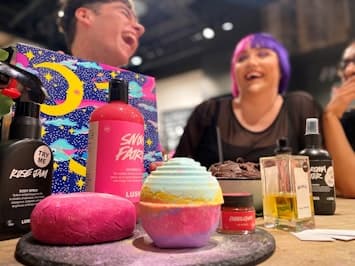
The modern bath bomb story is tied closely to Lush. The company credits co-founder Mo Constantine with inventing the bath bomb in 1989, and Lush has marked the product’s 30th anniversary in its own storytelling. In 2026, the brand also called it a 37-year-old product, which matches that 1989 origin.
The chemistry stayed the same, but the packaging, scenting, coloring, and surfactant choices kept evolving.
How to shop or tweak a formula without getting sold hype
If you want a bath bomb that performs well, start with the ingredient list and work backward from the reaction.
- Look for the obvious fizz pair: citric acid and sodium bicarbonate.
- If you want a stronger sensory hit, expect fragrance and color to be part of the formula, but know they are also the pieces most likely to bother sensitive skin.
- If you make your own, keep the mix dry and handle moisture carefully so the reaction waits for the bath.
- If you care about a cleaner skin feel, lean toward simpler formulas and read the cosmetic label with the FDA’s ingredient and allergen rules in mind.
This article was produced by Prism’s automated news system from verified source data, official records, and press releases, then run through automated quality and moderation checks before publishing. The system is built and supervised by the people who set the standards it runs under. Read our full AI policy.
Did this article answer your question?