How Lush Invented the Bath Bomb and Transformed Bathing Culture
Mo Constantine built the first fast-fizzing bath bomb in her garden shed in 1989; Lush’s 22-strong assortment and hit Intergalactic turned a single 2–3" ball into a global, category-defining product.

The fast fizzing bath bomb was invented in 1989 by Mo Constantine, co-founder of LUSH, in her garden shed, and Cosmetics Business calls the Bath Bomb a 37-year-old, category-defining bathing item that reshaped how people buy and experience baths. A bath bomb, by definition, effervesces in a tub to spread essential oils, fragrance and color; Lush built an entire retail language around that single sensory moment.
Sources give two founding timelines that sit awkwardly side by side: Brandification and Designlife-cycle explicitly date the bath bomb to 1989, while Designlife-cycle also states LUSH Fresh Handmade Cosmetics was started in 1996 in Poole, UK by Mark Constantine and Liz Weir. Cosmetics Business frames the story around Lush’s bathing category team but the paywalled feature repeatedly shows the text: "You need to be a subscriber to read this article. Click here to find out more."
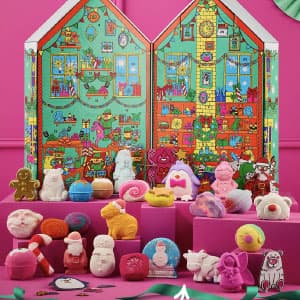
Product names and formulations trace the category’s evolution. Intergalactic is described as the world’s best-selling bath bomb and as a top seller, credited in one source with grapefruit oil and peppermint oil and in another with peppermint oil plus three color layers - blue, red and yellow. Butterball is listed as a creamy bath bomb full of skin-softening cocoa butter that has been with the label since its inception. The Experimenter appears in Lush copy as "an explosion of colour and innovation." Brandification notes there are 22 different bath bombs in Lush’s regular assortment today.
Retail and packaging choices doubled as marketing. Lush declares, "We won’t accept the status quo but will invent new, effective categories that fulfill our customers and the planet’s needs," and "Fresh isn’t just important to us; it defines us." The brand pioneered selling solid shampoos and bath balls without packaging since the 1990s, offers solids in bulk that customers take home in recycled paper bags, and uses animated GIF headers online instead of classic product descriptions to stage product application and storytelling. Skyquestt describes this approach as "going naked" packaging to arouse curiosity.

Sustainability claims run across the sources and the pushback against them appears in the record. Designlife-cycle reports Lush “takes great pride in their green policy,” asserts products are "100% biodegradable" and says raw materials are bought and transported with minimal energy, but the same source also notes "Lush products claim to be environmentally friendly and so we challenge this proclamation by ..." without the challenge text in the excerpts. Brandification records that small black plated pots are made of recycled PP, "taken back by Lush and recycled back into new containers in a closed loop," and that the "Bring it back - Recycle program" will start in Germany.
Market context is explicit: Skyquestt lists Lush among top players alongside Da Bomb, Bomb Cosmetics, Bath & Body Works Direct, Dr Teal's and others, and Brandification states, "The 'bath bombs' category has been the top-selling category worldwide in Germany behind 'hair' in the last twelve months." Despite the lack of public sales figures and few named members of Lush’s bathing category team in available excerpts, the trail of product SKUs, closed-loop packaging claims, the Intergalactic formulation details and the company's "naked" retail theater make clear why a small spherical product that began in a garden shed became central to Lush’s brand and to the global bath bomb market.
This article was produced by Prism’s automated news system from verified source data, official records, and press releases, then run through automated quality and moderation checks before publishing. The system is built and supervised by the people who set the standards it runs under. Read our full AI policy.
Did this article answer your question?