Soap School bath bomb course turns DIY craft into full-day training
Soap School’s bath bomb class treats fizz as formulation, not a weekend craft. The full-day, £150 workshop shows how a hobby can become a repeatable product line.
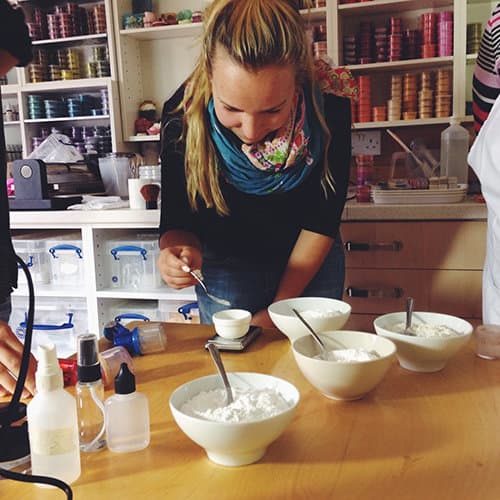
Soap School turns bath bombs into something closer to a trade than a craft-night novelty. Its Bath Bomb & Bodycare Course, also labeled the Fizziology bath bomb course, is set up as a full-day hands-on workshop from 10 a.m. to 4 p.m. for £150, and that structure tells you exactly where the category sits now: between self-care play and disciplined product making.
Bath fizzies, but make it a practice
The course is built around the skills and art of making bath fizzies, bath salts, bath truffles, bath muffins, and bathing salts, so the learning does not stop at one familiar sphere that dissolves in the tub. Soap School says students learn the delights of bath bomb making and are pushed to take the art of bath fizzies to new heights, which is a more technical promise than the usual one-recipe tutorial floating around social media.
That distinction matters because bath bombs often enter the hobby world as fast, colorful projects: mix, press, unmold, and hope for the best. Soap School’s framing suggests a different path, one that values formulation knowledge, consistency, and the ability to repeat a result. If you want to move from one-off fizzing experiments to reliable batches, the course is aimed squarely at that shift.
What the workshop is really teaching
The Bath Bomb & Bodycare Course is described as hands-on, and the day length is part of the point. A six-hour session gives room for technique, not just a quick demonstration, and the course language leans into both learning and indulgence. Soap School emphasizes that people value their me time and that the bath is a sanctuary of indulgence, but those lifestyle cues are paired with a structured bodycare curriculum rather than a casual spa vibe.
- bath fizzies
- bath salts
- bath truffles
- bath muffins
- bathing salts
The range of products on the syllabus also signals how makers can grow past a single hero item. Instead of treating bath bombs as an isolated craft, the course opens into a family of fizzy bath products:
That broader toolkit matters if you are thinking beyond personal use. A maker who understands texture, scent, binding, and presentation across several formats can build a more coherent range, and that consistency is what separates a hobby table from a product line.
A course designed for aspiring entrepreneurs
Soap School does not present itself as a casual craft brand. It describes itself as a professional soap making and natural cosmetics course provider for aspiring entrepreneurs, and that business focus runs through the rest of its offerings. The company says it provides consultancy, bespoke training, business planning, development, mentoring, and free guidance on cosmetic regulations.
Its other course pages reinforce that wider commercial ambition. Soap School says it helps customers build a complete range of cosmetic and supporting products to round out a business, including skin care, body care, hair care, bath bombs, fizzy treats, and candle making. In other words, bath bombs are not isolated as an internet fad here. They are positioned as one piece of a larger, sellable assortment.
The course calendar places the hands-on classes at SOAP SCHOOL LTD, 1 York Avenue, Fartown, Huddersfield, HD2 2QR, in West Yorkshire, England. That location detail matters because it underlines the workshop’s practical, in-person nature. This is not an abstract lesson about bath product aesthetics; it is a day in a real training space built for making, testing, and refining.
Why the commercial backdrop matters
Bath bombs have enough market weight to justify serious training. Grand View Research estimated the global bath bomb market at USD 1,859.7 million in 2023 and projected it will reach USD 2,837.8 million by 2030. The firm also projected a 6.5% compound annual growth rate from 2024 to 2030, with North American bath bomb revenue reaching USD 749.2 million by 2030.
Those figures help explain why a course like this can sit comfortably in the same universe as professional cosmetics education. A product category with that kind of scale supports more than impulse DIY. It creates room for formulation skill, business planning, and product development, all of which Soap School builds into its wider training model.
Soap School’s bath bomb class makes the hobby-to-skill pipeline visible. What starts as a fizzy bath project becomes a lesson in repeatability, product range, and market-ready know-how, and that is exactly why the course reads less like a craft afternoon and more like the first serious step in a bath bomb practice.
This article was produced by Prism’s automated news system from verified source data, official records, and press releases, then run through automated quality and moderation checks before publishing. The system is built and supervised by the people who set the standards it runs under. Read our full AI policy.
Did this article answer your question?