Soapmaid explains bath bomb essentials for consistent DIY results
Soapmaid cuts bath bombs down to the parts that actually matter, from the 60 to 65 percent baking soda base to the lavender buds that should finish a formula, not fix it.
The chemistry under the fizz
Soapmaid’s bath bomb guide works because it starts with the part most DIY makers get wrong: the formula is chemistry first, decoration second. Baking soda and citric acid are the engine, reacting in water to release carbon dioxide and create the signature fizz, while sodium citrate helps soften the bath water and leaves that smoother, silkier feel people want from a finished bomb.
That framing matters because consistent bath bombs are not made by piling on extras. They are made by balancing the base so the bomb holds together, breaks down cleanly, and behaves the same way every time it hits the tub. Soapmaid’s practical ratio guidance, with baking soda at about 60 to 65 percent of the mix and citric acid at about 30 to 35 percent, gives makers a real starting point instead of the usual guesswork.
What each core ingredient is doing
Soapmaid treats the core ingredients like job titles, and that is exactly how to think about them. Fine, food-grade baking soda is the foundation, because it gives the blend bulk and helps everything mix smoothly. If the base is coarse or inconsistent, the whole bomb tends to feel rougher and less reliable.
Citric acid does the heavy lifting on fizz, but the grind matters. Super-fine citric acid is preferred because it helps create a better reaction and a better texture, which is a small detail that pays off in a big way when you want a bomb that feels polished instead of crumbly.
The oils are there for slip and skin feel, not for turning the bath into a slick mess. Lightweight options like sweet almond, jojoba, or coconut add moisturization without making the water feel greasy, and that distinction keeps the bomb pleasant to use instead of leaving behind an oily film.
Polysorbate 80 is the ingredient that keeps the pretty parts from becoming cleanup problems. It helps oils and mica disperse through the water instead of floating on top or leaving rings around the tub, which is the difference between a bomb that looks good in the mold and one that actually behaves well in a real bath.
Where lavender buds fit in the formula
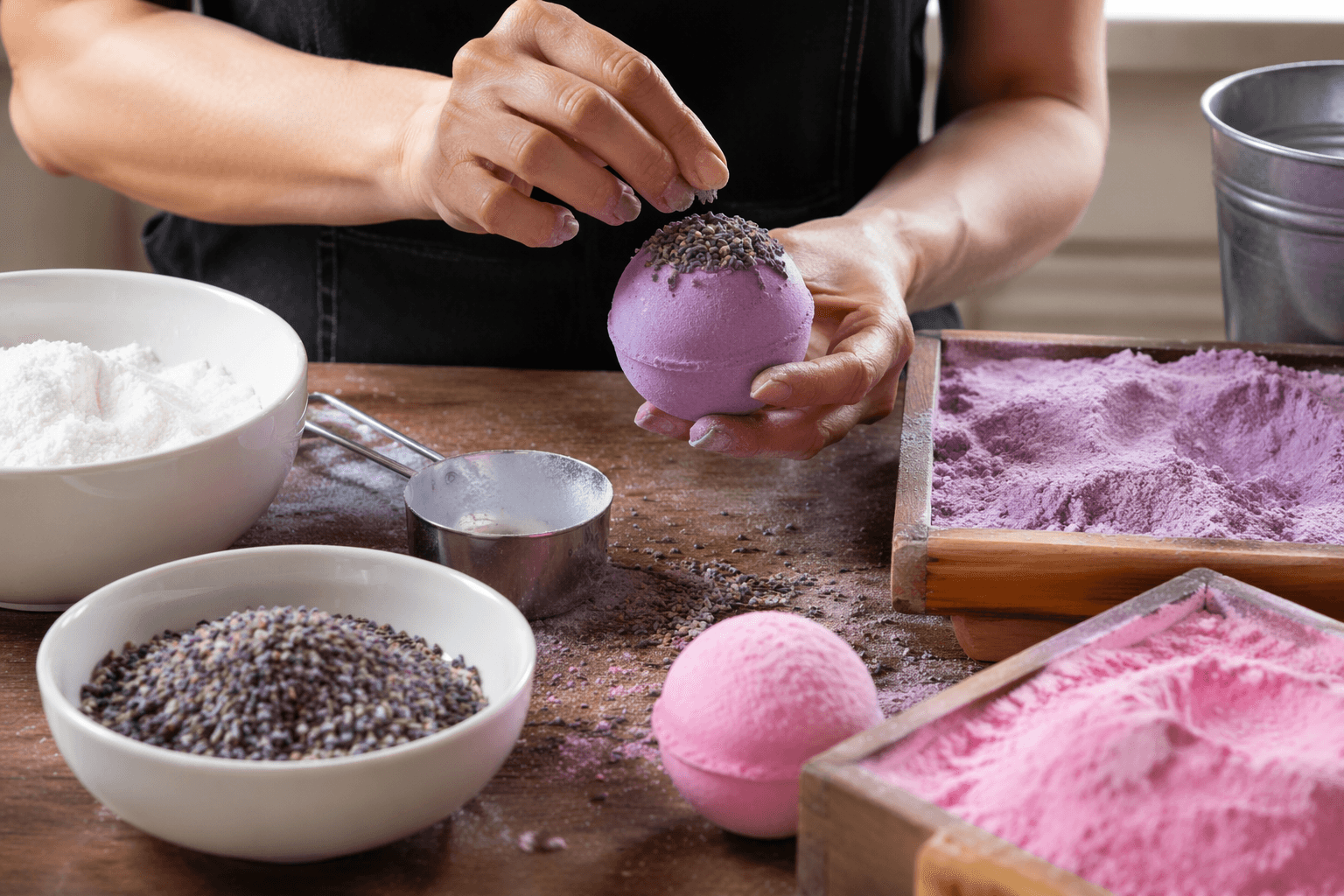
Lavender buds are best understood as a finishing botanical, not a structural ingredient. That is a useful reminder for anyone tempted to load a bath bomb with petals before the base is stable. The flower buds add a natural visual cue and support the lavender theme, but they should not be asked to compensate for a weak ratio or poor mixing.
That is the real value of Soapmaid’s approach: it keeps the lavender in its proper lane. The scent and look can elevate the finished bomb, but the chemistry still has to do the work first. Once the base is stable, lavender buds become an accent that makes the bomb feel intentional instead of cluttered.
A smarter way to build the batch
A lot of bath bomb frustration comes from treating every ingredient like a decoration. Soapmaid’s breakdown points in the opposite direction, and it is the better way to work if you want repeatable results. Start with the base proportions, then add the oil phase carefully, and only then think about how lavender buds or mica will look in the finished piece.
One useful comparison is cornstarch, which educational sources often describe as a modulator that slows the fizzing reaction and improves handling. That context reinforces the bigger lesson here: bath bombs are controlled systems. They perform best when the ingredients are chosen for specific roles, not tossed in because they seem craft-friendly.
For makers who want cleaner batches and fewer wasted ingredients, the practical checklist is simple:
- Use fine, food-grade baking soda for the base
- Use super-fine citric acid for a more even fizz
- Keep oils light, with sweet almond, jojoba, or coconut doing the moisturizing work
- Use Polysorbate 80 if you want oils and mica to disperse cleanly
- Treat lavender buds as the finishing touch, not the fix for a bad formula
That approach is what takes a bath bomb from experimental to dependable. It also makes the finished bomb easier to gift or sell because the look is cleaner, the tub stays cleaner, and the results are more predictable.
Why the label matters once the bombs leave the hobby table
Once bath bombs move from kitchen project to product, labeling stops being optional. The U.S. Food and Drug Administration requires cosmetic labels to list ingredients in descending order of predominance, and warning statements must appear whenever they are necessary to prevent a health hazard. In some cases, fragrance or flavor can be listed generically, but the overall ingredient declaration still has to be accurate and in order.
That obligation sits inside a broader framework that was expanded by the Modernization of Cosmetics Regulation Act of 2022. In plain English, the minute a bath bomb is marketed as a cosmetic product, the rules around safety and labeling get more serious. That is especially relevant for small makers who start with gift batches and then realize they have something people want to buy.
A little lavender, a little discipline, a much better bomb
Lavender gives bath bombs their familiar calm, but the ingredient only works when the foundation is right. The same is true for the rest of the formula: the fizz comes from the baking soda and citric acid, the water feel comes from sodium citrate, the cleanup depends on Polysorbate 80, and the finish is what lavender buds are best at adding.
Soapmaid’s guide earns its keep by making that hierarchy obvious. If you get the base ratio right, keep the oils lightweight, and treat lavender as the final polish, the next batch stops feeling like a gamble and starts feeling repeatable.
This article was produced by Prism’s automated news system from verified source data, official records, and press releases, then run through automated quality and moderation checks before publishing. The system is built and supervised by the people who set the standards it runs under. Read our full AI policy.
Know something we missed? Have a correction or additional information?
Submit a Tip