Viral Bath Bomb Turtle Toy Clip Was AI Generated, Not a Real Product
That viral sea turtle bath bomb clip is AI-generated, with no real product behind it. Here's the checklist every maker needs before the next trend hits.
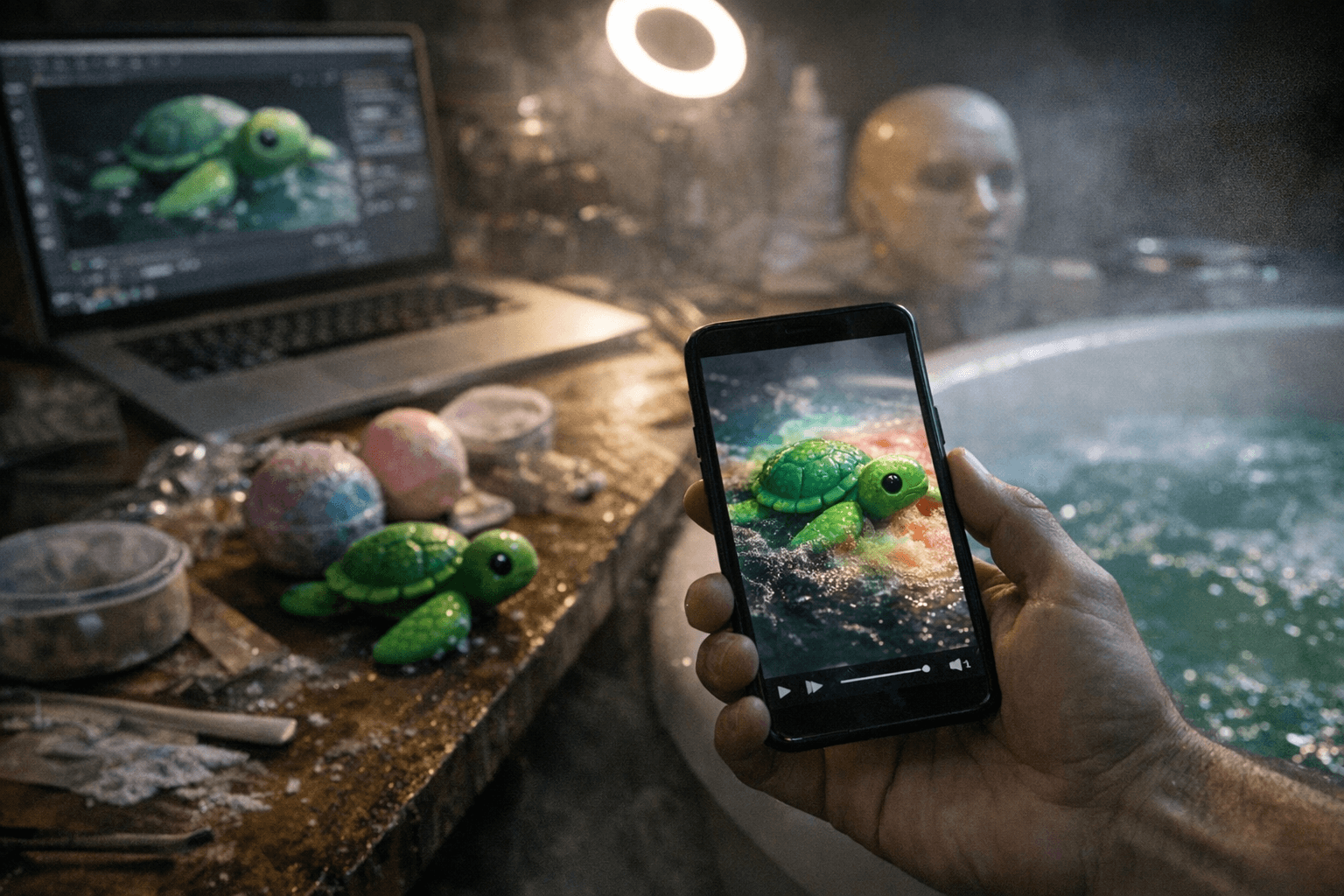
That impossibly timed sea turtle emerging from a fizzing bath bomb, color-saturated and cinematically centered, flooded TikTok and Instagram in late March 2026. Parents bookmarked it. Makers tried to source the ingredients. Nobody could find the product because the most-shared version of the clip was AI-generated or digitally edited to look like a real product demonstration.
No major retailer stocked a matching item. No bath or toy brand published a launch announcement. The absence of both was the first red flag, and in retrospect, the clip's visual qualities were the second: dissolve timing too controlled, lighting too even, the reveal too precisely centered for a real fizzing reaction filmed in a bathtub.
Spotting the fake follows a short pattern. Real bath-bomb demos have inconsistent dissolve rates because citric acid and baking soda react differently depending on water temperature, agitation, and bomb density. The turtle clip's fizz was suspiciously uniform. Real product videos also come with a paper trail: a brand page, a retailer listing, a price. The turtle clip had none of those, and when makers and journalists searched for a primary source, the trail ended at reshares.
This matters beyond the inconvenience of a dead search. Bath-bomb culture has become a prime target for AI-generated trend content precisely because the reveal mechanic is so photogenic. A parent watching the clip might try to recreate it at home using an arbitrary toy embedded directly in a bath bomb mixture; that shortcut creates real hazards, including small-part choking risks if the toy fractures, chemical exposure if the plastic interacts with citric acid, and dye contamination if the toy is not colorfast in water.
A $14 hatching toy sold at mainstream retailers provides the same dramatic reveal experience without those risks. It is rated for bath play, sealed, and marketed through verifiable retail channels rather than a viral clip with no product page.
For makers who want to build the effect into a homemade batch, the process requires two extra steps that most viral clips skip. First, test any toy candidate by submerging it in warm water for ten minutes: look for color bleed into the water, surface deformation, or cloudiness. If the water changes at all, that toy does not belong in a bath bomb. Second, place any toy that passes the soak test inside a sealed waterproof capsule before building the bomb around it. The capsule keeps the toy separate from the citric acid and baking soda mixture during the fizzing phase and prevents off-gassing from affecting bath water.
The materials baseline for an embedded toy is specific: ABS plastic or food-grade silicone construction, a minimum age rating appropriate for the child, no detachable small parts, and a sealed waterproof capsule large enough to contain the toy without compression.
The turtle clip was engineered to look replicable. That is the exact quality that made it spread. Checking for a retailer listing and a brand name before ordering supplies is the fastest filter available, and one the turtle clip could not have survived.
This article was produced by Prism’s automated news system from verified source data, official records, and press releases, then run through automated quality and moderation checks before publishing. The system is built and supervised by the people who set the standards it runs under. Read our full AI policy.
Did this article answer your question?