Wholesale vs Private Label Bath Bombs, Choosing Speed or Brand Control
Wholesale wins on speed, but private label only pays off once branding, packaging minimums, and compliance leave you a stronger per-unit margin.
The real choice behind the fizz
Bath bombs look like a simple category until you price them like a business. Grand View Research estimates the global market at USD 1.8597 billion in 2023 and projects it to reach USD 2.8378 billion by 2030, with Millennials and Gen Z driving demand because they want self-care, wellness, and products that feel worth photographing. In North America alone, the market is projected to reach USD 749.2 million by 2030. That kind of demand is why bath bombs can work as a quick resale item or as the center of a recognizable brand, and the wholesale-versus-private-label decision determines which path you are really taking.

Wholesale is the fast lane
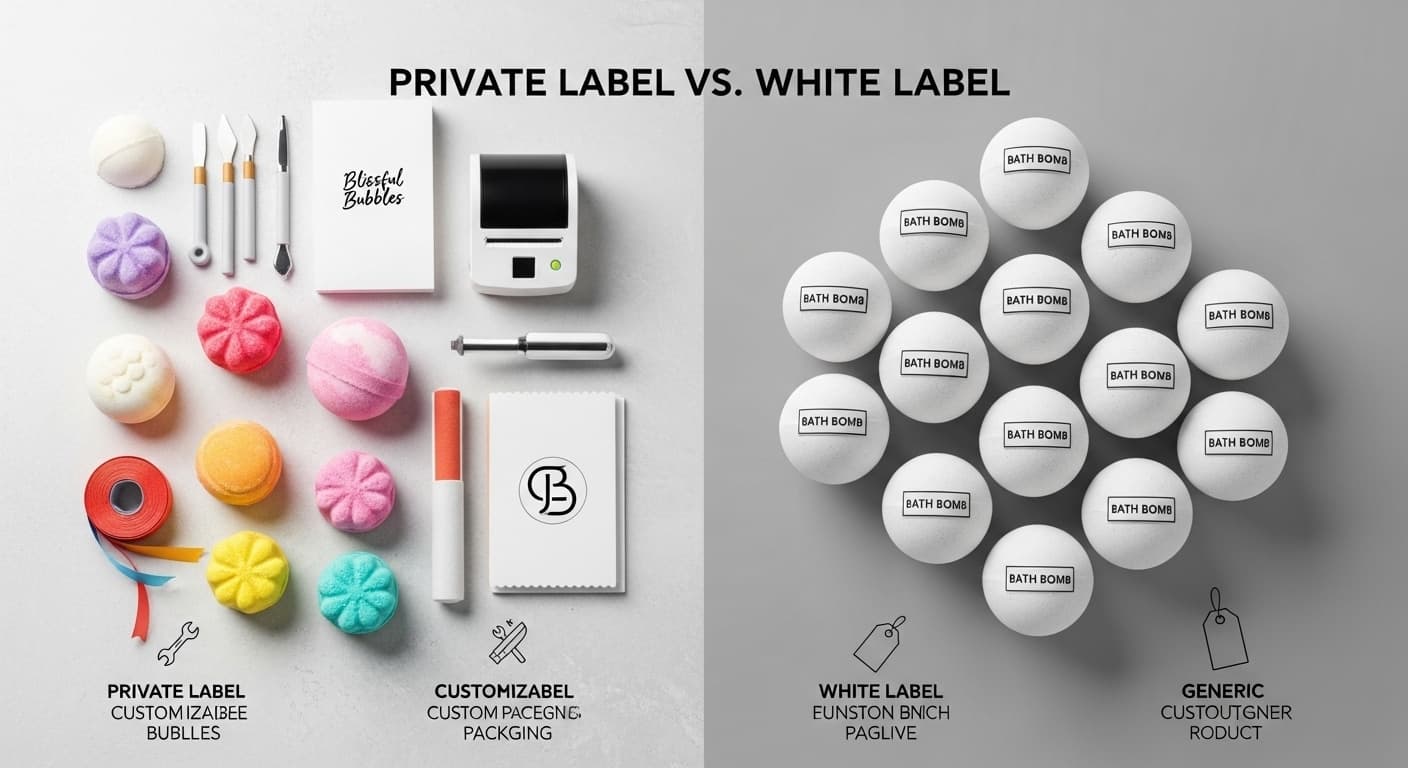
Wholesale bath bombs are finished products sold in larger quantities at a discount for immediate resale. You are buying speed: the formula already exists, production risk sits with the supplier, and you can stock a boutique shelf, spa counter, online seasonal drop, or gift shop display without building a product from scratch. For a small seller trying to test a scent family or fill a Mother’s Day bundle fast, that simplicity can be the difference between shipping now and missing the window.
The tradeoff is control. With wholesale, you accept the manufacturer’s scent profile, shape, color, and finish, which means your product story is limited to presentation, not formulation. That can still be profitable if the line moves quickly, but it is closer to reselling a finished experience than building a signature bath bomb brand.
Private label buys you the brand, not the shortcuts
Private label bath bombs are made by a manufacturer and sold under your own brand name. That is a very different asset, especially in a market where Grand View Research estimates global private-label cosmetics at USD 10.64 billion in 2024 and expects it to grow to USD 14.39 billion by 2030. If you want to build recognition, repeat buying, and a stronger shelf identity, private label gives you more room to look established even if your operation is still small.
The hidden cost is that the headline unit price is never the whole story. Branding fees, packaging minimums, shipping structure, and label runs can all land before the first sale, and those costs have to be spread across your order. Private label also usually means less control over the scent and formula than a fully custom production run, so if your brand promise depends on a very specific fizz, fragrance, or ingredient story, the catalog version may feel close but not exact.
Where the profit line actually moves
The real break-even question is not “Which option is cheaper?” It is “Which option leaves more margin after every cost that touches the product?” For home production, that includes ingredients, labor, packaging, spoilage, and your time. For wholesale and private label, it includes the landed unit cost, freight, branding, label compliance, and any packaging minimums that force you to buy more than you can move at once.
A useful way to think about it is this: wholesale starts winning when the lower upfront complexity lets you sell faster than you could make the bombs yourself, even if the brand is less distinctive. Private label starts winning when the extra setup cost is spread across enough units that your per-unit margin still beats homemade production, while the branded look lets you command a higher perceived value. If the product is going into a seasonal launch, a spa retail assortment, or a gift bundle, that perceived value can matter as much as the raw unit cost.
The hidden tradeoffs that can erase the shiny margin
This is where a lot of small sellers get tripped up. A private-label quote can look attractive on paper, but the profit can shrink once the packaging vendor wants a minimum run, the label has to carry the right product information, and the scent selection is narrower than the one you had in mind. Even wholesale can stumble if the unit price is good but shipping eats the discount or the product feels too generic to justify a premium shelf tag.
- Reduced scent and formula control, which limits how distinct your line can feel.
- Branding fees and packaging minimums, which can tie up cash before sales start.
- Shipping and freight, which can matter more than the sticker price on a catalog page.
- Ingredient quality, which affects how the bomb performs, smells, and fits your brand story.
- Labeling compliance, which becomes part of the product cost the moment you move from casual resale to a branded cosmetics line.
A few costs deserve special attention:
That last point matters because bath bombs are not just cute inventory. They are part of a cosmetics category, and once you start making claims about fragrance, skin feel, or wellness, the product stops being a simple impulse buy and starts carrying brand risk.
Compliance is part of the margin, not an afterthought
The U.S. Food and Drug Administration says companies that market cosmetics are legally responsible for product safety. The agency also says cosmetics generally do not need premarket approval, except for color additives, which gives small brands room to move quickly but does not remove responsibility. Under MoCRA, the FDA issued final guidance in December 2024 on registration and listing of cosmetic product facilities and products, and on February 11, 2026 it announced updates to its Cosmetics Direct portal to support biennial registration renewal.
The Federal Trade Commission adds another layer: advertising claims must be truthful, not deceptive or unfair, and evidence-based. That becomes especially important if your bath bombs lean on relaxation, wellness, or skin-benefit language. A private-label line may make compliance easier operationally because the manufacturer is already producing a retail-ready item, but the brand on the label still has to stand behind the claims, the ingredients, and the way the product is marketed.
Choosing speed or brand control
Wholesale makes sense when you need to launch fast, keep complexity low, and test whether a scent story or giftable bath bomb assortment can move. Private label makes sense when you want a product that looks like yours, can build long-term recognition, and has enough margin left after fees and packaging minimums to justify the extra overhead. Grand View Research’s growth numbers explain why both models are attractive, but the sharper business lesson is simpler: wholesale rents shelf space, while private label builds an asset.
For a small bath bomb seller, the smartest move is usually not the cheapest-looking quote. It is the path that keeps your units moving, your claims clean, and your brand strong enough that the next customer remembers the name on the label.
This article was produced by Prism’s automated news system from verified source data, official records, and press releases, then run through automated quality and moderation checks before publishing. The system is built and supervised by the people who set the standards it runs under. Read our full AI policy.
Did this article answer your question?