Bonsai Society of Brevard revisits exposed-root trees at June workshop
Bonsai Society of Brevard will revisit exposed-root trees from its September 2024 workshop at a June 20 session, with repotting and new Sea Hibiscus available.

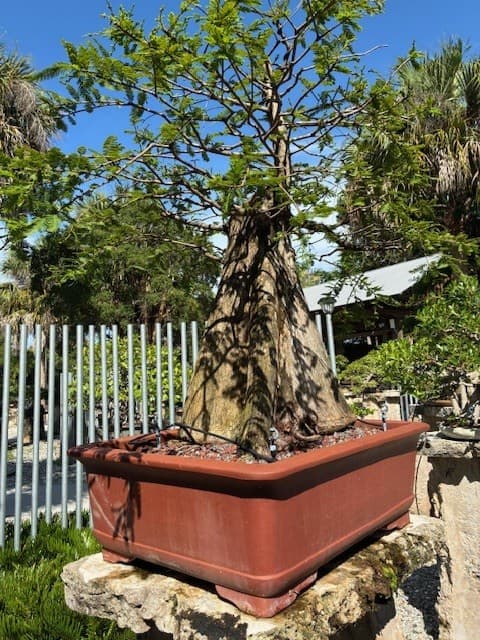
Bonsai work often looks finished at the demo table, but the Bonsai Society of Brevard is using its June 20 meeting to show what happens after the first wiring, the first rocks and the first roots. The club will revisit the exposed-root plantings members built in September 2024, turning the session into a progress check as much as a workshop.
The society generally meets on the third Saturday of each month at 1 p.m. at Melbourne Public Library, 540 E. Fee Blvd., Melbourne, and this month’s gathering fits that rhythm. Members who still have trees from the 2024 exercise are being asked to bring a bonsai pot and tools so they can repot and continue the build. For anyone who did not take part last time, the club will have eight newly purchased Sea Hibiscus available for $25 each, with the root-over-rock supplies included. The society will provide wire and other materials; participants only need to bring tools and the patience to work through the next stage.
That follow-up matters because the exposed-root project did not begin as a one-off lesson. In September 2024, the club held the original workshop at Melbourne Public Library with a $30 fee and first-come, first-served spots. Trees and material were provided, and Rob guided members through the exposed-root style pre-bonsai using PVC pipe, wire and rocks. The club’s explanatory notes say the technique starts with a rooted Sea Hibiscus cutting grown in a split PVC tube, usually about 9 inches long, and the cutting can stay in that setup for about 18 months before the next step if roots have escaped the bottom of the nursery container. Sea Hibiscus, identified as Talipariti tiliaceum, is the quickest of the species the club considered for the method.
That kind of continuity is what makes a club like this useful. The Bonsai Society of Brevard describes itself as a 501(c)(3) educational organization, says several members are internationally known and notes that Brevard County sits in USDA Zones 9b and 10a, which helps explain why tropical material like Sea Hibiscus works so well there. The larger Bonsai Societies of Florida convention was held May 22-24 in Orlando at the Florida Hotel and Conference Center, with the theme Small and a focus on mame, shohin and chuhin, but the Brevard meeting keeps the lesson local and practical.
The value of the June session is not the first reveal. It is seeing whether the exposed roots are filling out, whether the rock placement still holds and whether the tree is ready for a better pot after 18 months of development. That is the part of bonsai that teaches the most.
This article was produced by Prism’s automated news system from verified source data, official records, and press releases, then run through automated quality and moderation checks before publishing. The system is built and supervised by the people who set the standards it runs under. Read our full AI policy.
Did this article answer your question?