Bonsai turns trees into living art through careful pruning
Bonsai is not decorative shrink-ray gardening. Its real artistry comes from pruning roots and branches, wiring shape, and respecting a tree’s long memory.
Bonsai is restraint, not decoration
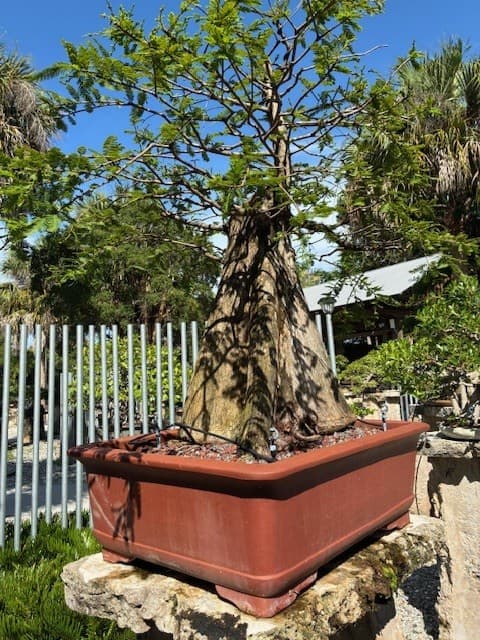
The biggest myth about bonsai is that it is just a tiny tree in a pretty pot. In practice, it is a controlled act of shaping living wood, where roots are pruned, branches are wired, and growth is deliberately limited in a container until the tree reads as age, balance, and presence. The Royal Horticultural Society calls the name itself “tray cultivation,” which is a better description than most people realize: the point is not merely to keep a plant small, but to make scale, proportion, and character feel intentional.
That distinction matters because bonsai is not a species. Britannica describes it as the art of training and growing living dwarf trees in containers, and that wording gets at the real discipline behind the display. A serious bonsai is not a houseplant pretending to be a tree. It is a tree that has been repeatedly edited, guided, and restricted so its silhouette carries the weight of a mature landscape in miniature.
What makes it look like art instead of décor
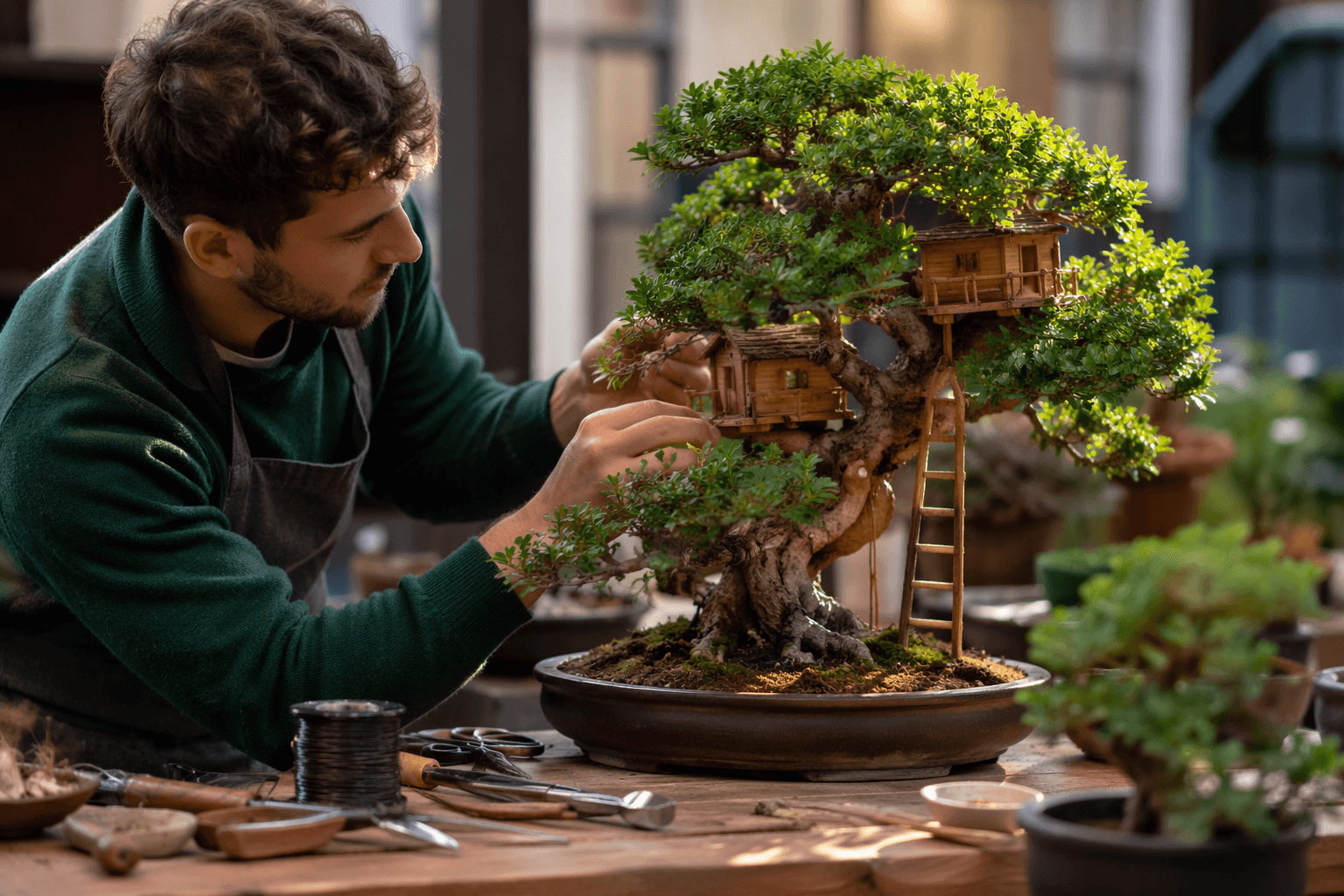
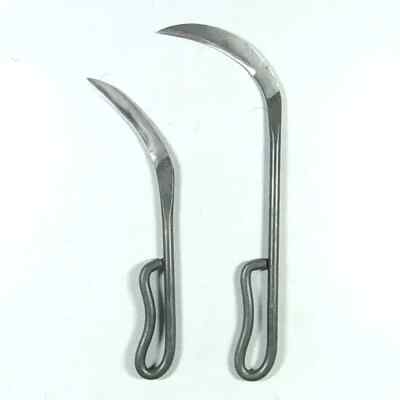
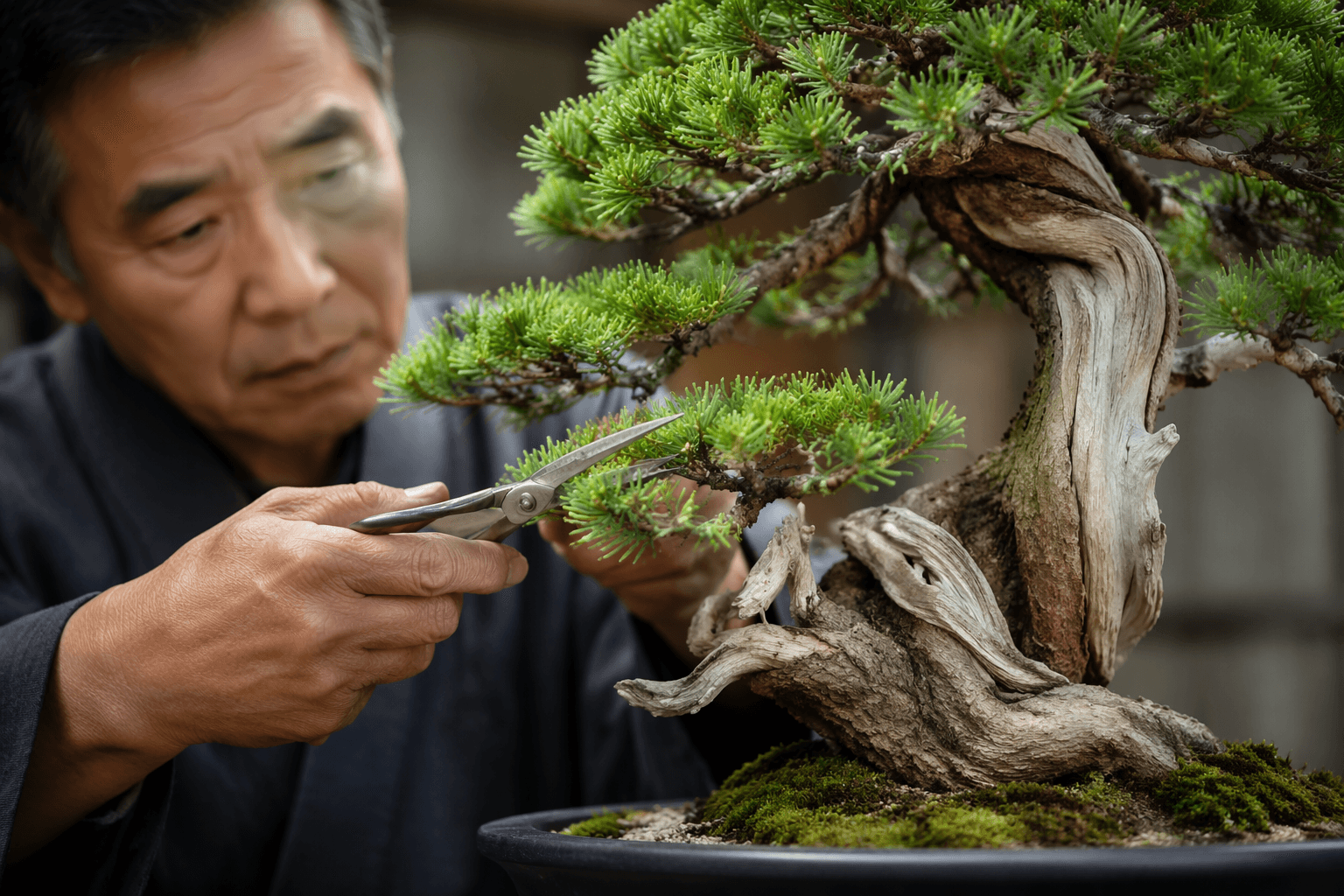
If you want to understand why one bonsai feels convincing and another looks like a mall ornament, start with pruning. The craft depends on cutting roots and branches with a purpose, not just trimming for neatness. Wiring then sets branch direction and movement, while container restriction keeps the tree compact enough for the composition to hold together. Those three moves are what separate living art from something simply sold as a bonsai-shaped object.
The aesthetic principle is restraint. Japanese tradition pushed the form toward naturalistic shapes rather than cartoonish perfection, and that is still the difference that seasoned growers notice first. The tree should suggest weather, age, and struggle without looking overworked. When the branch line is too stiff or the canopy too symmetrical, the illusion breaks immediately.
The practice began long before the word did
Bonsai did not start in a showroom. It comes out of Chinese tree-cultivation traditions more than 1,000 years old, when trees were grown in trays, wooden containers, and earthenware pots and trained into naturalistic shapes. The Metropolitan Museum of Art describes the related Chinese form penzai as a way humans transform nature, which is exactly the right lens for reading the art: bonsai is never just about control, but about turning cultivation into interpretation.
Japan developed the art further, and the word bonsai entered common use in the Meiji period. Japanese sources also note that the practice had already moved beyond elite circles by the end of the Edo period, which explains why bonsai feels both aristocratic and deeply practiced. Art-history sources show it appearing in Japanese visual culture by at least the 13th century, so by the time the modern word settled in, the visual language was already well established.
Living history is part of the appeal
Few horticultural forms carry memory like bonsai does. One famous white pine in Washington, D.C., about 390 years old, survived the Hiroshima bombing and later became part of the U.S. Bicentennial gift collection. That kind of tree changes the way people talk about bonsai, because the object in front of you is no longer just a cultivated plant. It is a survivor, a witness, and a long-running argument for patience.
The National Bonsai & Penjing Museum at the U.S. National Arboretum makes that point in institutional form. Its collection began in 1976 with a gift of 53 bonsai trees from Japan to commemorate the United States Bicentennial, and it now includes more than 300 specimens on rotation. The Arboretum describes it as the world’s first museum dedicated to bonsai, which tells you how far the art has moved from private obsession into a public cultural record.
The community is part of the craft
Bonsai has never been just about one person and one tree. The formal community matters because the art depends on shared standards, technique, and correction, and that support network expanded in the 20th century. Bonsai Clubs International was founded in 1960, and the American Bonsai Society followed in 1967, created by people who wanted a North American society catering to individual needs.
That timeline is important because it shows bonsai as both tradition and infrastructure. Clubs, societies, museum collections, and exhibitions keep the knowledge from collapsing into isolated fashion. They also remind you that bonsai is learned through repetition and critique, not through a single dramatic trim.
What serious bonsai asks of you
If you are approaching bonsai with a decorator’s eye, the first correction is simple: think in years, not weekends. Every major choice, from pruning roots to wiring a branch, is meant to preserve long-term structure rather than force instant prettiness. The tree should look edited, but never punished.
A second correction is just as important: the container is not an afterthought. It is part of the composition, and the restraint it imposes is what gives the tree its miniature authority. Without that pressure, the proportions loosen, the silhouette swells, and the illusion of an old tree in a small world falls apart.
- Pruning should clarify the tree’s story, not flatten it into symmetry.
- Wiring should guide movement, not freeze the plant into a rigid pose.
- Container culture should support the image of age and balance, not just keep the tree alive.
- Naturalistic shape usually reads better than novelty styling, because bonsai works by suggestion.
That is why bonsai still matters as living art. It is not asking you to admire a cute small tree. It is asking you to read discipline, memory, and time in a form you can hold in your hands.
This article was produced by Prism’s automated news system from verified source data, official records, and press releases, then run through automated quality and moderation checks before publishing. The system is built and supervised by the people who set the standards it runs under. Read our full AI policy.
Did this article answer your question?