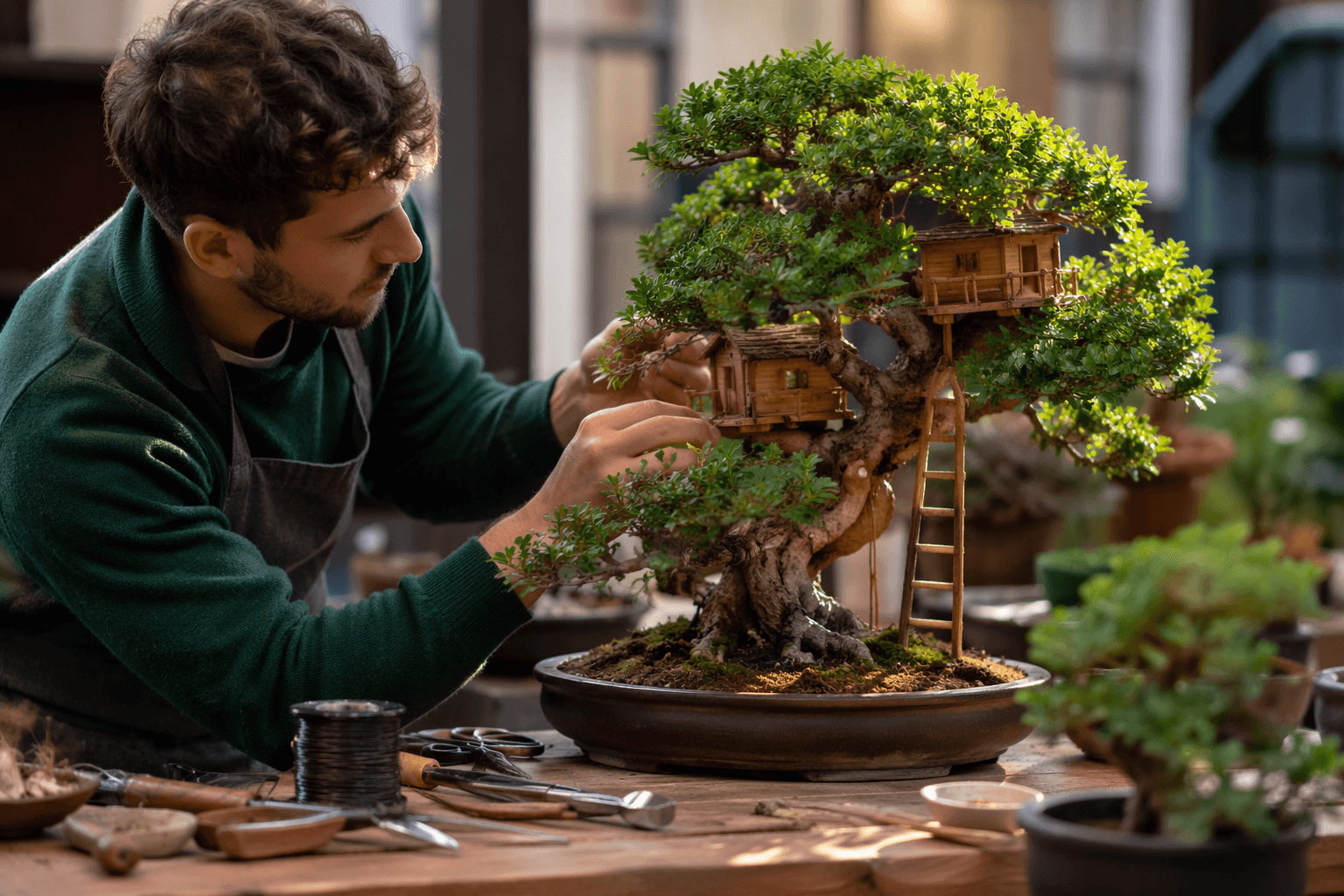
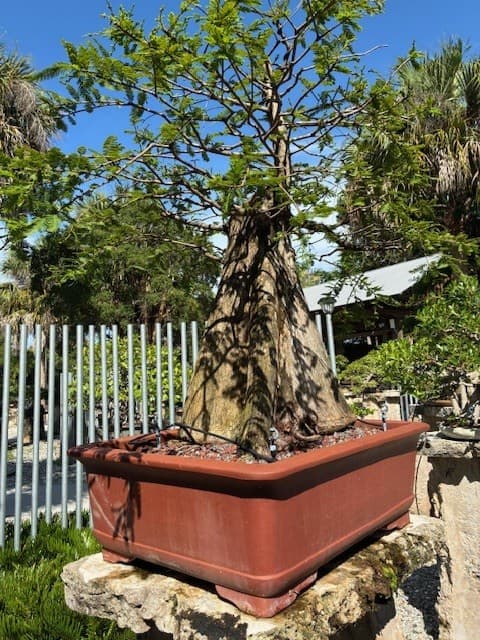
Chennai bonsai exhibition opens with 120 trees, suiseki stones on display
More than 120 bonsai trees and suiseki stones opened a Chennai show under Japan’s consul-general, with demos for students and apartment dwellers.
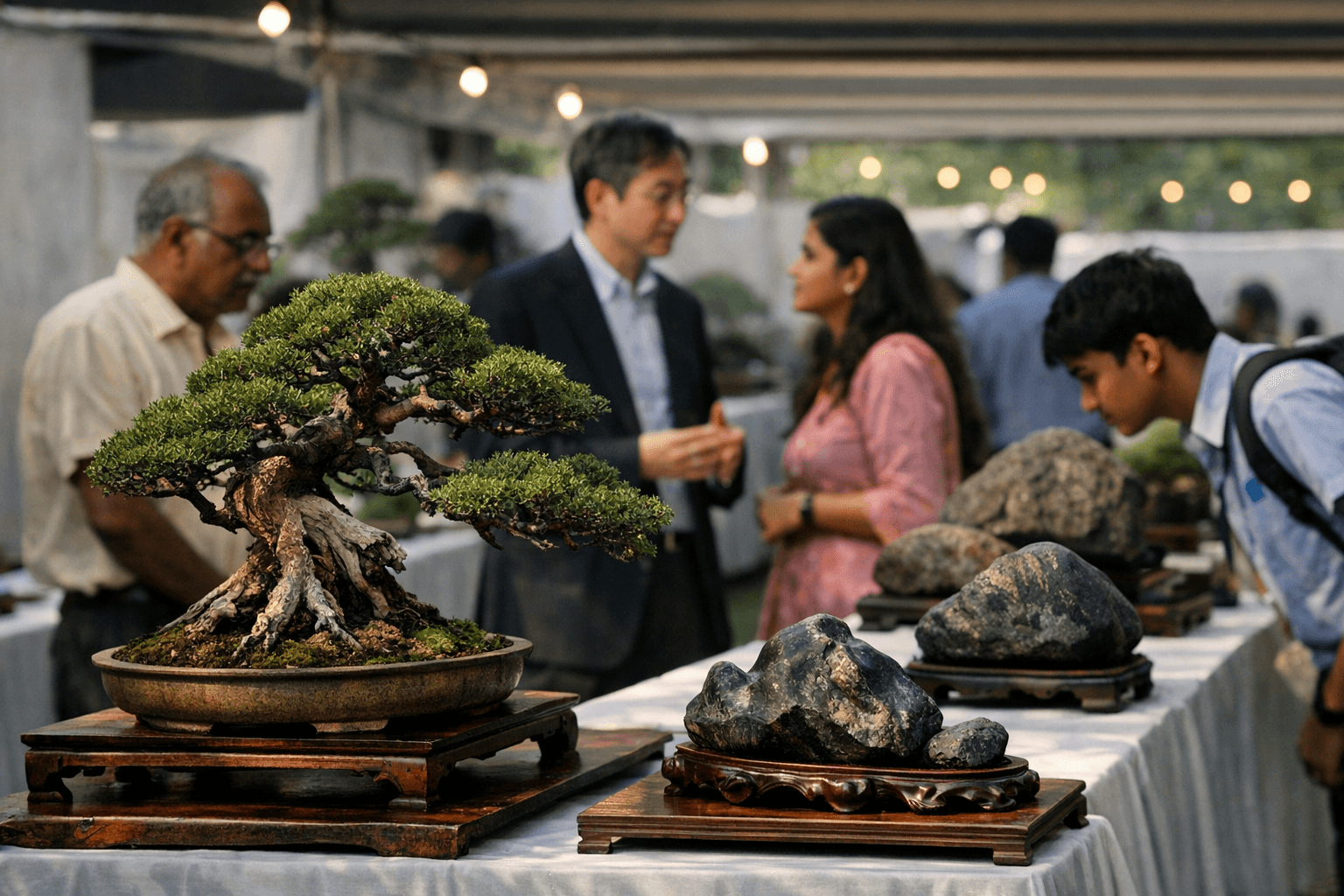
More than 120 bonsai trees and a selection of suiseki stones filled the Indo-Japan Chamber of Commerce & Industry premises in Chennai as the two-day exhibition opened with unusual diplomatic weight. Takahashi Muneo, the Consul-General of Japan in Chennai, inaugurated the show alongside N. Ravi of Kasturi & Sons, with Koichi Takahashi representing the Japanese Association and Michael Hasper, the Consul-General at the German Consulate in Chennai, also present.
The display reached well beyond a simple line of miniature trees. Bonsai made from peepal to fig gave the room a distinctly local feel, while the suiseki stones added the quiet counterpoint that serious bonsai shows depend on. In suiseki, the stone is not filler but subject: a naturally occurring shape chosen for presence, balance and suggestion. Paired with living trees, the stones sharpen the eye, making viewers look more closely at form, texture and the space each object holds.
Takahashi Muneo said he was struck by “the harmonious nature of bonsai plants and the human creativity behind the form,” and added, “I am impressed that we Japanese are learning our culture from India.” N. Ravi described bonsai as “a particular philosophy unique to Japan, which requires patience, dedication, and attention to detail, creating masterpieces of these living plants.” The remarks framed the exhibition as cultural exchange as much as horticulture, with the Japanese diplomat and an Indian media executive speaking the same language of craft, restraint and discipline.
Among the exhibitors was K. Sivaji, a bonsai artist who has been practicing since 1960, giving the Chennai show a line of continuity that stretched across generations. Suguna Ramamoorthy said bonsai is a viable alternative for apartment dwellers with limited space, a point that fits the city well and helps explain why the exhibition leaned into demonstrations for school and college students on April 11 and for the general public on April 12, from 10 a.m. to 6 p.m.
Chennai has seen this kind of cultural crossover before, including a 2022 Japan Expo that paired bonsai with ikebana, calligraphy, origami, martial arts and tea ceremony. This latest showing pushed that conversation further, placing more than 120 trees, stones and a strong diplomatic turnout in the same frame, and giving the city’s bonsai community a public stage large enough to match its ambition.
This article was produced by Prism’s automated news system from verified source data, official records, and press releases, then run through automated quality and moderation checks before publishing. The system is built and supervised by the people who set the standards it runs under. Read our full AI policy.
Did this article answer your question?