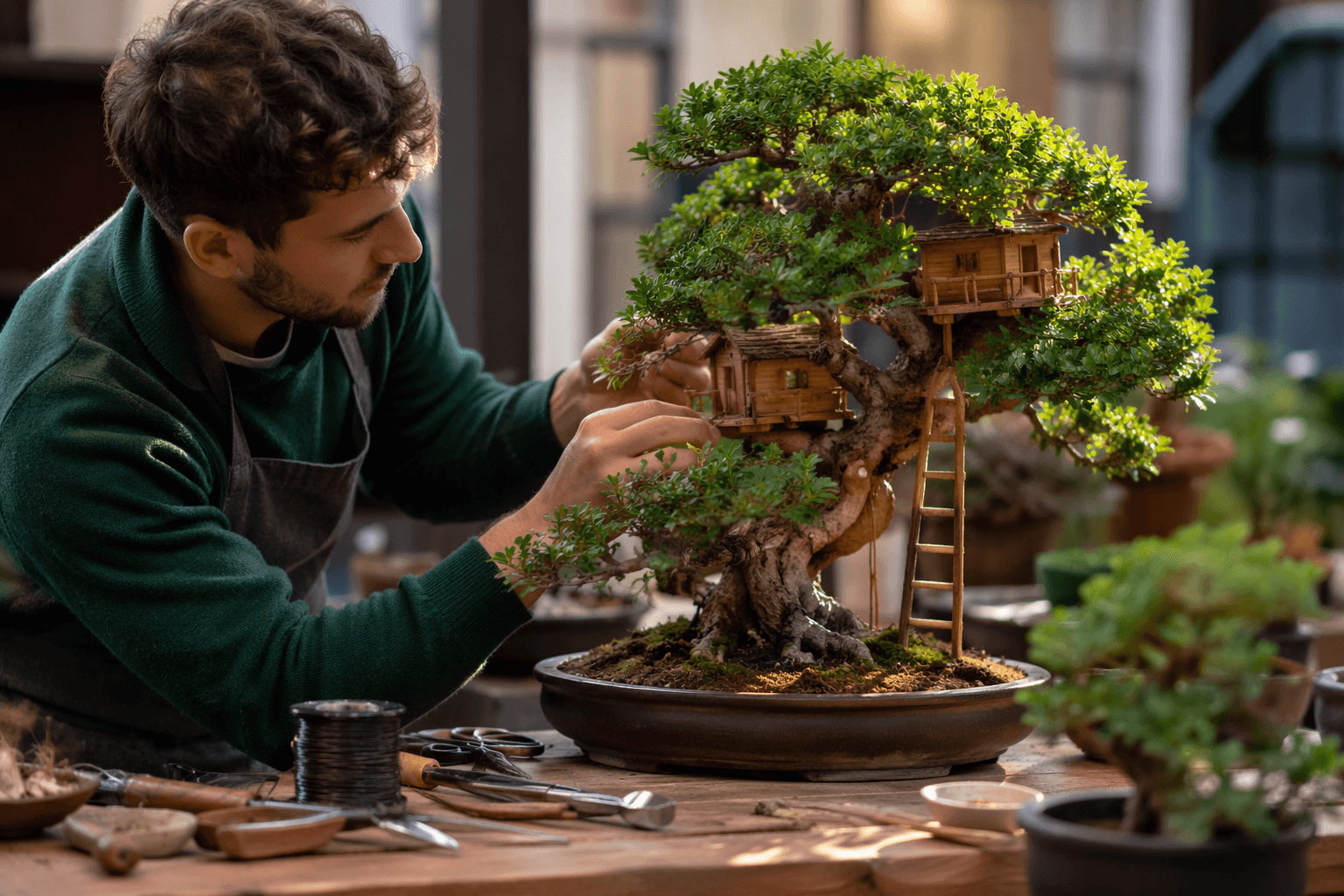
Three Months Testing Reveals Best Premium Japanese Bonsai Tools
Three months of testing put the concave cutter first and the full set last. Clean cuts, long edge life, and the right steel are what actually move a bonsai bench forward.
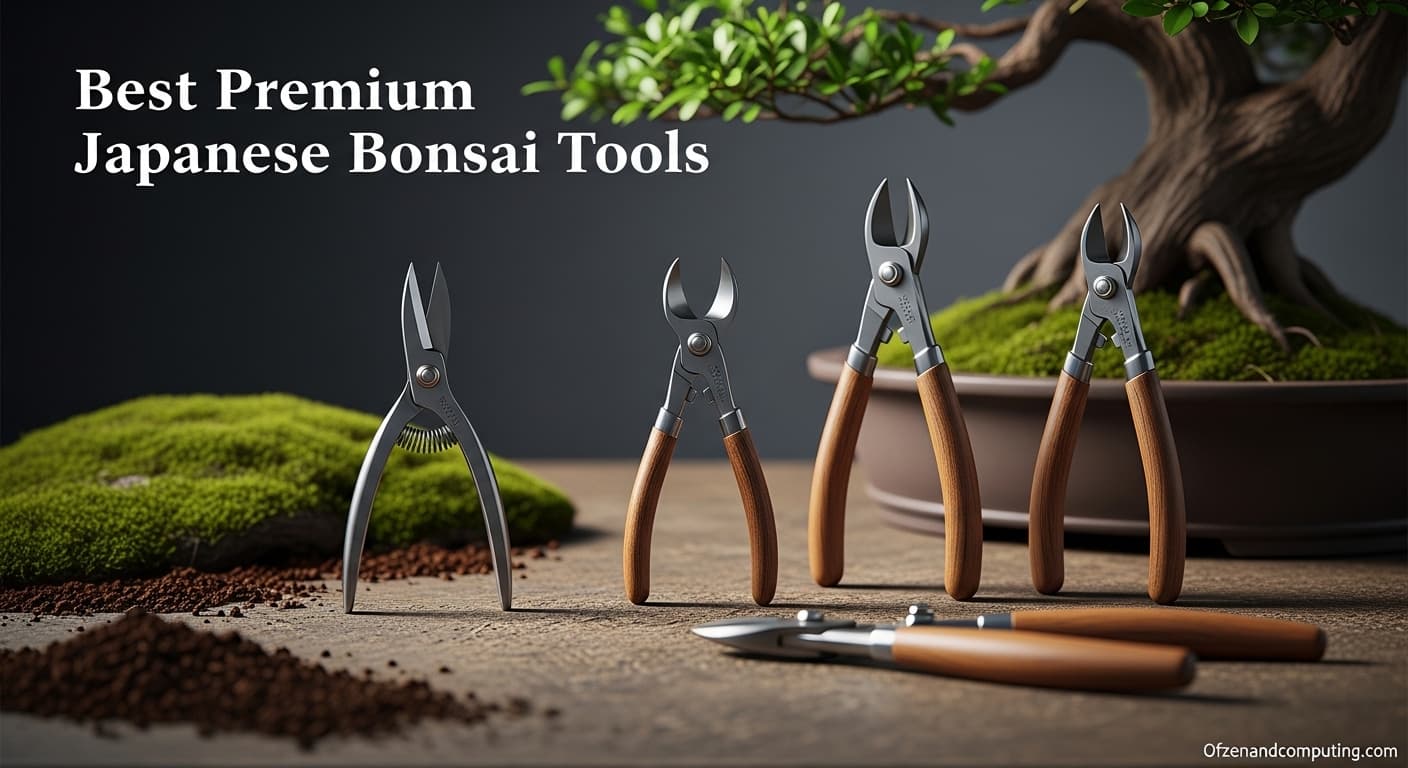
1. Concave branch cutter
This is the first premium buy because it changes the outcome of the cuts that matter most. Bonsai Clubs International notes that the curved blade leaves a hollow wound that heals flush with the trunk, and that is the kind of finish serious trees need when you want scars to disappear rather than advertise the cut.
2. Fine twig scissors
For daily refinement, this is the tool that gets used the most. Three months of handling shohin and mature material showed that the best premium scissors earn their price in edge retention, clean twig trimming, and the way they reduce hand fatigue when you are cleaning a tree repeatedly.
3. Root scissors
Repotting is where premium steel starts paying back immediately. Clean root-work protects feeder roots, speeds recovery, and matters even more on trees that may live for a century or longer, which is why this is one of the first serious tools to buy once your bench grows beyond casual work.
4. Wire cutter
Wire removal looks simple until the tool starts bruising bark. A proper Japanese wire cutter gives you the close, controlled bite needed to remove wire without tearing the surface, which becomes more important as you move from training stock into refined trees.
5. Knob cutter
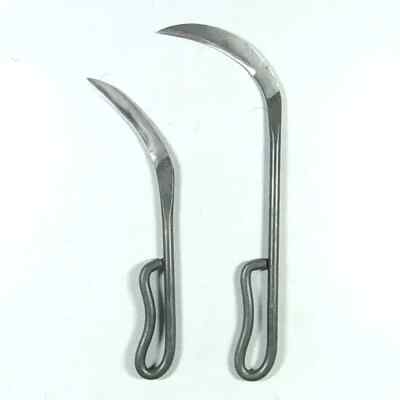
This is the specialist tool for bigger decisions, not everyday maintenance. It comes into its own when you are reducing stubs, working trunk-level bulges, or cleaning up heavier cuts that need a precise hollow rather than a rough chop.
6. Jin pliers
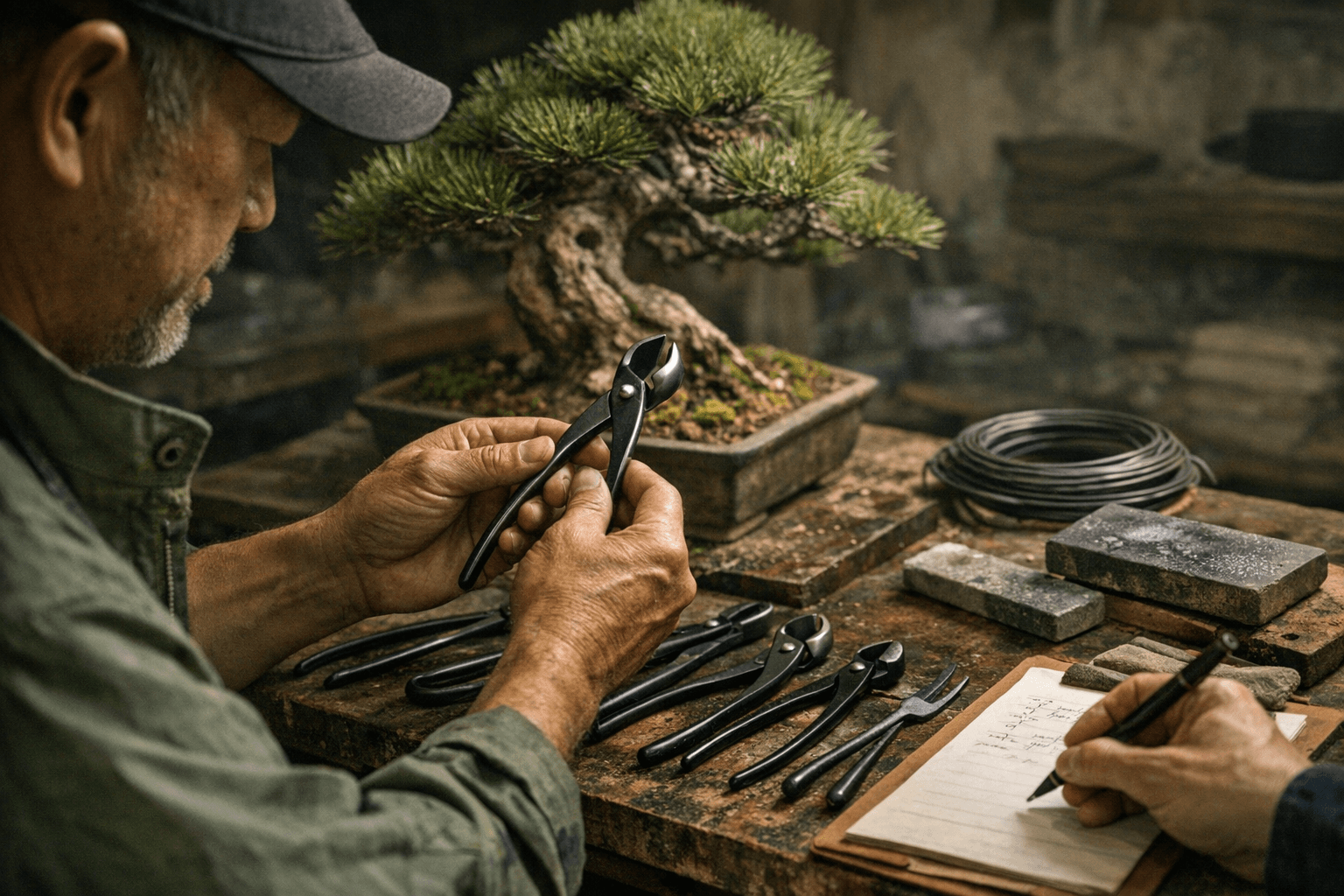
Deadwood work is where jin pliers justify their place. They let you twist, tear, and shape deadwood with control that improvised tools cannot match, but they are still a later purchase unless shari, jin, and aged character are already part of how you work.
7. Pruning saw
Once a branch is too thick for a cutter, the saw becomes the damage-control tool. The premium versions stand out because they cut straighter, hold an aggressive edge, and are kinder to bark on mature specimens than cheaper saws that wander or snag.
8. Long-handled branch shears
Long handles matter when leverage matters. They reduce strain on larger trees, give better reach in awkward places, and make a real difference in workshops or club sessions where the work is heavier and hand comfort starts to shape the quality of the cut.
9. Root rake and chopstick tool
This is not the glamorous buy, but it is one of the most useful in repotting season. It speeds soil removal, untangles roots cleanly, and keeps the root pad organized, which helps when several trees are moving through the bench in one session.
10. Complete premium Japanese set
If you are building a full kit, heritage and support matter as much as the blade shape. The three-month comparison ran across Wazakura, Hanafubuki, Kakuri and other premium lines, and the clearest pattern was that the best tools come from makers who understand metallurgy, heat treatment, and serviceable distribution, not just shiny packaging.
Kaneshin still carries the longest story in the group, with retailer pages tying it to 1919, more than a century of toolmaking, and Masashi Nishimura as the fourth generation of the family business. The guide’s Kaneshin-style benchmark also points back to Seki City and Yasugi-Hagane steel, while Wazakura says it has delivered 100 percent made-in-Japan garden, bonsai, and ikebana tools worldwide since 2019 through artisan workshops in Niigata, Gifu, Aichi, Mie, and Shigaraki.
That is the right lens for buying premium tools in a craft that began in China about 2,000 years ago and can outlive the people who shape it. Bonsai may be passed down for generations, Japan still supports a sizable bonsai industry inside its nursery trade, and even the famous white pine gifted in 1976 that survived Hiroshima and later lived at the U.S. National Arboretum is a reminder that the bench is really about preservation, not just pruning.
This article was produced by Prism’s automated news system from verified source data, official records, and press releases, then run through automated quality and moderation checks before publishing. The system is built and supervised by the people who set the standards it runs under. Read our full AI policy.
Did this article answer your question?