Milwaukee Bonsai Society Plans Kusamono Demo, Auction and Spring Care Tips
Milwaukee’s bonsai calendar turns hands-on fast: Young Choe’s kusamono demo, World Bonsai Day, and Lynden’s summer show all offer real entry points.
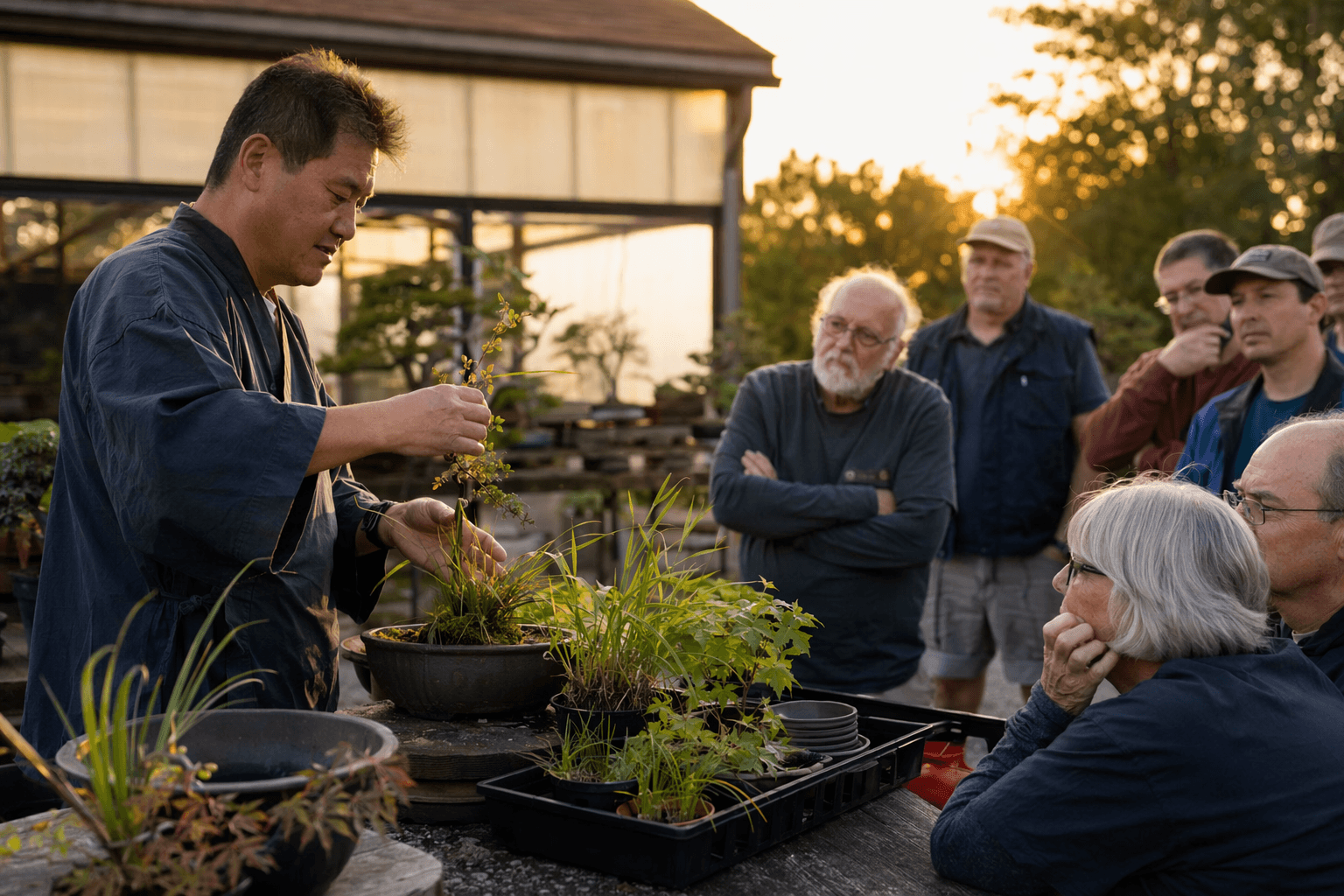
May opens with a kusamono demo that is meant to be watched, learned from, and then carried home in spirit. The Milwaukee Bonsai Society is centering its May 2 general meeting on guest artist Young Choe, a choice that gives the club a strong bridge between art, horticulture, and public-facing bonsai culture. The evening includes a short introduction to kusamono before the live demonstration, then an auction of the finished arrangement, which turns the program into more than a lecture. It also brings in a local potter selling specially made containers designed to match the kusamono work, a useful reminder that pot selection is part of the composition, not an afterthought.
Choe is a particularly fitting artist for that kind of program. She studied traditional art in Korea, earned a BS in horticulture from the University of Maryland, and studied kusamono in Japan with master Keiko Yamane. She has also spent more than 20 years volunteering at the National Bonsai and Penjing Museum, and her background includes work with the U.S. Department of Agriculture and the U.S. National Arboretum. A National Bonsai Foundation interview describes kusamono as the art of curating wild grasses and flowers in unique pots or trays, and Choe’s profile makes clear why she is so often presented as someone who connects the aesthetic and technical sides of the craft.
The practical value of the May meeting is that it shows how a club night can be a complete entry point. You see a live composition come together, hear the basic framing before the demo, watch the finished piece move to auction, and get a direct look at how container choice changes the final presentation. For anyone trying to understand where kusamono fits beside bonsai, this is the easiest on-ramp in the newsletter.
The president’s message gives the rest of the month its horticultural backbone: spring is the season to repot, reevaluate winter survival, and keep an eye on nightly temperatures. That advice matters because it sets the tone for the whole schedule. The club is not treating the calendar as a string of social events alone. It is linking each gathering to the work that needs to happen now, whether that means repotting, checking stock that came through winter, or deciding which trees are ready to be shown.
World Bonsai Day is the clearest public gateway on the schedule. Milwaukee County lists the 2026 event at Boerner Botanical Gardens for May 9, from 9 a.m. to 4 p.m., with live demonstrations at 10 a.m. and 1 p.m. World Bonsai Day is observed on the second Saturday in May and was created in 2010 to honor Saburo Kato’s mission of peace and international friendship through bonsai, so the Milwaukee display lands inside a global celebration rather than a standalone club date. That combination of public garden setting, timed demos, and a full-day window makes it one of the best opportunities for newcomers to see bonsai in an accessible setting.
For a visitor, the appeal is immediate. Boerner Botanical Gardens provides the broader landscape context, while the demo schedule gives the day structure and a reason to stay. For the club, the event also works as a community touchpoint: it connects the society’s work to a bigger bonsai tradition and puts trees in front of people who may never have stepped into a local meeting room. If the goal is to find the easiest place to bring a friend into the hobby, this is the date on the calendar that does the most heavy lifting.
June turns the focus from public introduction to hands-on participation. The Milwaukee Bonsai Society lists a June 6 general meeting with Jennifer Price, along with a repotting workshop for participants from the fall 2025 public workshop series. That detail matters because it shows continuity. The club is not just offering isolated classes, it is following through with people who began learning in the fall and are now ready for practical work at the bench. June 20 brings another beginner-friendly step, a spring ficus workshop aimed squarely at newer students.
Those June sessions are the strongest reminders that Milwaukee’s bonsai scene is built around progression. A general meeting with Jennifer Price gives members a club-night anchor, while the repotting workshop and ficus class translate directly into skills people can use on their own trees. If the May meetings are the public face of the schedule, June is where the technique starts to settle in.
The summer anchor is the annual exhibit at Lynden Sculpture Garden, set for June 26 through 28. The Milwaukee Bonsai Society’s 2026 annual show will have Andy Smith as guest artist and exhibit judge, a strong sign that the club is aiming for both collector interest and public pull. Smith’s reputation is a big part of that appeal. One event listing describes him as the “king” of yamadori in this country and says he transplants roughly 300 to 400 trees each year, which makes his appearance relevant not just to display-tree owners but to anyone interested in collecting and post-collection aftercare.
Lynden’s 2025 show helps explain why the annual exhibit is such a dependable draw. That event featured more than forty trees, plus food trucks, beverages, raffles, and vendors, which means the weekend works as both a show and a community gathering. The 2026 program is set up to continue that model, with Smith judging the exhibit and hosting public workshops related to yamadori and collecting. That combination gives the weekend real range: people can study show trees, hear critique from a major figure in collecting, and still treat the event as a casual summer outing.
The bigger picture is that Milwaukee Bonsai Society is using one newsletter to connect several layers of the hobby at once. Beginners get a kusamono demo, a public World Bonsai Day display, a ficus workshop, and a repotting session. More experienced members get a judge with serious yamadori credentials, a show venue with proven traffic, and a calendar that rewards trees that have been prepared well in advance. The repeated calls for volunteers, display trees, and silent auction support show a club that is not just programming events, but building the infrastructure that keeps them working.
For anyone deciding where to plug in, the path is clear. Start with Young Choe if you want a close look at how plant material and container design come together. Head to Boerner on World Bonsai Day if you want the most public-facing entry point. Then keep June in view for repotting, ficus work, and the Lynden exhibit, where the season’s progress is likely to show up in full.
This article was produced by Prism’s automated news system from verified source data, official records, and press releases, then run through automated quality and moderation checks before publishing. The system is built and supervised by the people who set the standards it runs under. Read our full AI policy.
Did this article answer your question?