Minnesota Bonsai Society workshop teaches beginners to prune, wire, and repot trees
This $95 class hands you a tree, the materials, and a real workflow: prune, wire, repot, then take it home with follow-up care.
A real first step, not a demo
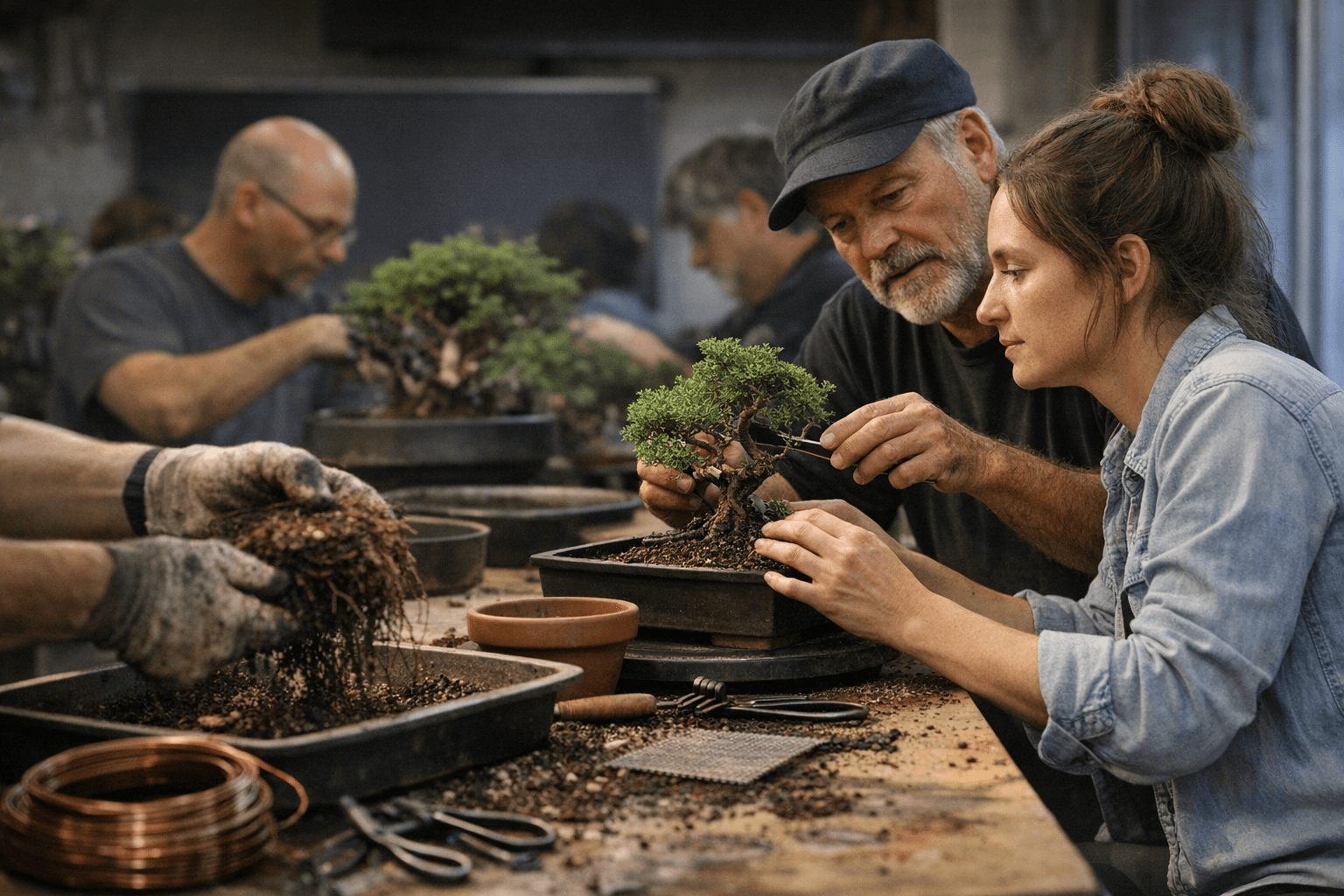
The Minnesota Bonsai Society built its beginner workshop like an actual entry ramp into the hobby, not a feel-good lecture. For $95, you get a hands-on class, a pre-event Zoom session, and all materials provided, then you leave with the bonsai tree you created. That matters if you have always wanted to try bonsai but do not yet own tools, soil, or suitable stock.
The club says it was founded in 1971 to inspire participation and appreciation in bonsai, and it still runs like a working club rather than a passive showcase. It describes itself as an all-volunteer organization, which fits the way this workshop is structured: practical, specific, and designed to get beginners from curiosity to a finished tree without a pile of guesswork.
What you actually do in the workshop
The value of this class is the sequence. You start by selecting a tree, then you learn how to prune it, repot it, and wire it into a bonsai, and you also learn how to care for it at home. That order is the right way to lower the barrier for a newcomer, because bonsai is not one skill, it is a chain of decisions that all affect the tree’s survival and shape.
Pruning shows you where the structure is. Repotting teaches you what is happening below the soil line. Wiring gives you movement and direction. Home care keeps the whole project alive after the class ends. If you have ever felt that bonsai was too easy to admire and too hard to start, this workshop solves that problem by turning the hobby into a clear, guided workflow instead of an intimidating art form.
The pre-event Zoom session is an especially smart part of the setup. It gives you a chance to learn the basics before your hands are on the tree, which helps you avoid the kind of early mistakes that can make beginners hesitate, especially when wiring or handling roots for the first time. By the time you walk into the in-person class, you are not starting cold.
Tree choice is part of the lesson
The Minnesota Bonsai Society does not treat species selection as an afterthought, and that is one of the best things about the workshop. April and September sessions include junipers, July and September can be tropicals, and the September workshop allows either choice. That guidance is practical, not decorative, because it steers you toward trees that fit your climate and your day-to-day life.
Tropicals can be treated as indoor bonsai during winter, which is a real advantage if you live in an apartment or do not have outdoor storage. A lot of beginners get stuck by buying a tree that demands conditions they cannot realistically provide. This workshop avoids that trap by matching the tree to the season and the setup, so you are not guessing whether your first bonsai belongs on a balcony, a bench, or inside by a bright window.
Why taking the tree home matters
The most important detail in the whole workshop may be the simplest one: you go home with the tree. That turns the class from a one-off lesson into the beginning of a practice. You are not just watching someone else make cuts and wrap wire, then trying to recreate it later from memory. You own the result, and you keep working from there.
That is also why the no-cost follow-up care session matters. After you successfully complete the beginner workshop, you can sign up for Beginner 2.0 at no extra cost. In bonsai, the first repotting and the first weeks after styling are when a lot can go wrong, so a follow-up built into the program is not a bonus feature, it is part of making sure beginners do not leave with a tree they do not know how to maintain.
Part of a bigger learning pipeline
The beginner class is only one piece of a larger education path at Minnesota Bonsai Society. The club says it hosts master bonsai artists each year for programs and workshops, and its Bonsai Concepts program was created to help members develop skills through classroom sessions paired with hands-on instruction. That combination is what serious bonsai education looks like: theory, then repetition, then correction.
Membership makes that pipeline easier to access. A one-year membership costs $50 for up to two members of the same household, and members get access to all MBS functions and activities. If you and someone in your home are both interested, that is a relatively low-cost way to stay plugged into the club’s broader calendar instead of treating bonsai as a one-time experiment.
The club’s 2026 beginner workshop listings make the demand clear. Those workshops were scheduled at Washington County Fairgrounds in Lake Elmo, Minnesota, and several of the April sessions were already marked sold out. That is a useful signal for anyone who keeps putting off the first step: the class is popular because it is built to remove friction, not because it wraps the hobby in mystique.
How MBS fits the wider bonsai world
Minnesota Bonsai Society is not the only group leaning into hands-on instruction and practical aftercare. The American Bonsai Society also offers workshops in which tree material is included in some classes, along with practical aftercare. That broader pattern says something important about where bonsai education works best: people learn faster when they are handed material, shown the sequence, and given a way to continue after the class ends.
That is exactly what makes the Minnesota model so effective for beginners. You get a tree, you get the materials, you get the technique, and you get a follow-up path. Instead of spending your first weeks collecting advice and gear, you spend them actually doing bonsai. For anyone who has waited for the right moment to start, this is the cleanest possible entry point.
This article was produced by Prism’s automated news system from verified source data, official records, and press releases, then run through automated quality and moderation checks before publishing. The system is built and supervised by the people who set the standards it runs under. Read our full AI policy.
Did this article answer your question?