Tacoma bonsai studio turns beginners into tree stylists
Bonsai Bai Me in Tacoma makes bonsai feel approachable: pick a small tree, shape it yourself, and leave with a living project instead of a classroom lecture.

A bonsai studio built to take the fear out of bonsai
The first smart thing Bonsai Bai Me does is strip away the museum-glass mystique. In Tacoma, inside a historic building, Preston Sonntag and McKenna Sonntag have built a studio experience that makes bonsai feel hands-on, social, and reachable for people who have never wired a branch in their lives. Instead of presenting bonsai as a rarefied art reserved for experts, they turn it into something you do with your own hands and take home alive.
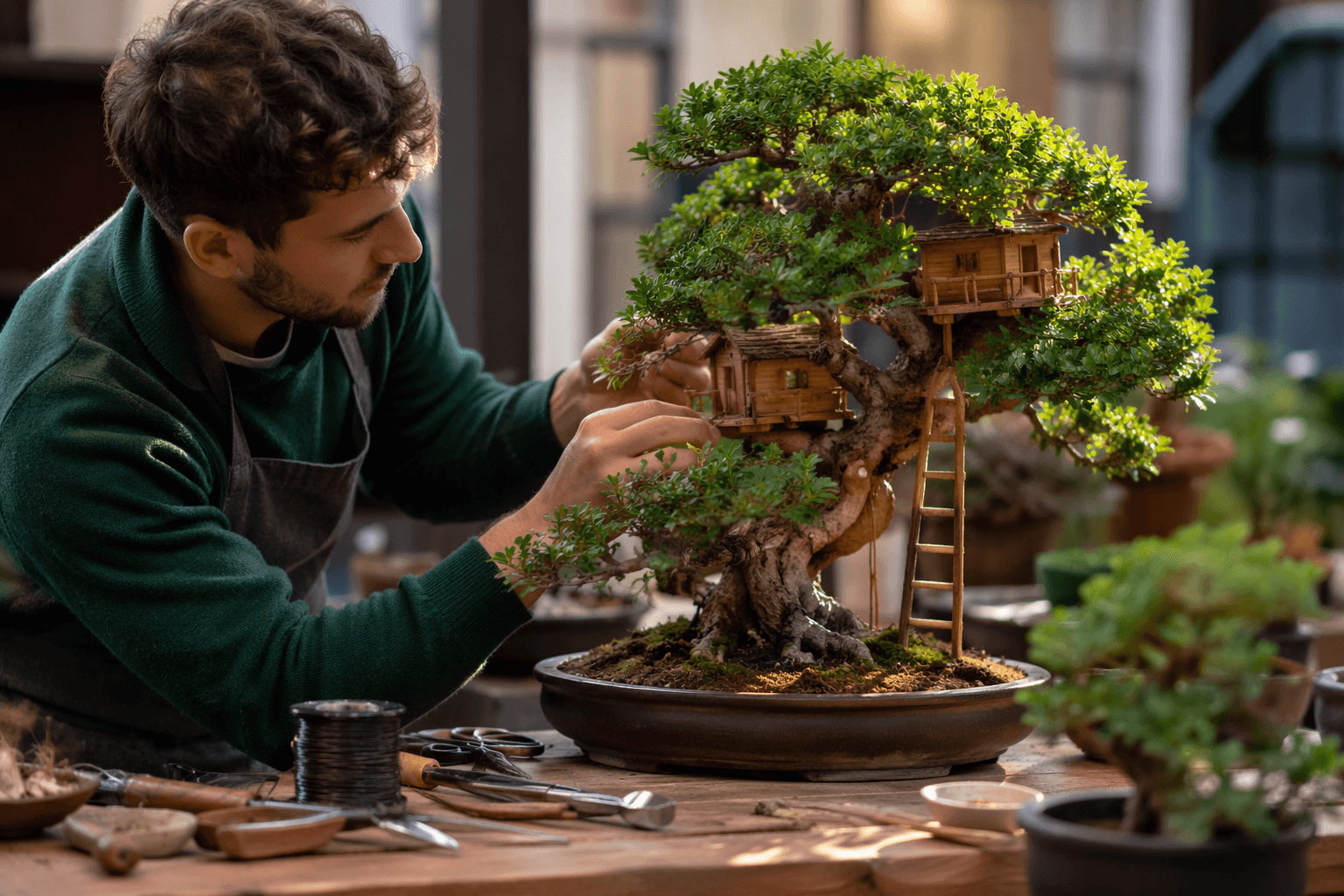
That matters because the usual bonsai experience can feel intimidating before you even touch a tree. Bonsai Bai Me flips that script. Guests choose a small tree and a container, then work through transplanting, trimming, and styling with guidance. The point is not to watch somebody else perform the craft. The point is to participate in it, and to leave with a tree you helped create.
What the experience actually looks like
The model is simple, and that simplicity is the appeal. You start by selecting a tree and a pot, then move into the core steps that define the hobby: repotting or transplanting, pruning, and styling. That sequence matters because it gives newcomers a real bonsai workflow without dumping them into a pile of jargon or a wall of tools.
There is a practical lesson built into every step. Transplanting shows how roots and container size shape the tree’s future. Trimming teaches restraint, because bonsai rewards decisions that look careful rather than dramatic. Styling turns the whole exercise into design, not just gardening. By the time you finish, you are not holding a souvenir. You are holding a live tree with a direction.
What makes that especially useful for beginners is the scale. A small tree is less intimidating than a big nursery specimen, and a guided container choice reduces the chance of making a bad first call. That lowers the barrier without sanding off the real techniques. It is still bonsai, just translated into a format that does not punish inexperience.
Why this is different from the bonsai stereotype
Bonsai often gets framed as delicate, slow, and a little forbidding. Bonsai Bai Me keeps the patience, but drops the distance. The studio’s setup is social rather than solitary, and that changes the whole tone of the practice. When you are learning beside other people, asking questions while your hands are in the soil, the work feels less like a test and more like a shared build.
That social format is a big reason the studio reaches beyond the usual bonsai crowd. Couples show up. Families show up. Corporate groups show up. In other words, this is not being sold only as a niche collector’s hobby or a club meeting with a steep learning curve. It works as a date-night activity, a family outing, or a team-building session because the format is structured enough to guide non-experts, but tactile enough to feel real.
The studio also gets one essential thing right: bonsai is not a quick craft project. The tree you leave with is the beginning of a long relationship. It may be shaped over decades and even generations, which is where the hobby stops being a novelty and starts becoming stewardship. That perspective is what separates bonsai from a one-off workshop. You are not finishing a product. You are entering into a process.
The Sonntags built this from teaching, not marketing
Preston Sonntag and McKenna Sonntag did not start with a polished retail concept and then add a class on top. They started teaching informally in a one-bedroom apartment while they were in college, then turned that early enthusiasm into a workshop business. That origin story explains a lot about the studio’s feel. It was built from repetition, teaching, and hands-on learning before it became a destination.
That background also helps explain why the business now travels well beyond a single audience. The Sonntags have locations in Utah as well, which suggests a model that can scale without losing the core experience. The backbone is still the same: guide the process, keep the entry point small, and let the tree do the teaching.
For anyone who has watched bonsai get treated like an elite specialty, that matters. A studio like this does not water down the practice. It changes the doorway into it. Instead of insisting that newcomers first absorb years of rules, Bonsai Bai Me lets them begin with a tree, a pot, and a set of guided choices.
The philosophy behind the styling
Underneath the hands-on format is a Japanese aesthetic sensibility that runs through bonsai culture, including an appreciation for imperfection and the beauty of an unfinished work. That idea is easy to talk about in the abstract and harder to actually build into a beginner session. Bonsai Bai Me seems to make it concrete.
A tree in progress is not a failure case here. It is the point. The uneven line, the open space, the work still ahead, all of that belongs in the experience. That is a healthier message for newcomers than the fantasy of instant perfection. It teaches people to see bonsai as horticulture and design together: roots, pruning, balance, patience, and restraint all operating at once.
That framing is especially important in a region like the Pacific Northwest, where the hobby already has serious depth and a strong community base. A welcoming studio does not replace clubs, collections, or exhibitions. It widens the funnel. People who start with a guided session may later move toward more advanced work, but they do so without having been scared off at the start.
Why Tacoma’s model works
Bonsai Bai Me’s real innovation is not that it makes bonsai easier. It makes bonsai legible. The studio shows newcomers what the work actually is, and it does so in a setting that feels communal instead of exclusive. You get soil under your nails, a tree in your hands, and enough structure to leave with something meaningful rather than a half-understood demonstration.
That is why the Tacoma studio stands out. It takes a hobby that people often imagine as intimidating and rarefied, then rebuilds the first step around participation. For a beginner, that changes everything. Instead of wondering whether bonsai is beyond you, you are already styling the tree.
This article was produced by Prism’s automated news system from verified source data, official records, and press releases, then run through automated quality and moderation checks before publishing. The system is built and supervised by the people who set the standards it runs under. Read our full AI policy.
Did this article answer your question?