Teppei Kojima Reimagines Bonsai for a Younger, Stylish Audience
Teppei Kojima turns bonsai into design culture, pairing streetwear cues with disciplined trees. That shift could change what younger buyers bring home.
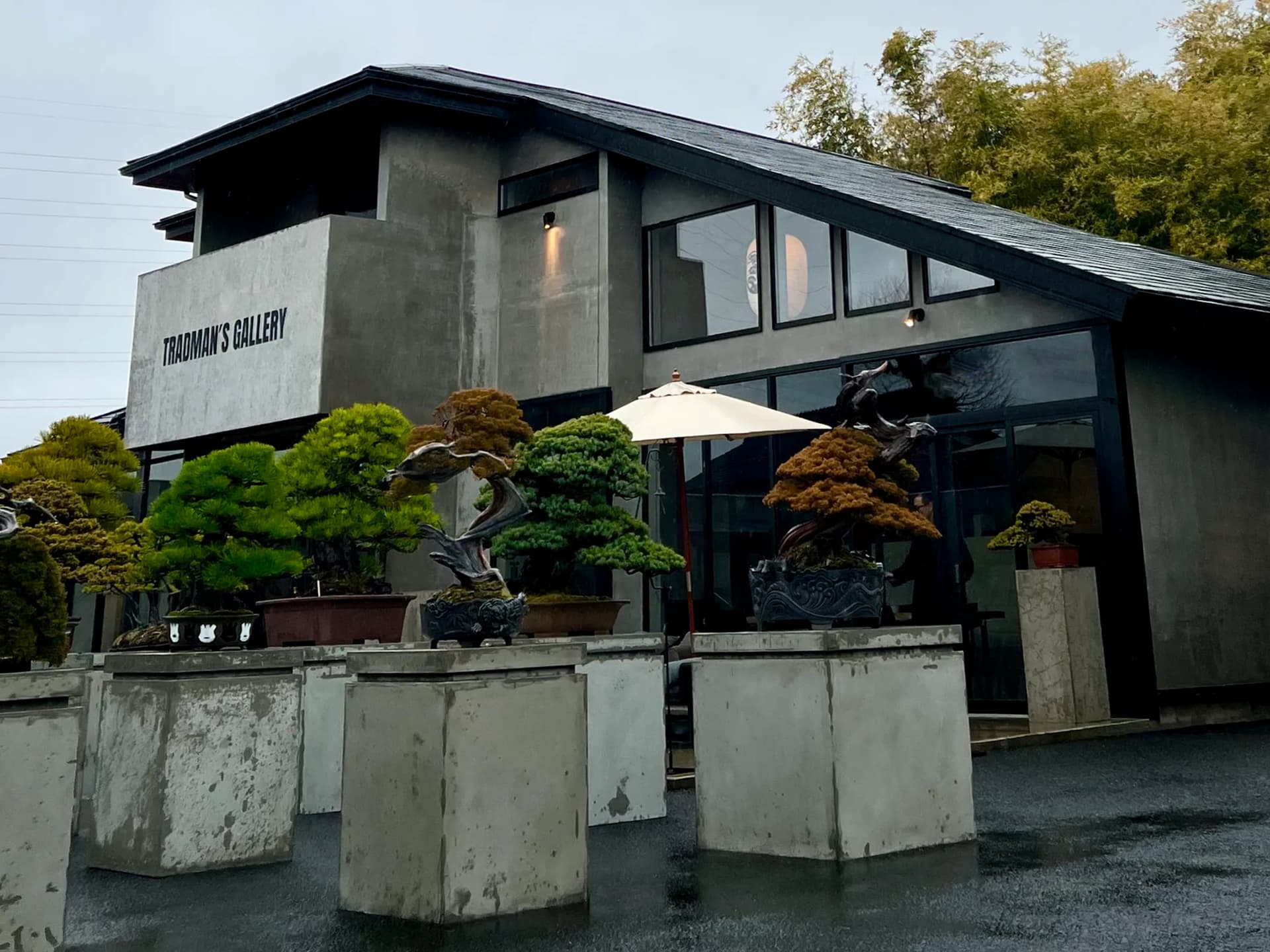
A 1,300-year-old art form is getting a streetwear-era reset in Teppei Kojima’s hands. At Tradman’s Bonsai in the Japanese countryside, he stages trees on modern pedestals and treats silhouette, texture, and line like the language that makes bonsai legible to a younger crowd.
Kojima’s point of view is the story
What makes Kojima stand out is not only that he founded Tradman’s Bonsai in 2015, but that he came to bonsai through fashion and buying. He spent part of his earlier career as a buyer and traveled internationally, where he noticed that bonsai displayed overseas did not always feel like the trees he knew in Japan. That gap became the basis for his brand: present bonsai with authenticity, but do it in a way that feels current, polished, and culturally fluent.
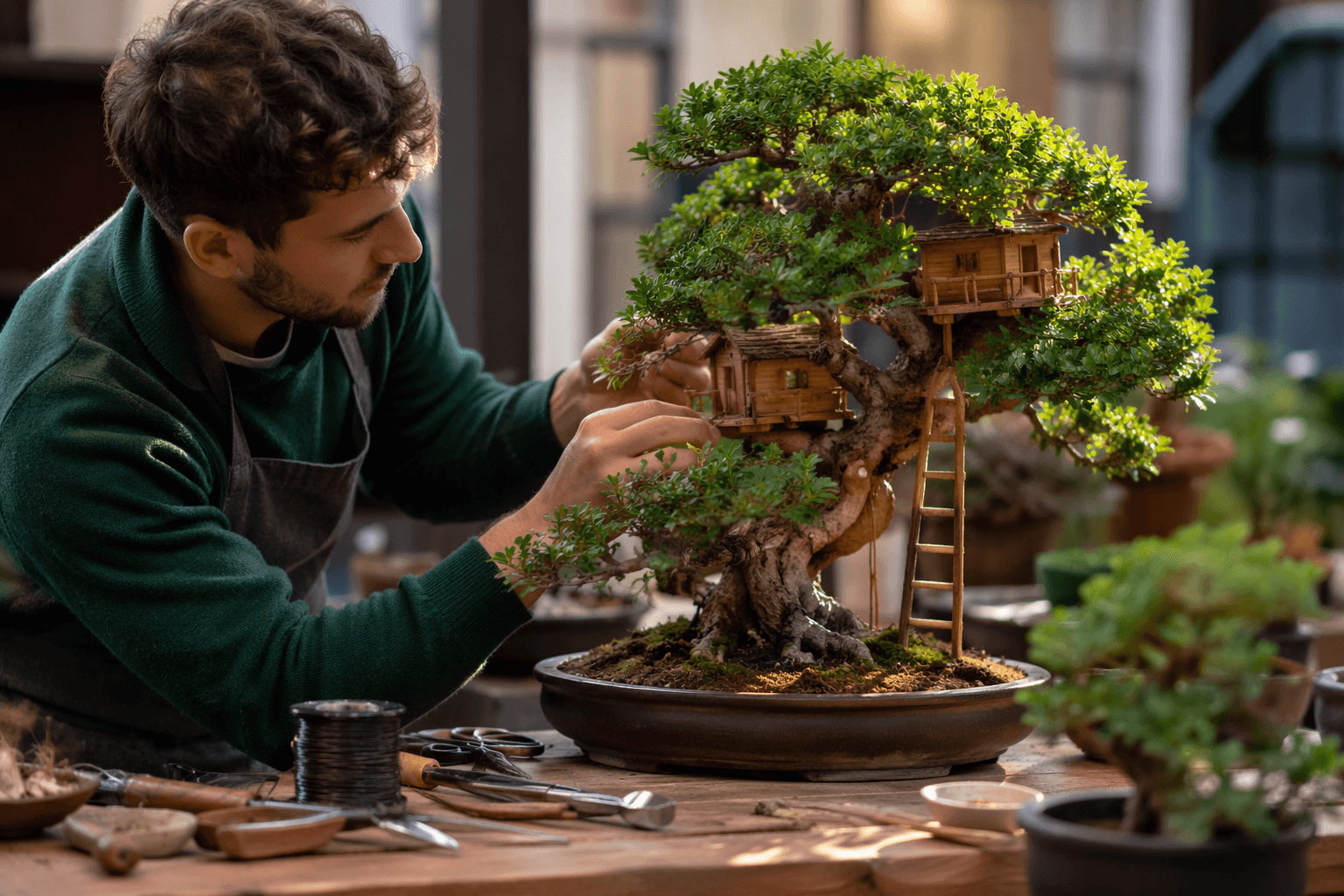
You can see that thinking in the way he works. The profile places him in the workshop with shears in hand, cutting a small evergreen while rows of trees sit neatly arranged outside the walled compound. The setting matters. It signals control, discipline, and curation, but also a clean visual identity that feels closer to a design studio than a dusty collector’s room.
Why the visual language matters now
Kojima’s approach is not about softening bonsai. It is about giving it a different frame. Tradman’s presents itself as a company that shares traditional Japanese bonsai with the world while embracing innovation through street culture, fashion, and art, and that mix explains why the trees read differently under his eye.
The cues are easy to spot:
- Modern pedestals instead of purely traditional staging
- Clean architectural backdrops that let the tree’s line stand out
- Branding that sits comfortably near luxury and streetwear
- Social presentation that makes the tree feel ready for photography, interiors, and display
That matters because younger buyers often meet bonsai first as an image, not as a club culture. Kojima seems to understand that a tree has to look good in a room, on a feed, or beside other design objects before it will ever become part of a longer practice. For readers, that changes the buying mindset: the question is no longer only species, age, and trunk movement. It is also how the tree holds space.
The market gap Kojima is trying to close
This shift is not happening in a vacuum. The National Bonsai Foundation has said that in Japan, young people often see bonsai as a hobby for the elderly and the rich. A 2024 Yomiuri report described distributors selling miniature bonsai for beginners specifically to attract younger interest. Kojima’s strategy fits that same pressure point, but with a more design-forward answer.
Rather than chasing novelty for its own sake, Tradman’s has leaned into collaborations that make bonsai feel present in contemporary culture. Recent profiles say the company has worked with Jimmy Choo, A Bathing Ape, Cartier, Nike, Dior, shu uemura, and RIMOWA. Those names tell you a lot about the intended audience. Kojima is positioning bonsai where luxury, streetwear, and art meet, which makes the trees feel less like a museum object and more like a living design element.
For your own home, the practical effect is significant. A bonsai that feels contemporary is often one that is displayed with more intention, not more clutter. The stand, pot, background, and negative space all become part of the composition. If you have ever felt that bonsai should look as good on a side table as it does on a display bench, Kojima is speaking your language.

Bonsai has reinvented its presentation before
Kojima’s push may feel modern, but the art form has always carried a history of reinvention. The Japan Bonsai Association traces bonsai back about 1,300 years to China, and says the practice became popular beyond elites in Japan during the later Edo period. That is an important reminder: bonsai has never belonged to one fixed social class or one frozen visual code.
The institutional milestone came in 1934, when the first Kokufu Bonsai Exhibition was held at the Tokyo Prefectural Art Museum, now the Tokyo Metropolitan Art Museum. That exhibition helped formalize bonsai as an art worthy of public presentation, not just private cultivation. Kojima’s work sits in that same lineage of presentation, except his audience is shaped by street culture, branding, and contemporary interiors rather than only formal display conventions.
The wider international story reinforces that sense of continuity. The National Bonsai & Penjing Museum in Washington, DC bills itself as the world’s first and finest bonsai museum, and Japanese bonsai gifts formally presented to the U.S. National Arboretum in July 1976 helped establish the collection. Bonsai has always moved between private homes, elite spaces, public exhibitions, and institutional preservation. Kojima is simply steering it into a new visual era.
What this means when you buy and display a tree
Kojima’s work offers a useful lens for your own purchases. If you are drawn to the way bonsai now overlaps with design culture, start thinking like a curator rather than a collector. The tree still matters first, but the presentation now carries real weight.
When you shop, pay attention to:
- Silhouette, because strong line reads instantly in a modern room
- Texture, because bark, foliage, and pot surface add visual depth
- Scale, because smaller trees can feel more approachable for first-time buyers
- The stand or shelf, because elevation changes how the tree speaks in a space
- The mood of the whole display, because bonsai now competes with furniture, ceramics, and art objects
That does not mean abandoning tradition. It means understanding that a well-made presentation can pull new people into the craft without diluting it. Kojima’s insight is that presentation can widen the audience while technique keeps the work honest. He is not trying to make bonsai trendy; he is making it readable to a generation that already lives with design as part of everyday life.
A craft that stays rooted while its audience changes
Kojima’s real contribution is bigger than style. He is showing that bonsai can speak in a contemporary register without losing discipline, patience, or respect for its Japanese roots. In a field with deep history, formal institutions, and a long record of adaptation, that is not a gimmick. It is the next step in how the art reaches people.
For readers, the takeaway is simple: the tree in front of you may still be ancient in spirit, but the way you frame it, buy it, and live with it can be entirely of this moment.
This article was produced by Prism’s automated news system from verified source data, official records, and press releases, then run through automated quality and moderation checks before publishing. The system is built and supervised by the people who set the standards it runs under. Read our full AI policy.
Did this article answer your question?