Upside-down photos help bonsai growers spot design flaws
Flip a bonsai photo upside down and the design mistakes pop: hollow spaces, runaway branches, and weak counterbalance show up fast.
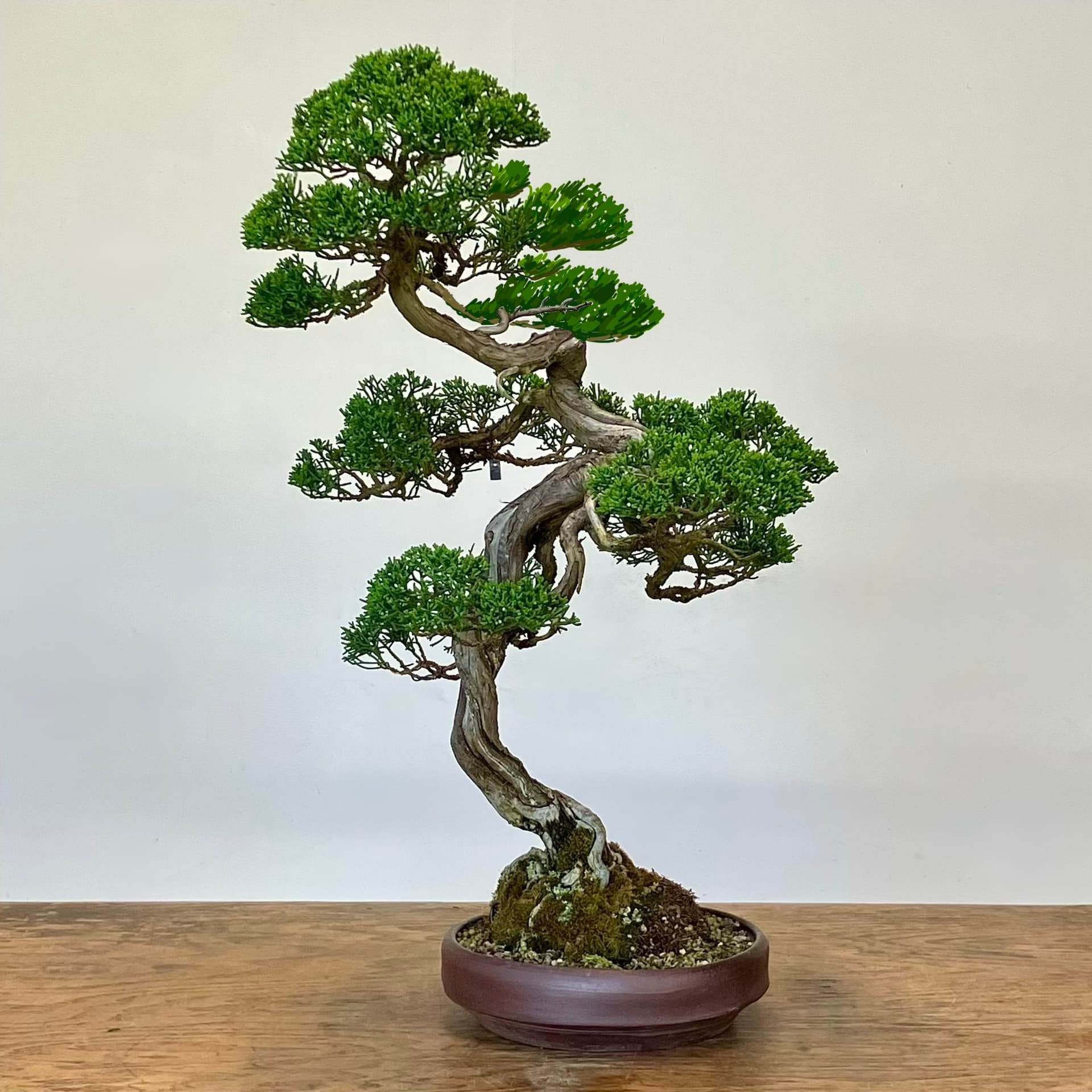
A phone photo can do what your eyes, already loyal to your original plan, often cannot. Turn the image upside down and the tree stops reading like a bonsai for a second, which is exactly why Michael Hagedorn’s trick exposes balance problems so quickly.
Why the upside-down view works
Hagedorn’s method starts with a familiar problem from drawing faces from photographs: the brain likes symbols more than relationships. Once you think you know what you are looking at, you stop measuring the spaces between parts and start filling in the idea of the thing. Bonsai can trigger the same shortcut, because you already know where you meant the apex to sit, which branch was supposed to carry the weight, and what angle you thought the trunk should hold.
That is where the upside-down photo earns its keep. The flipped image interrupts the brain’s habit of saying, this is a bonsai, and pushes you back to basics, mass against void, branch against branch, foliage against open space. In Hagedorn’s hands, the method is not abstract theory. It is a quick way to see whether the composition actually holds together once the tree is stripped of the assumptions you bring to the bench.
When to use the photo test
The best moment is right after a styling change that affects the tree’s read in space. Hagedorn’s example was a juniper that had just been repotted at a new leaning angle, and that shift was enough to upset the balance of the design. That is exactly the kind of moment when a photo test is worth doing, because a tree can look convincing in person while still carrying a hidden imbalance.
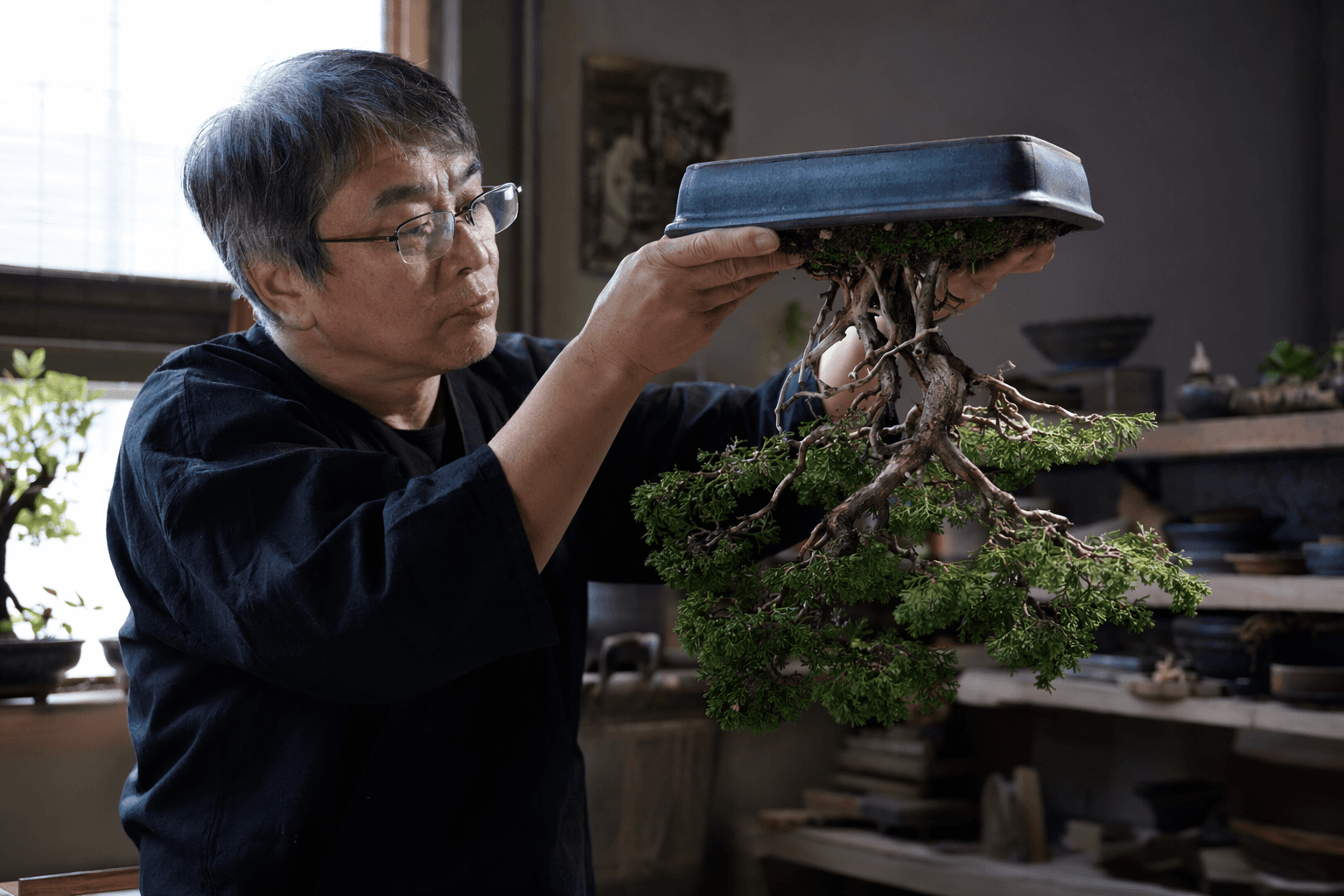
Use the test at these points in the process:
1. Right after repotting, especially if the tree has been given a new lean.
2. After major branch work, when the silhouette has changed but your eyes still remember the old shape.
3. Before you commit to a final cut, when you want a clean read on what the design is saying.
4. At the end of a session, when you want to check whether the tree still feels balanced after you have been staring at it for too long.
The point is not to replace your eye. It is to reset it. A photo gives you a second look, and an upside-down photo gives you a better one because it slows down the recognition reflex that usually gets in the way.
What the flipped image reveals
In the juniper example, the upside-down view made several flaws easier to see at once. A hollow area in the structure became obvious. A branch that had seemed acceptable in person suddenly read as too long. Foliage that was supposed to balance the composition no longer carried enough visual weight to counter the rest of the silhouette.
That is the real value of the method. Bonsai is an asymmetrical art form, so balance is rarely a matter of mirror symmetry or neat geometry. It is a conversation between trunk movement, branch placement, empty space, and the direction the eye is pulled around the tree. When you are standing directly in front of your own work, and especially when you know exactly what you intended, those relationships are easy to misjudge.

A flipped photo helps you spot problems that are easy to miss in the moment:
- a branch that runs too long and pulls attention away from the rest of the design
- a hollow side that needs more structure or a different branch choice
- foliage pads that no longer counterweight the trunk line
- a silhouette that feels unbalanced after a repot or re-tilt
- missing visual mass where the tree should feel anchored
That is why the method is so useful after a repot. A new angle can improve movement and drama, but it can also expose a weak side of the composition that the original orientation disguised. The upside-down check catches that before the next round of styling bakes the problem in.
Why this fits bonsai practice, not just photography
This is not a gimmick borrowed from outside the hobby. Bonsai reference material treats balance, proportion, trunk movement, and branch structure as central concerns, and Virginia Tech’s bonsai guide lays out common styles such as formal upright, informal upright, slanting, cascade, and semicascade. Those styles are judged by how the tree slants relative to an imaginary vertical axis, which makes visual balance a structural question, not just a matter of taste.
Bonsai Empire frames styles as guidelines rooted in circumstances in nature, which is another way of saying that the tree has to read convincingly as a living composition, not just as a collection of branches. That is why the upside-down photo is so effective. It tests whether the tree still feels coherent when you remove the emotional attachment to the styling plan and look only at the relationships on the page or screen.
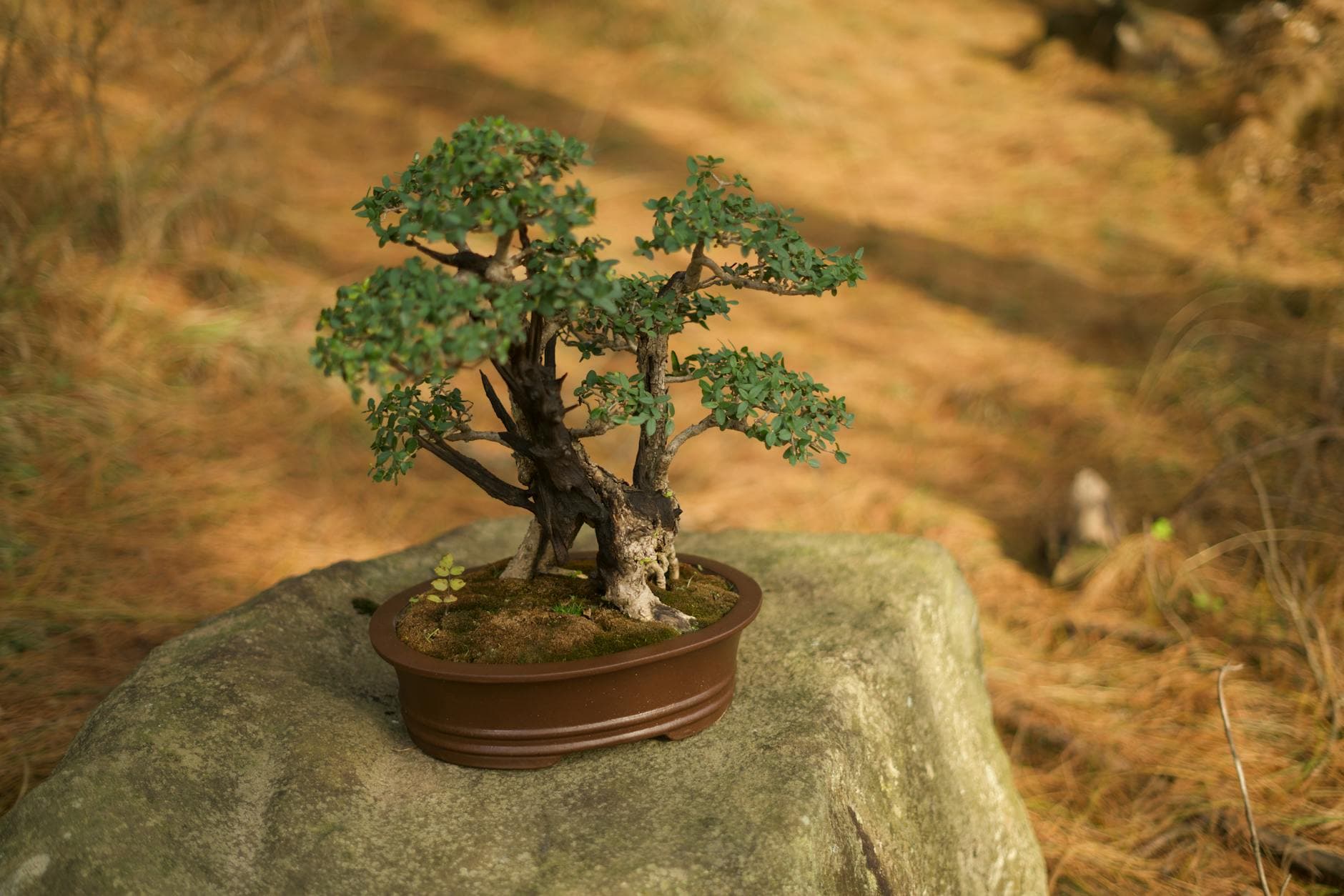
Photography already has a place in the hobby’s culture. The National Bonsai Foundation maintains a Photographing Bonsai category that treats photography as part of bonsai appreciation and development over time. Bonsai BCI has also published guidance on photographing bonsai trees and viewing stones, and it has described computer-based virtual styling and restyling as another tool for artists. Hagedorn’s technique sits comfortably inside that tradition. It is simply a faster, cheaper way to ask the same question: does the design actually work?
A simple before-and-after check
Think of the juniper like this. Before the flip, the repotted tree looked like a thoughtful adjustment, with a new lean intended to improve its presence. After the flip, the composition exposed a hollow pocket, a branch that reached too far, and foliage that failed to balance the rest of the canopy. The tree had not changed, but the reading of the tree had.
That is the practical promise here. You do not need special software or a critique session to get the benefit. A phone camera is enough, and if you are working without one, Hagedorn offers a no-tech fallback: tilt your head and give yourself a fresh look at the tree. The phone is better, but the habit is what matters. Over time, the upside-down check trains your eye so you catch weak counterweights, missing pads, and awkward proportions earlier, before they harden into the next styling decision.
The goal is not to make every tree symmetrical or polished beyond its nature. It is to make sure the design still reads clearly when your own expectations are removed from the frame. Turn the photo over, and the tree tells the truth faster.
This article was produced by Prism’s automated news system from verified source data, official records, and press releases, then run through automated quality and moderation checks before publishing. The system is built and supervised by the people who set the standards it runs under. Read our full AI policy.
Did this article answer your question?