Vienna bonsai workshop teaches beginners to shape and care trees
A 90-minute Vienna workshop put bonsai in beginners’ hands, sending home trees, care notes, and a clearer path into the hobby.
A workshop built for first-timers
At Scot’s Landscaping in Vienna, the Ki No Kaze Bonsai Club made bonsai feel less like a gallery discipline and more like something you can actually start on a Saturday morning. The workshop, listed as a beginner-level session for ages 15 and up, ran about 1 hour 30 minutes, offered free parking, and opened its doors at 10:40 a.m. on Saturday, May 30, 2026, at 6303 Grand Central Avenue in Vienna, WV 26105.
That setup mattered as much as the trees themselves. Instead of leaving newcomers to guess where to begin, the club gave them a short, practical entry point: select a tree, shape it, pot it, and learn how to keep it alive after the class ended.
What beginners actually got to do
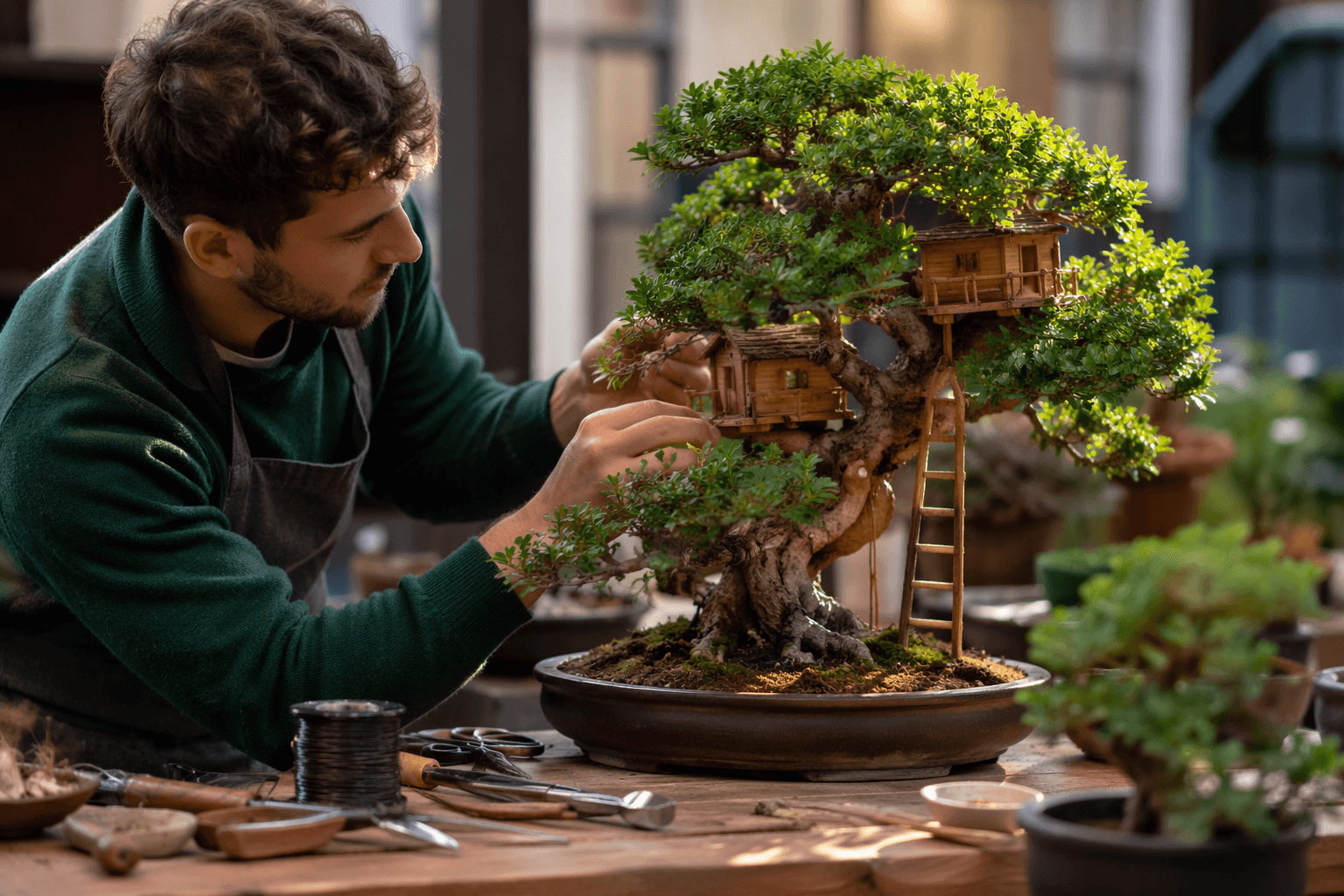
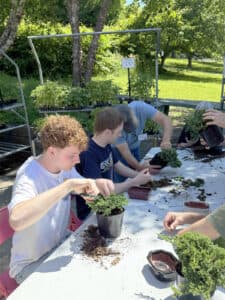
The strongest part of the session was that it did not stop at theory. Participants learned how to select, pot, train, and maintain their own bonsai, which is the kind of progression that can feel intimidating when you first walk into the hobby. Here, the process was broken down into manageable steps, and the club clearly aimed to meet novices where they were, not where an exhibition judge might wish they were.
Small pots were set out for first-time participants, a simple detail that told you everything about the room’s intent. This was not a demo for people already fluent in wiring, pruning, and root work. It was a hands-on introduction that let someone with no background leave with a tree that was already theirs to tend.
The takeaway was not just a finished tree
One of the smartest things Ki No Kaze did was send people home with the trees they worked on. That turns a class into an ongoing practice. A bonsai workshop can teach you vocabulary, but if you leave without a tree, you still have to translate that lesson into action later. Here, the aftercare came baked into the experience.
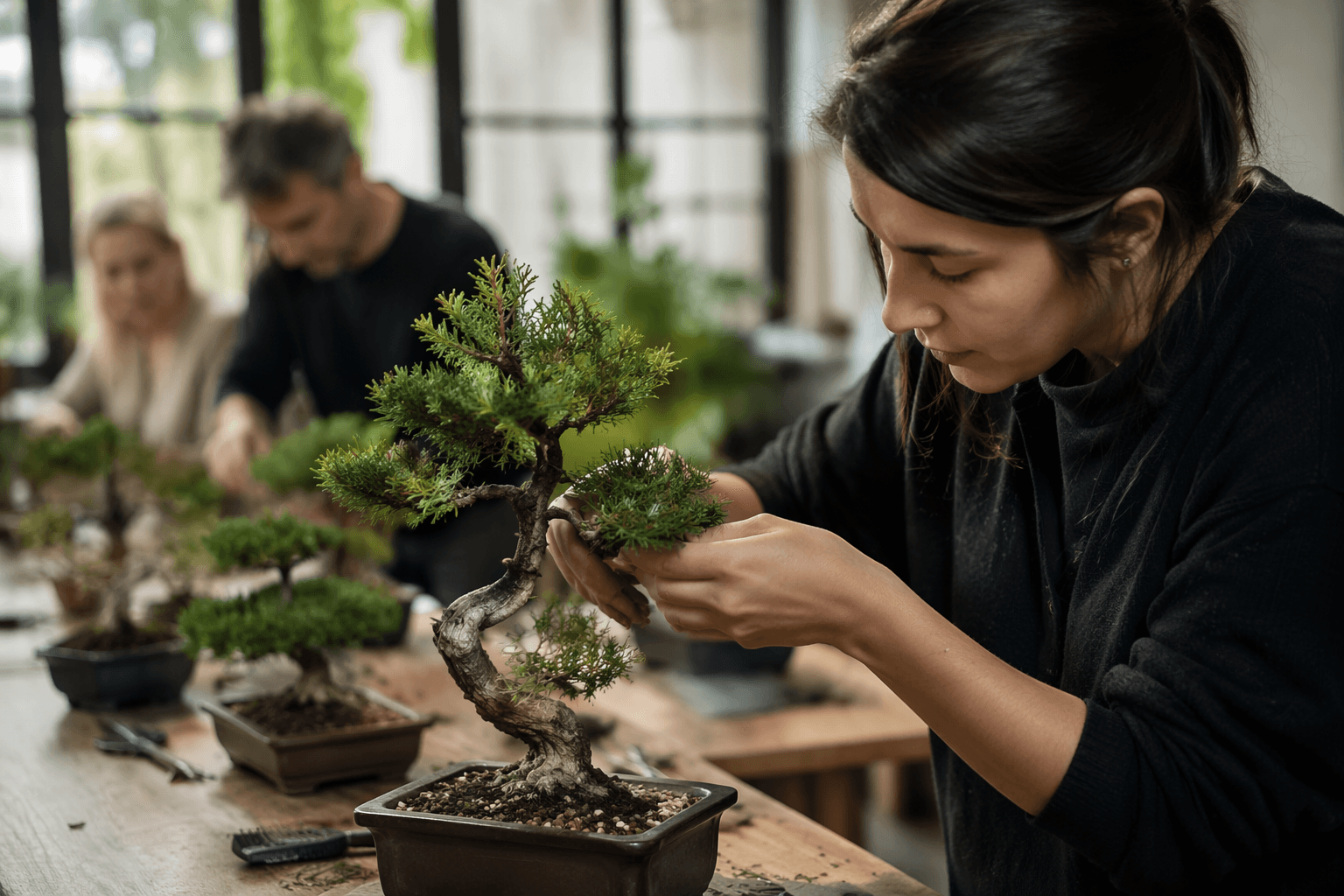
That matters because bonsai is never really a one-and-done craft. Bob Conway underscored that point by describing the club’s trees as plants members have created and maintained over time. That is the real beginner lesson hiding underneath the styling: bonsai is stewardship, not just shaping. If the session taught anything beyond the mechanics of potting, it was that progress in bonsai comes in layers, with patience doing as much work as the shears.
The club also emphasized basic care and maintenance, which is where many newcomers stumble. It is easy to get excited about the visual transformation and forget what comes after the class ends. A beginner who understands watering, maintenance, and the need to keep observing the tree has a much better shot at turning that first pot into something worth developing.
Why the display trees mattered
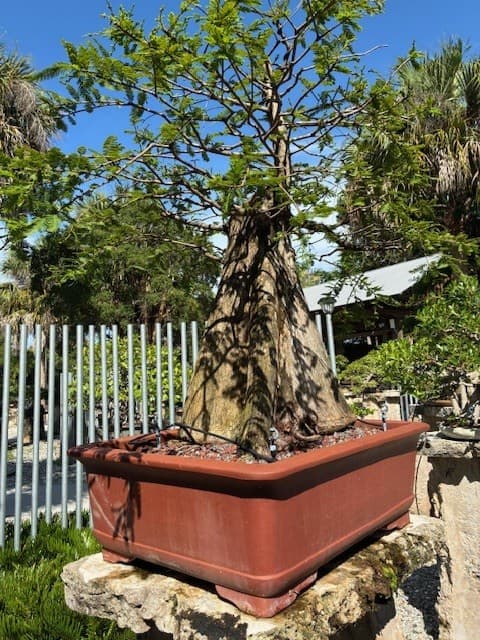
The workshop was not only about what beginners were making in the moment. Club members also brought specimen trees for display, including older material that had been developed over several years. That gave newcomers a benchmark for what long-term styling can produce when you stay with a tree through setbacks, new growth, and structural decisions.
Jim Lindley used one older demonstration tree to show how bonsai often evolves through accidents as much as intention. He explained that a broken branch later led him to create jin work, the deadwood technique that gives a tree a more weathered, aged look. For beginners, that is a useful lesson in itself: not every flaw has to be hidden. In bonsai, some of the best character comes from learning how to use what the tree gives you.
That mix of fresh starters and older examples is a strong teaching model. The first-timers see the starting point. The display trees show the finish line, or at least one of them, and the gap between the two becomes less mysterious.
Ki No Kaze keeps bonsai public, social, and local
This Vienna workshop also fit into a broader pattern for Ki No Kaze. The club meets most months at Scot’s Marketplace and shows up in community settings rather than hiding inside a private circle. That public-facing approach is one reason bonsai feels accessible here: people do not have to stumble into a formal society to see it in action.
The club has also appeared at regional events and cultural venues, including the Mid-Ohio Valley Multi-Cultural Festival, the Parkersburg Art Center, and Earth Day activities in Marietta. Local listings also placed Ki No Kaze at a Parkersburg Art Center living-art display in 2024 and at the Mid-Ohio Valley Multi-Cultural Festival in 2025. The Parkersburg Art Center described the group as West Virginia artists who shape and train miniature trees into living sculptures centered on balance, patience, and care.
That kind of visibility matters. Bonsai has a reputation for being slow, technical, and a little guarded. Ki No Kaze keeps putting it in places where people can see it, ask about it, and try it without signing up for some grand commitment first.
A region-wide pattern, not a one-off lesson
The Vienna workshop was part of a longer pattern the club has been building for years. A 2021 Marietta Times story described Ki No Kaze holding a two-day event at Scots Landscaping and charging $50 for a workshop that included everything needed, plus personalized care instructions from club members with more than 100 years of combined knowledge and expertise. That earlier workshop provided Blue Rug Junipers for everyone to use, which tells you the club has long understood the importance of removing friction for beginners.
That same coverage also identified Ki No Kaze as West Virginia’s only bonsai society known to club president Jim Lindley at the time. Whether you are seeing the club at a workshop, a living-art display, or a festival booth, the method stays consistent: make the entry point easy, show what good trees can become, and keep the hobby visible where ordinary people can walk up to it.
That is what made the Vienna session work. It was not just a bonsai lesson tucked inside a marketplace. It was a clean doorway into the hobby, with small pots, live instruction, practical care, and a tree to carry home, which is exactly how a curious passerby turns into someone who starts shaping trees for real.
This article was produced by Prism’s automated news system from verified source data, official records, and press releases, then run through automated quality and moderation checks before publishing. The system is built and supervised by the people who set the standards it runs under. Read our full AI policy.
Did this article answer your question?