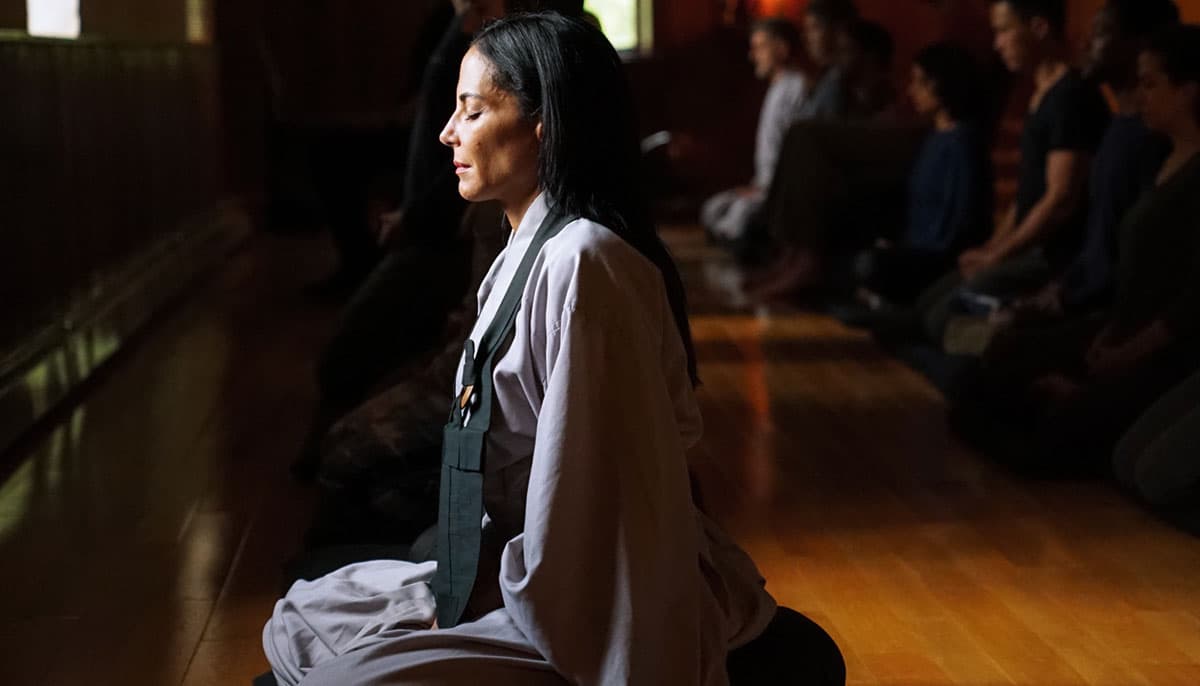
Sangha Live streams weekday meditation with teaching, chat, and recordings
Sangha Live’s weekday mornings now read like a rolling online retreat: one-hour sits with teaching, chat, and same-day recordings.
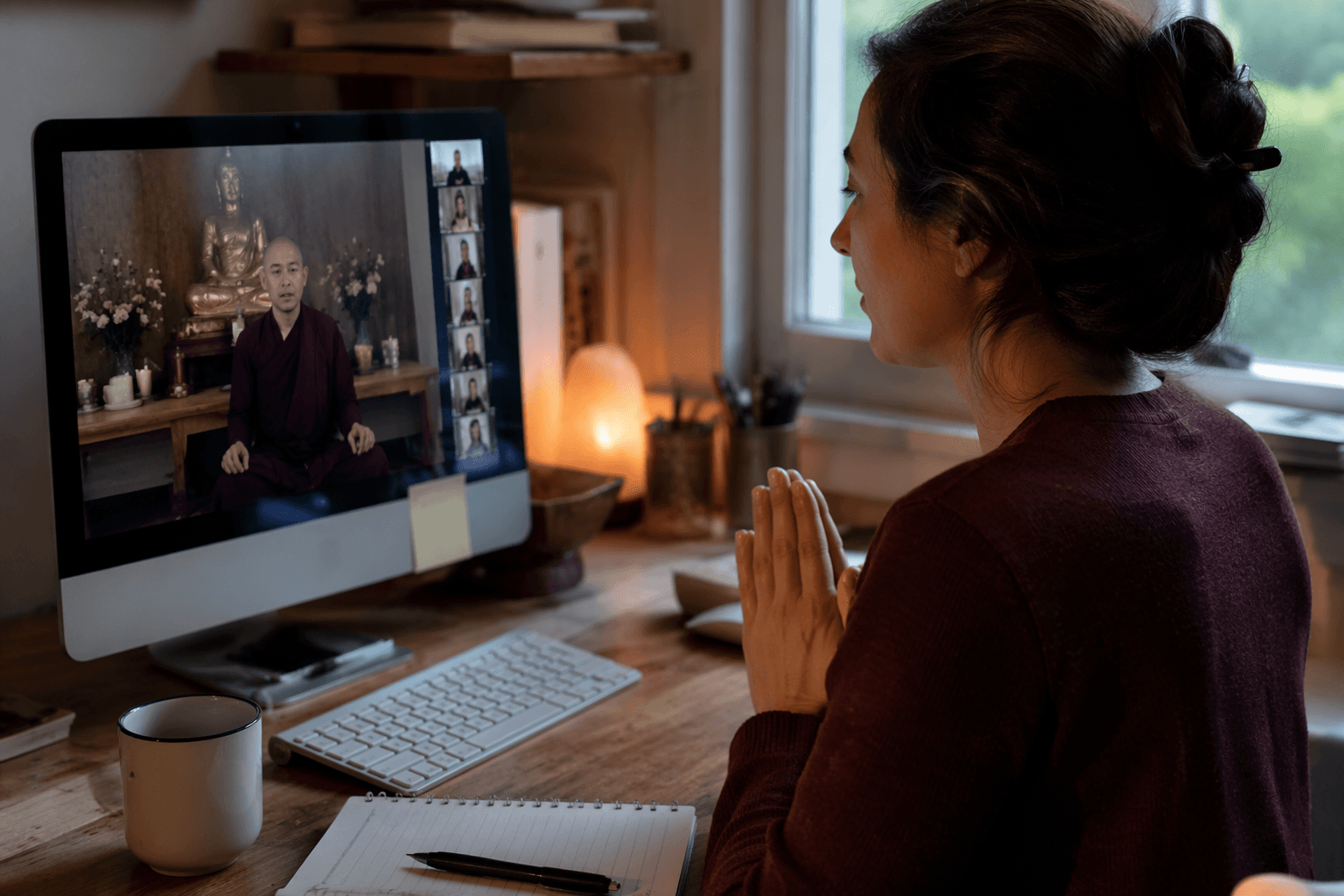
Sangha Live’s Daily Meditation page is doing more than listing sessions. It is acting like a live practice dashboard, with one-hour weekday morning gatherings in European time, guided meditation, dharma teaching, and live chat built into the format. The current run spans July 13 through July 17, 2026, with Christopher Titmuss listed as the teacher for the live sessions.
What the live week looks like
This is not a silent sit dressed up as programming. Each daily session combines three moving parts: a guided meditation, a dharma teaching, and a live chat, so the hour has the feel of practice, instruction, and community contact all at once. That structure matters for Insight practitioners who want something steadier than a one-off class and more interactive than a bare meditation timer.
The timing is also practical in a way that suits a distributed sangha. Weekday mornings in European time give the schedule a consistent rhythm, and the one-hour length keeps the commitment clear. For people balancing work, family, or different time zones, the format makes it possible to keep showing up without needing to build an entire retreat calendar around a single event.
Christopher Titmuss anchors the live stretch from July 13 to July 17, which gives the week a clear teaching line even as the daily practice remains accessible. That combination of fixed teacher and recurring structure is part of what makes the page feel less like a calendar and more like a standing container for practice.
A rolling curriculum, not just a timetable
The archive on the same page shows that Sangha Live is running a much broader curriculum than the current week alone. The recent weeks are organized by teacher and theme, and the themes are chosen with a practitioner’s life in mind rather than as abstract theory. The result is a sequence that reads like a working syllabus for daily life on the path.
Zohar Lavie’s week centered on abiding in vibrant tranquility and cultivating stillness, ease, and wellbeing. That is classic Insight territory, but the emphasis on tranquility makes it especially usable for anyone whose practice gets scattered by pace or pressure. The language of ease and wellbeing also signals that calm is being treated as a trainable factor, not a luxury.
Ulla Koenig’s week moved in a different direction, exploring ethics beyond guilt and shame through hiri and ottappa, the healthy self-respect and respect for others that support restraint without self-punishment. That framing is valuable because it keeps ethics from becoming a brittle exercise in blame. The practice sits closer to inner dignity and relational care, which is where a lot of real-world Buddhist ethics actually lives.
Nirmala Werner brought the focus to enoughness and the joy of missing out. That theme cuts straight at the modern habit of overcommitment, and it gives practitioners a clean way to think about contentment without drifting into passivity. In a sangha context, “enoughness” is not an abstract slogan. It becomes a direct instruction on how to meet experience without chasing more.
Miles Kessler taught on the Seven Factors of Awakening, which gives the archive a more explicitly canonical frame. That topic is especially useful in a live online setting because it ties daily practice back to a structure many Insight meditators already know well: mindfulness, investigation, energy, joy, tranquility, concentration, and equanimity. Even without turning the sessions into a textbook, the theme keeps the teaching grounded in the path.
Nathan Glyde’s week looked at awakening happiness, another theme that brings practice into direct contact with the felt texture of the mind. The repetition of joy, steadiness, and presence across earlier offerings shows a consistent bias in the programming: this is not just about sitting through discomfort, but about cultivating conditions that make practice livable and repeatable.
Why the format works for Insight practice
The strongest thing about the page is the way it treats continuity as the real value. Instead of relying on a single headline event, it keeps offering a regular slot, a named teacher, and a theme that can be followed from day to day. That makes the live week feel closer to a rolling online retreat than a drop-in class.
The recordings sharpen that effect. Same-day recordings in the Dharma Library mean the practice does not end when the live hour does, and the archive is organized by week and theme for people who cannot attend live. That setup is especially useful for practitioners who miss part of a week, need to revisit a teaching, or are working across time zones that do not line up neatly with European mornings.
The page’s structure also gives students a simple way to orient themselves: show up live when possible, then use the recordings to stay with the week’s theme. Because the archive preserves the sequence by teacher and topic, it supports both continuity and review. You are not just collecting sessions. You are following a line of practice.
How to use the week well
If you want to make the most of this kind of program, treat the live hour as your primary sit and the recording as the backstop. The live session gives you guided practice, teaching, and chat in real time, while the Dharma Library lets you catch up or revisit the material the same day.
A simple approach works best here: 1. Join the weekday morning live session if your schedule allows. 2. Stay with the guided meditation and teaching as one integrated hour. 3. Use the same-day recording if you miss the live slot or want to hear the teaching again. 4. Follow the weekly theme, rather than treating each session as isolated content.
That is the real promise of Sangha Live’s Daily Meditation page. It keeps a steady morning practice available, gives it a teacher-led frame, and leaves a trail of recordings so the week can still hold together when life gets in the way.
This article was produced by Prism’s automated news system from verified source data, official records, and press releases, then run through automated quality and moderation checks before publishing. The system is built and supervised by the people who set the standards it runs under. Read our full AI policy.
Did this article answer your question?