Zen retreat boosts self-compassion in DBT clinicians, study finds
A five-day Zen retreat improved self-compassion and well-being in 120 DBT-trained clinicians, beating a matched Dharma-talk condition. The study tested 212 health professionals.
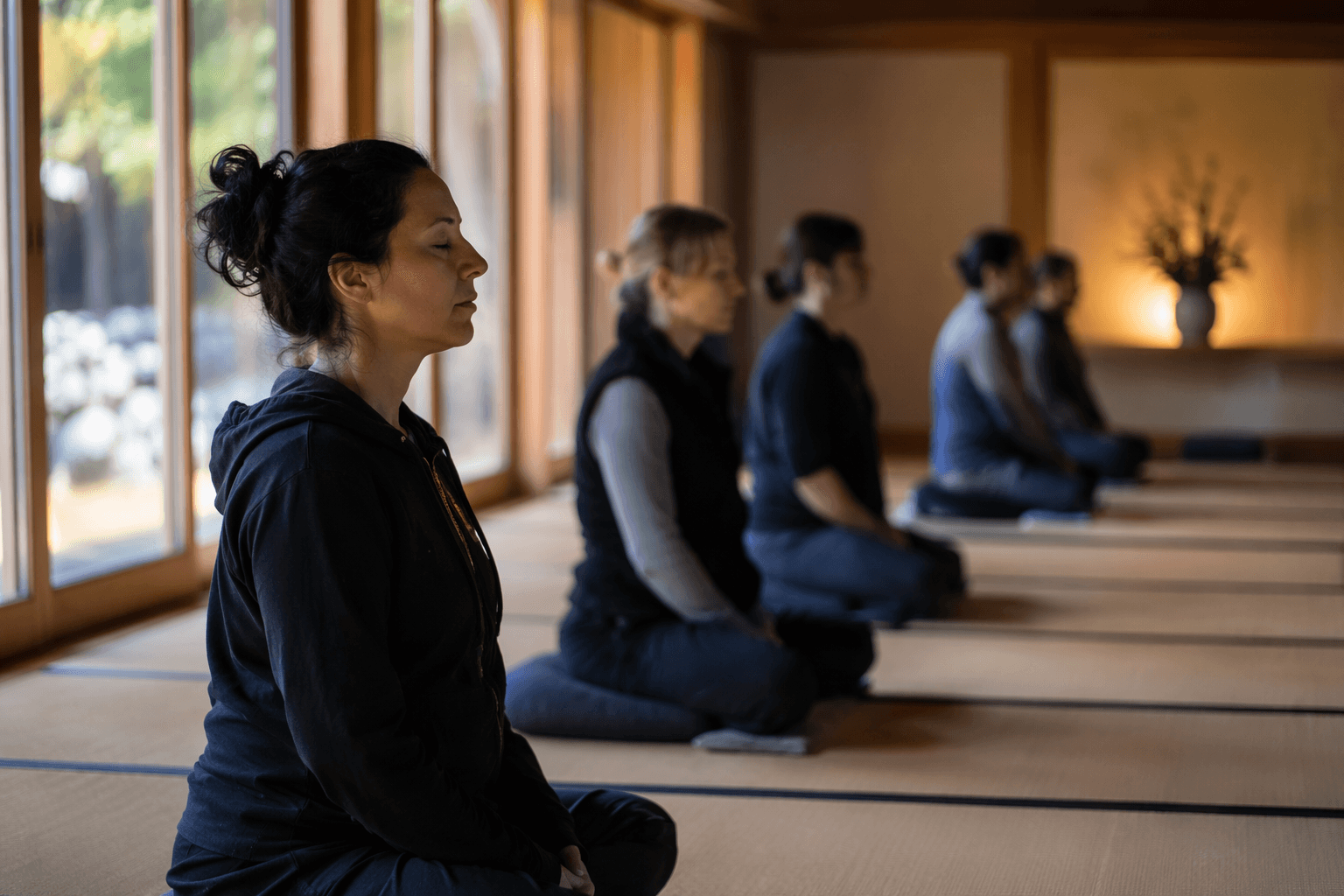
A five-day silent residential Zen-style retreat gave 120 DBT-trained mental health professionals a measurable lift in self-compassion, mindfulness and well-being, and it did better than a matched Dharma-talk condition in a group of 212 clinicians already carrying heavy emotional loads. The study, published July 14, 2026 in Mindfulness, puts a hard test on a question Buddhist Insight Meditation readers know well: does intensive retreat practice change how caregivers meet their own suffering, not just how they talk about mindfulness?
The design mattered. Karina Solovieff, Miguel Angel Murua, Maria Arqueros, Randy Wolbert, Jan Glasenapp, Vibh Forsythe and Joaquim Soler compared a retreat arm with 120 participants against 92 controls in a time- and content-matched Dharma-talk comparator. That meant the researchers were not simply measuring the effect of hearing teachings. They were testing what happens when clinicians step into a structured, silent, residential practice container.
According to the preprint, the retreat included seated meditation, mindful walking, daily Dharma talks, rest periods and noble silence throughout the day. The published article concluded that participation in the 5-day retreat was associated with improvements in affective symptoms, self-compassion, situational self-awareness and well-being relative to an active psychoeducational comparator. The preprint went further, reporting gains in self-kindness, common humanity and mindfulness, along with reductions in self-judgment, isolation and over-identification.

Those outcomes map cleanly onto the Self-Compassion Scale’s three paired dimensions: self-kindness versus self-judgment, common humanity versus isolation, and mindfulness versus over-identification. For clinicians trained in Dialectical Behavior Therapy, that matters because DBT already weaves together mindfulness and dialectics, yet the Zen-style retreat component has rarely been evaluated as a tool for the people delivering care. Solovieff has described herself as a licensed clinical psychologist and doctoral candidate researching Zen mindfulness practices on mental health professionals, and her work is rooted in silent retreats developed by Marsha Linehan and led by Randy Wolbert.
The timing also fits a larger workforce problem. A 2024 systematic review in the American Journal of Public Health screened 5,158 publications and included 118 interventions for health care workers, with 76% reporting significant changes and 39% showing measurable effect sizes. Another mindfulness study in nurses, involving 631 health care workers, found that Mindfulness in Motion reduced burnout and stress while increasing resilience and work engagement. Earlier retreat research in psychiatry had already treated the format as a notable innovation, but this new paper extends that logic into the DBT world, where the clinicians who help others regulate emotion may need a brief, rigorous way to steady their own minds first.
This article was produced by Prism’s automated news system from verified source data, official records, and press releases, then run through automated quality and moderation checks before publishing. The system is built and supervised by the people who set the standards it runs under. Read our full AI policy.
Did this article answer your question?