Black Ops 7 RICOCHET Update Targets Cronus Zen, XIM Matrix Input Spoofing
RICOCHET's Season 3 crackdown expands Cronus Zen and XIM Matrix detection while making SMS 2FA mandatory for new free-to-play PC accounts as of April 2.
The sharpest backlash to RICOCHET's Season 3 update had nothing to do with Cronus Zen or XIM Matrix. It came from players who have never touched either device but now hit a new wall at account creation: as of Season 3's April 2 launch, SMS two-factor authentication is mandatory for every newly created free-to-play Activision account on PC. That single policy change detonated a predictable argument across the community. Players in regions with limited carrier coverage, those without a dedicated mobile number, and privacy-conscious users who object to handing a phone number to a game publisher all flagged the requirement within hours of the patch. Activision's stated position is blunt: "Raising the barrier to entry makes it harder for banned cheaters to create new accounts and return. It also cuts down the pool of accounts used for cheating and helps reduce account fraud."
The phone-number mandate is a direct structural attack on the throwaway-account pipeline that has sheltered ban-evaders for years. A removed player with no verification requirement could regenerate a fresh account in under three minutes. SMS registration makes that cycle expensive and, critically, traceable back to a real-world identity. The current rollout is scoped to new free-to-play PC accounts without a recent Call of Duty title purchase within the past two years. But Activision confirmed the requirement will expand to existing accounts over the coming weeks, meaning the exemption window for legacy players is closing. The per-platform evaluation adds one important wrinkle: if a player owns Black Ops 7 on Battle.net but accesses Warzone through Steam, SMS 2FA applies to the Steam session only. Once registered, RICOCHET can also re-trigger the verification step when it detects suspicious activity on an account, turning 2FA from a one-time hurdle into an ongoing identity checkpoint.
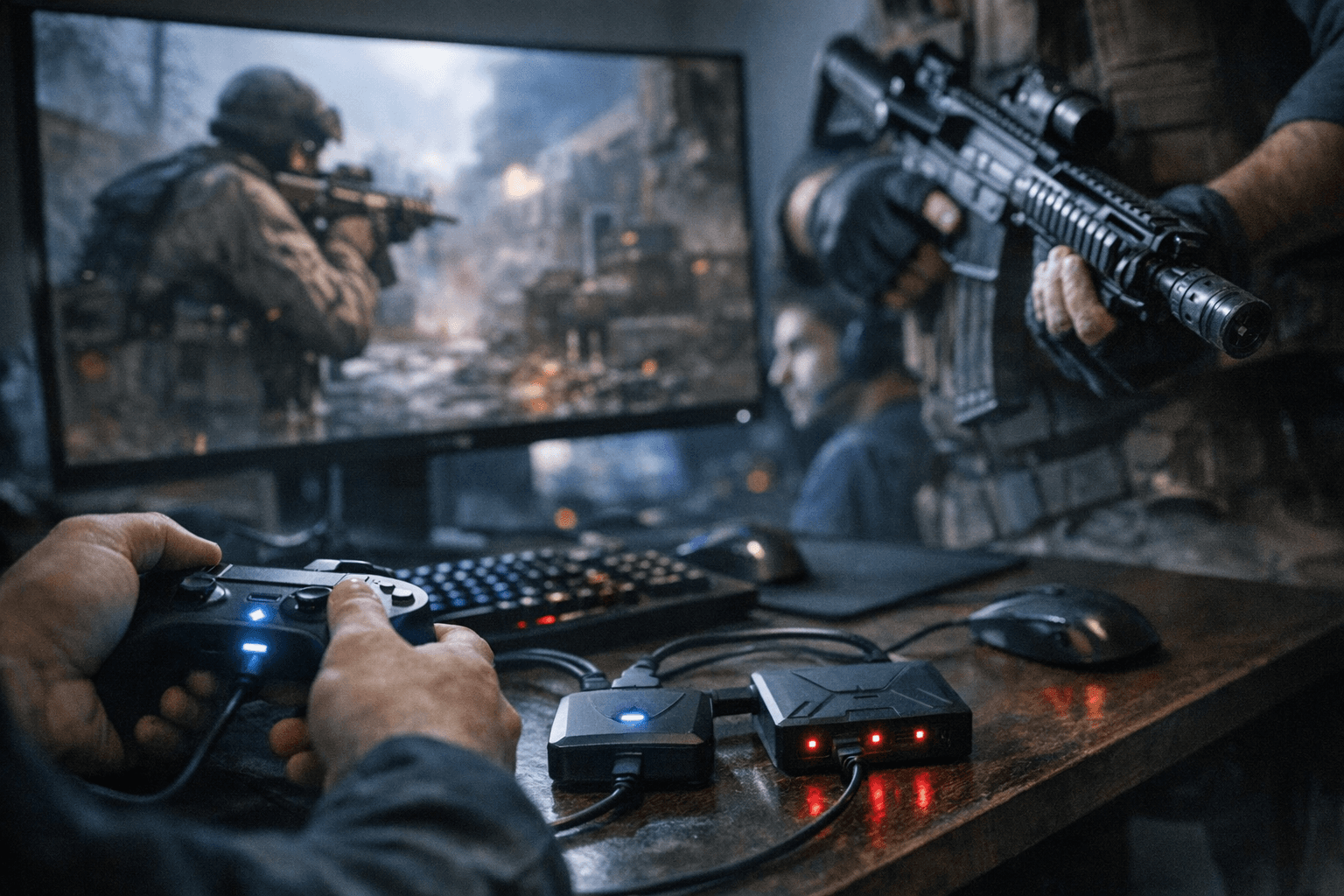
The device enforcement is the longer-running fight. RICOCHET introduced behavior-based detection targeting Cronus Zen and XIM Matrix during Season 2, and Season 3 marks a continued expansion of that work, not a pivot to a new strategy. Both devices occupy a commercially awkward space: they are sold openly through major retailers, their manufacturers are not cheat software houses subject to easy legal pressure, and they are highly configurable. The Cronus Zen runs custom GamePacks that can eliminate recoil entirely. The XIM Matrix routes mouse-and-keyboard input through controller spoofing to access aim assist on both console and PC. Rewriting a script or updating firmware used to render previous signature-based detection useless within days of a ban wave. Activision has been explicit about why that approach kept failing: these devices "are designed to hide, adapt, and change configurations," making any fixed fingerprint obsolete almost immediately.
The Season 2 and now Season 3 detection framework sidesteps the signature problem by targeting behavior instead of hardware identity. Rather than trying to recognize what device is connected, RICOCHET's system tracks how inputs behave over time, specifically examining timing consistency, recoil compensation variance, and reaction latency windows. A player whose spray pattern is mechanically identical across fifty consecutive bursts is producing something that falls outside the range of human motor variability. A reaction speed measured in single-digit milliseconds is not a human reflex. The detection targets entire classes of machine-driven behavior, which remain identifiable even as users cycle through different scripts or configurations. Activision characterized Season 3 as foundation-building rather than a definitive solution: "These updates establish a foundation that RICOCHET Anti-Cheat will continue to build on until these devices no longer work across Call of Duty."
For players caught by these detections, the response is graduated. The first stage is an in-game warning confirming that unauthorized input modification has been identified on the account. That warning escalates to mitigation if the behavior continues, channeling flagged accounts into degraded match pools away from the general population, the same shadowban infrastructure RICOCHET has deployed since its earlier seasons. Permanent bans, hardware-linked through Activision's attestation layer, are the endpoint for the most persistent offenders. Season 3 added one more pressure point specifically for PC: updated in-game warnings now target players who do not meet the TPM 2.0 and Secure Boot requirements that were tightened in January 2026. Activision stated that players failing those hardware security thresholds will eventually face restricted playlist access, not just warnings.
For legitimate players in ranked lobbies, the practical effect of successful detection is straightforward: the opponents running machine-perfect recoil suppression either stop using the hardware or get removed. Both outcomes change the competitive environment in the same direction. Ranked Play in Black Ops 7 now operates on a single Skill Rating ladder, and every match where a Cronus or XIM user inflated their rating creates false SR data that distorts the entire bracket. If RICOCHET's behavioral detection performs as described, upper-skill lobbies should gradually lose the opponents whose aim profiles simply do not resemble human inputs. Legitimate controller players and keyboard-and-mouse users on PC should see no change in how their inputs register; the detection framework is explicitly targeting machine-generated consistency, not hardware category.
The accessibility concern is real and not yet fully resolved. Input modification hardware is not exclusively the domain of cheaters. Some disabled players use adapters to remap controls in ways that could produce behavioral signatures that superficially resemble the patterns RICOCHET is trained to flag, particularly if custom remapping creates consistency in specific input sequences. The graduated response system, with its warning stage as a buffer before punitive action, provides some margin. But Activision has not published explicit accommodation guidance for accessibility hardware in this update, which leaves those players in a monitoring posture rather than a formally protected one. The speed and transparency of the appeals pipeline will determine whether false positives get resolved quickly or become a sustained community grievance.
Navigating the new requirements is manageable if actioned proactively. The SMS 2FA enrollment flow for new PC free-to-play accounts runs through Activision's Two-Factor Authentication support page and takes under five minutes with a compatible carrier. Players without access to a reliable phone number due to carrier gaps or regional restrictions should contact Activision account support directly to request alternate verification before attempting to create or access an account; that case-by-case process is not instant and works better as a pre-emptive step than an emergency one. Players who already own Black Ops 7 on a purchased platform are not immediately subject to the new requirement on that platform, but enrolling in SMS 2FA ahead of the confirmed expansion to existing accounts removes the disruption risk entirely. For anyone locked out of an account already registered to a phone number they no longer control, the recovery path runs through Activision's identity verification flow, which requires the email address on the account and, in some regions, government ID validation. The appeals channel for players flagged incorrectly by device detection is the same support portal; submitting immediately with full device context, including any accessibility hardware specifics, is the faster resolution path than waiting for an escalated review.
Activision framed the Season 3 package as the strongest attestation suite currently deployed in a commercial multiplayer game. Whether that claim holds will depend not on the announcement but on how the detection layer performs at scale across millions of daily sessions. The community has been asking for this crackdown specifically since Cronus hardware became a fixture in upper-bracket lobbies. The Season 3 results will either validate the behavioral detection model or give its critics exactly the evidence they've been waiting for.
This article was produced by Prism’s automated news system from verified source data, official records, and press releases, then run through automated quality and moderation checks before publishing. The system is built and supervised by the people who set the standards it runs under. Read our full AI policy.
Did this article answer your question?