How to Test and Update Your Loadouts After Major Call of Duty Patches
The Swordfish A1 just lost an entire kill shot in Season 3, flipping from 3 bullets to 4 overnight; here's a 48-hour playbook to rebuild your loadout before the ranked ladder adjusts.
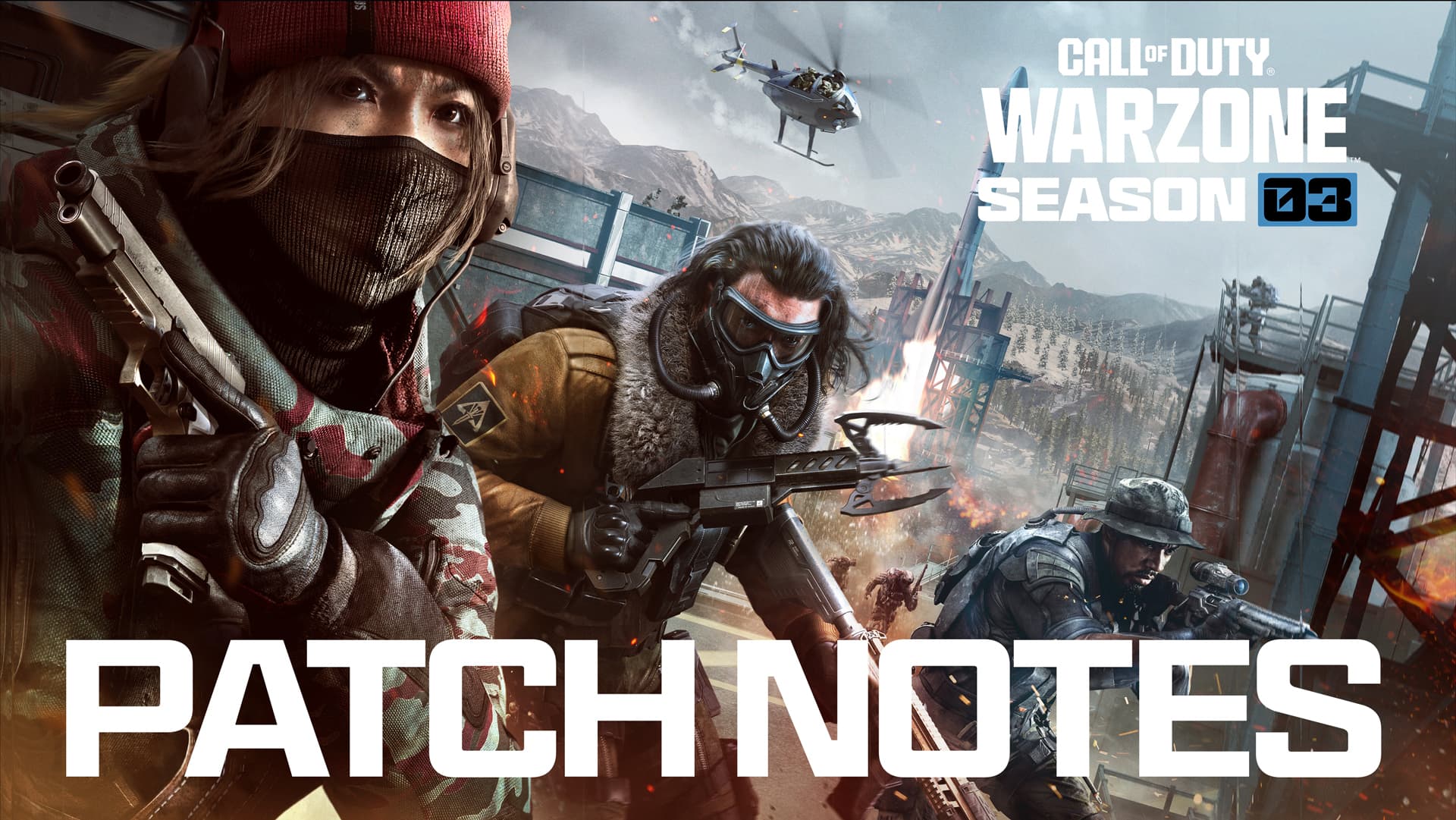
The Swordfish A1, the marksman rifle that dominated lobbies since Season 2 Reloaded, went from a 3-shot kill to a 4-shot kill when Season 3 landed on April 2. ADS time increased from 330ms to 340ms, sprint-to-fire extended from 230ms to 240ms, tactical sprint-to-fire pushed from 360ms to 370ms, and damage range was cut across the board. The Voyak KT-3 assault rifle received its own nerfs after climbing to near-ubiquity heading into Season 3. Meanwhile, the Ryden 45K, RK-9, Razor 9mm, Carbon 57, and MPC-25 all received meaningful damage range extensions and handling improvements. Players who treat the first 48 hours as a structured reset rather than a panic queue will gain a competitive edge that takes most of the lobby two weeks to close.
This is that reset process.
Hour 0 to 2: Read the Patch Notes Like a Scouting Report
The instinct after a major patch is to queue immediately and feel out the changes in live matches. Resist it. Spend the first hour reading official patch highlights and mapping every weapon in your active loadout rotation to what was touched. You are not reading the full notes cover to cover; you are building a personal impact list organized by the weapon classes you rely on.
For Season 3, that list looks different depending on your playstyle. Marksman players need to process the Swordfish A1 losing an entire bullet's worth of killing power, which rewrites every engagement distance calculation built over the past month of muscle memory. AR players running the Voyak KT-3 are absorbing nerfs; Warzone AR players on the DS20 Mirage and MRX-17 received considerable increases to damage range, giving players more variety when choosing guns for long-range combat. SMG players have the most direct opportunity: the Carbon 57 received improvements to aim-down-sight speed, sprint-to-fire speed, and damage range simultaneously, which is a rare combination for a single patch. Know exactly where you sit before you open a gunfight.
Hour 2 to 6: Range Testing at Three Distances
Use private match or practice range, not public lobbies. The goal is to isolate variables, and public matches introduce too many unknowns during this phase. Test each changed weapon at three engagement brackets: close (0 to 10 meters), mid (10 to 35 meters), and long (35 meters and beyond).
At each distance, track two things: time-to-kill and recoil recovery. On the Swordfish A1, the core question is whether the weapon still closes engagements at the ranges it previously owned. A 4-shot kill at 35 meters against a moving target is a functionally different weapon from the 3-shot variant that carried seasons of marksman players. If your primary use case was mid-range countersniping, the math has shifted in a way that no attachment swap fully reverses. At close range, clock the Carbon 57 directly against your current SMG: the ADS and sprint-to-fire improvements are tangible when tested side by side, not just on paper. Run at least 20 controlled engagements per distance bracket before drawing conclusions. Five-shot impressions are noise.
Hour 6 to 12: The Attachment Audit
Attachments do not exist in a vacuum; they interact with the patch's underlying tuning changes. Season 3 made this explicit with the Rapid Fire attachment, whose damage range penalty increased from 8% to 20% and muzzle velocity penalty jumped from 8% to 20% as well, with recoil penalties also increased. If you were running Rapid Fire for burst fire cooldown management, you are now trading far more range than before for the same benefit.
For each weapon you are testing, cycle through three attachment configurations:
- Mobility build: ADS and sprint-to-fire focused
- Accuracy build: recoil control and spread reduction focused
- Hybrid build: balanced across both
The goal at this stage is not to find the theoretically optimal build; it is to find the configuration that most closely restores your pre-patch baseline feel. That recovered baseline is your new starting point for further iteration. Any attachment whose penalty category was specifically modified in the patch notes, like Rapid Fire's range and velocity costs, is a candidate for removal regardless of how long it has been in your build.
The One-Screen Decision Tree: Keep, Rebuild, or Swap
Work through this sequence for each weapon in your rotation before committing to any loadout change:
1. Does the weapon still achieve its pre-patch TTK at your primary engagement range? If yes, keep it and audit attachments only. If no, continue.
2. Can an attachment swap recover that performance? Test the accuracy and hybrid builds explicitly. If yes, update the build and keep the weapon. If no, continue.
3. Is the weapon's new performance ceiling competitive at a different engagement range? If yes, reframe the weapon's role rather than replacing it. The Swordfish A1 lost authority at long range but still has a window closer in. If no, continue.
4. Identify the closest buffed archetype and repeat range testing for that candidate. Voyak KT-3 users should be testing the DS20 Mirage and MRX-17 in Warzone. Swordfish A1 users who need to exit the marksman class entirely should assess what the buffed SMG tier now covers before defaulting to another precision rifle.
When to swap weapon classes entirely: if your primary engagement range is mid (10 to 35 meters) and ARs in that bracket took nerfs while the SMG tier gained range, Season 3 has created a direct substitution opportunity. Running a Carbon 57 or MPC-25 primary with a marksman secondary covers close-to-mid engagements and occasional longer requirements without depending on a nerfed AR to do both jobs simultaneously.
Hour 12 to 24: Rebuild Utility Around the New Loadout
Secondary weapons and tactical or lethal slots exist to cover the scenarios your primary can no longer handle. If a mid-range AR has been weakened, utility selections should compensate for that gap rather than reinforcing what the loadout already does well. Season 3 includes the addition of the Grappling Hook to Warzone, which is directly relevant here: if your rebuilt weapon needs enemies within close range to be fully effective, a mobility tool that closes distance quickly has moved from a novelty pick to a first-tier utility slot.
Update secondaries and tacticals last, after confirming the weapon and attachment configuration. Utility choices built around a loadout that no longer exists add more variables to an already unstable test environment.
Hour 24 to 48: Confirm in Live Matches
Queue public matches and track 10 to 20 games with the rebuilt loadout before making further changes. You are looking for two specific signals: personal KD relative to your seasonal average, and whether losses are consistently happening at the engagement ranges your testing identified as covered. If KD drops significantly, return to the attachment audit before switching weapons again. Most post-patch performance drops trace back to attachment interactions rather than the weapon's core tuning, and swapping the weapon entirely resets your entire testing baseline.
Keep one eye on developer communications during this window. Post-season hotfixes are standard practice, and an attachment or weapon that is underperforming on day two may receive a secondary correction within the first week. For players coordinating with a squad, this is the right window to stress-test meta shifts in scrims rather than ranked matches so that no one's Skill Rating absorbs the learning curve.
The Habit That Pays Off Every Season
The players who navigate major patches fastest share one practice: two fully built alternate weapons sitting in loadout slots at all times, not half-assembled placeholders but tested, attachment-complete options ready to activate the moment a patch lands. The 48-hour rebuild compresses significantly when you are choosing between two known quantities rather than starting from a blank slate.
Season 3 brings one of the biggest rounds of weapon balancing in recent memory, and the Swordfish A1's displacement will ripple through the marksman category for weeks. The players who put in the structured work now, before the lobby average has adjusted, are the ones who walk into ranked play with a rebuilt loadout while everyone else is still reacting.
This article was produced by Prism’s automated news system from verified source data, official records, and press releases, then run through automated quality and moderation checks before publishing. The system is built and supervised by the people who set the standards it runs under. Read our full AI policy.
Did this article answer your question?