Call of Duty Warzone ranked play adds tougher PC security, SR rules
Warzone ranked play now punishes bad starts harder, pays more for beating better teams, and demands a stricter PC boot chain before you can climb.
What changes the moment you queue
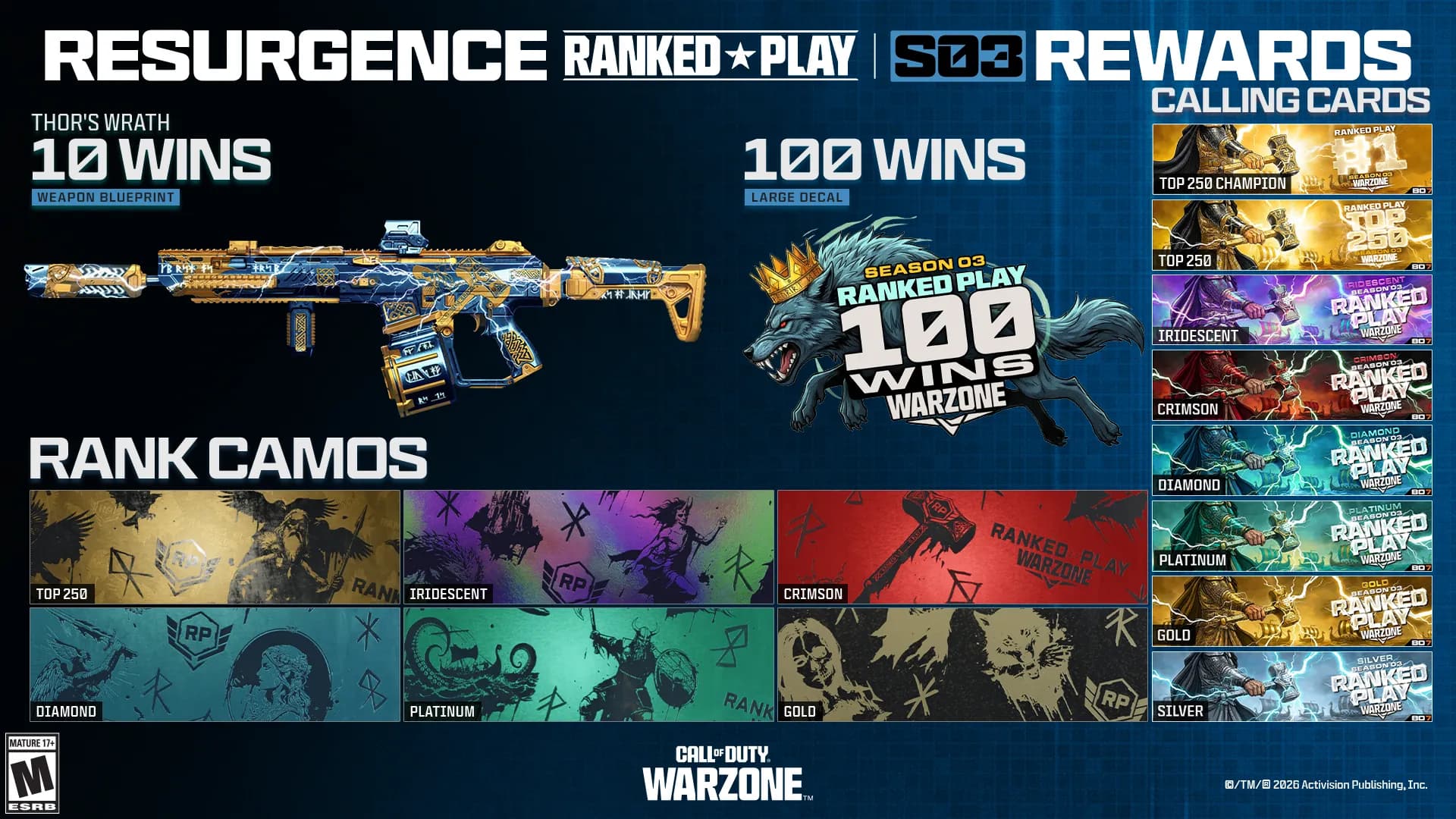
Ranked Play: Resurgence is not just Warzone with tighter matchmaking. The mode runs on a narrower ruleset than standard Warzone, with weapons limited to Black Ops 7 options plus selected perk and attachment restrictions, so the loadout game gets narrower and more deliberate before the first gunfight even starts. That matters because the mode is built around skill division progression, exclusive rewards, and a ladder that expects repeatable performance, not one lucky lobby.

The practical read is simple: you are not optimizing for comfort, you are optimizing for consistency under pressure. In ranked, every missed rotation, every bad ego challenge, and every greedy buy decision can snowball into a worse SR return, especially once the deployment fee starts biting.
How SR actually rewards you
SR, or Skill Rating, is the currency that drives Ranked Play: Resurgence. You earn it by outlasting other squads, eliminating opponents, and completing in-match challenges, but the game does not treat every elimination the same. Knock over a higher-ranked opponent and the reward is worth more than farming a lower-ranked lobby, which means the ladder is quietly pushing you toward cleaner, higher-value fights.
That changes squad behavior in a big way. Chasing every isolated player is less important than taking fights you can actually convert against strong teams, because the SR system rewards the quality of the elimination as much as the fact that you got one. If you are making calls in comms, the right question is not “Can we fight?” but “Is this fight worth the SR and the risk to our placement?”
There is also a hard ceiling here: the maximum SR available per match is 150. That cap is the part players should plan around, because it means even a great performance has a limit, while a reckless start can still bury you under avoidable losses. In practice, that makes every point feel expensive and every late-game decision more important than chasing flashy stat lines.
Why the deployment fee changes your risk tolerance
Starting in Silver, each match carries a deployment fee. That one rule changes the emotional texture of ranked more than almost anything else, because it turns every bad lobby into an actual SR tax before you have even stabilized. You are no longer just trying to gain points, you are trying to earn back the cost of entry and still leave the match ahead.
This is where team strategy gets more disciplined. Early, unnecessary fights become a liability, especially if your squad is still warming up or one player is lagging behind on comms and timing. The smart play is usually to stabilize first, then choose the engagement that gives you the best shot at a meaningful SR swing rather than the first scrap that shows up on the map.
For squads that like to play fast, the deployment fee is a built-in reality check. It does not kill aggression, but it forces you to be selective about when to push and when to hold power positions. If you are queuing with friends, that means the IGL has to think like a banker as much as a brawler: protect the downside, then spend your risk where the payout is strongest.
Why PC security matters more in this ladder
The other big change is not about gunskill at all. When Ranked Play: Resurgence launches in Season 02, RICOCHET Anti-Cheat will require a stronger form of remote attestation for PC players in partnership with Microsoft, building on the existing TPM 2.0 and Secure Boot requirements. That is Activision making the PC trust chain part of ranked eligibility, not an optional background detail.
Microsoft describes remote attestation as a way to validate the hardware and Windows boot process using TPM-backed evidence. In plain English, the game is looking for proof that the machine booted the way it should have, because a competitive ladder is only as believable as the devices allowed into it. That is a serious move, and it makes sense in a mode where cheating has an especially high impact on fair play.
For PC players, the behavior change is immediate: you need to treat your system setup like part of your ranked prep. If your machine is not compliant, the issue is not “optimization” anymore, it is access. That means boot integrity, security settings, and trusted hardware are now as relevant to climbing as recoil control or endgame decision-making.
How to play differently under these rules
The best ranked players will adapt their habits around three pressures at once: SR efficiency, deployment cost, and tighter PC validation. That means fewer ego pushes, more fight selection, and a stronger focus on surviving to the moments where kills are worth more and placement can do more work. In a capped system, wasting resources on low-value fights is the fastest way to feel hard stuck.
- Take fights that improve your position, not just your kill count.
- Value higher-ranked targets when the opportunity is clean, because those eliminations are worth more SR.
- Respect the deployment fee starting in Silver, since bad starts now cost more than pride.
- Make sure your PC setup clears the stronger remote attestation path before you queue, so the ladder is not blocked before the match begins.
A good squad under these rules should think in layers:
That is the real shape of the new ranked experience. It is stricter, pricier, and more selective about what counts, which is exactly why it will reward teams that play cleanly instead of loudly. If you want to climb now, you need the right fight, the right timing, and a PC that proves it belongs in the room before the first drop ever happens.
This article was produced by Prism’s automated news system from verified source data, official records, and press releases, then run through automated quality and moderation checks before publishing. The system is built and supervised by the people who set the standards it runs under. Read our full AI policy.
Did this article answer your question?