How New and Intermediate Players Can Master Map Control and Win More Engagements
Winning more gunfights in CoD has less to do with aim than most new players think: mastering power positions, rotations, and spawn logic is the real separator.
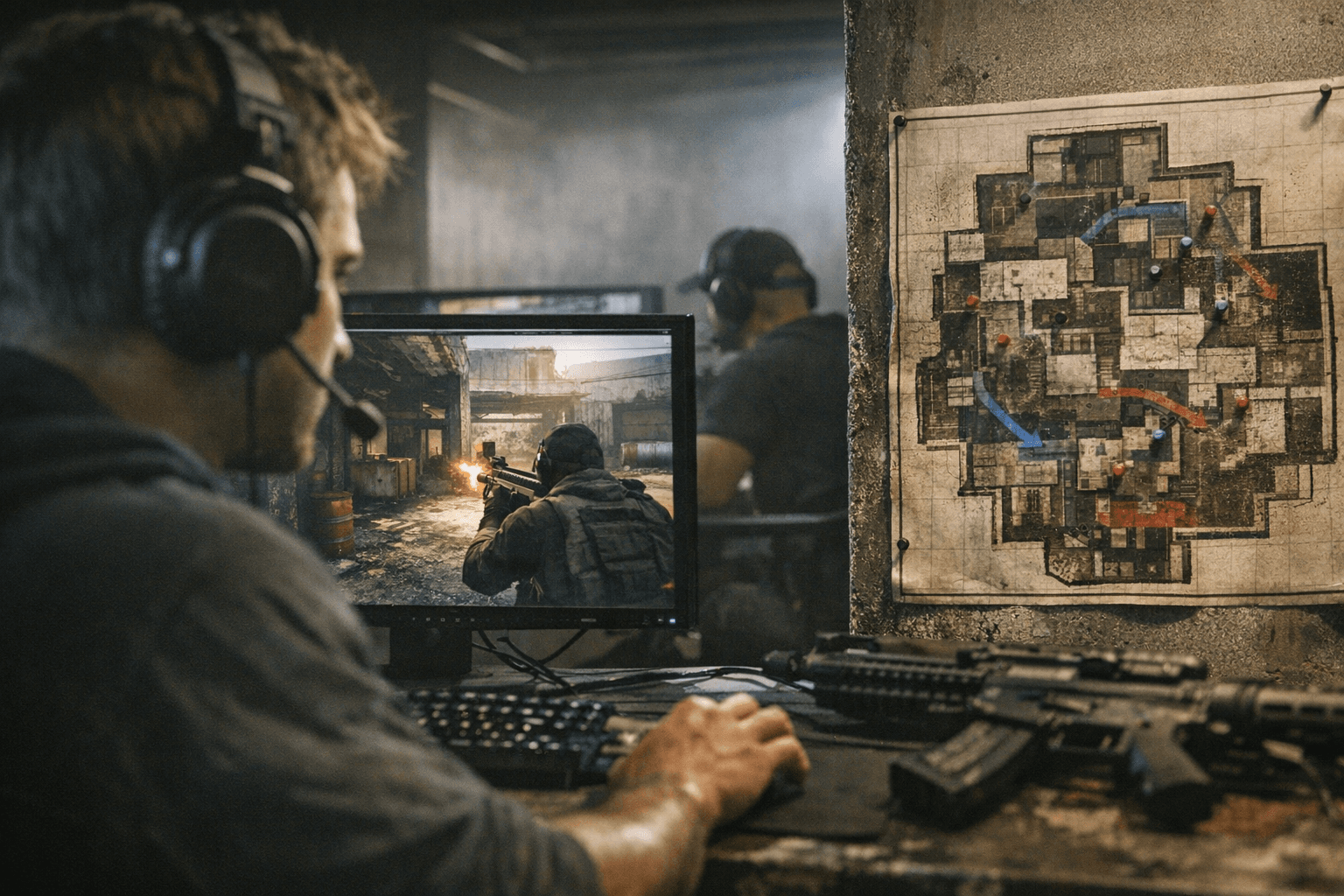
Most players grind their aim for hours and still lose round after round. The uncomfortable truth is that many players lose matches not because of poor aim, but because they're caught out of position: standing in the open, rotating late, or simply unaware of their surroundings. Map control, rotations, and decision-making are the skills that actually separate consistent winners from players who frag well but contribute little. Here's how to build all three.
What "map control" actually means
Good positioning is all about maintaining map control, line-of-sight advantage, and zone dominance. At its core, that means being in a spot where you see the enemy before they see you, you control a key rotation path, or you can deny movement through a chokepoint. None of that requires elite aim; it requires knowing where to be before a fight starts.
Black Ops 7's maps follow a tactical lane design that rewards positioning over pure reaction time. The best spots aren't random: they're built around power angles, crossfire positions, anchor holds, and elevated overwatch sightlines. Learning to read that structure, on any map you drop into, is the single fastest way to improve.
Power positions: the spots that decide rounds
Every CoD map has a handful of locations that control more of the map than anywhere else. BO7 is slower and more tactical than arcade-style Call of Duty releases. That means players win by holding strong headglitches, denying push directions, cutting rotations early, and controlling mid-map chokepoints.
These positions fall into a few recognizable categories:
- Overwatch angles: Platforms, balconies, staircases, or windows overlooking high-traffic lanes are the "snipers nest" of BO7, even if you're holding ARs.
- Headglitches: Boxes, desks, sandbags, vehicles, or half-walls where your head is visible but your body is hidden. Headglitches aren't cheesy: they're positional fundamentals.
- Crossfire positions: These are positions that allow you to shoot players entering from two or more angles, often mid-map junctions or objective entrances. Crossfire setups allow teams to delete opponents before they even touch objectives.
On a map like Protocol in Black Ops 6, for example, the map center is flanked by two major strongholds, the Armory and the Barracks. Controlling one or both is the key to your team's success. The same principle applies universally: find the central structure, hold it, and you dictate where every fight happens.
Rotations: moving with purpose, not panic
A rotation is any movement you make between positions during a match. Most new players rotate reactively: they die, respawn, and sprint back to where they just came from. Better players rotate *proactively*, anticipating where the action is moving before it gets there.
Map control and rotations win games. Learn common sightlines and timing windows so you understand how long enemies take to rotate between objectives. Control the connecting lanes and use smoke, flash, and other utility to deny vision and slow opponent movement during rotations.
In modes like Hardpoint, the principle is even more explicit. Rotate to the next Hardpoint location before the current one expires. Study the rotation order during your first few matches, then position yourself advantageously for incoming objectives. By the time most players are reacting to the timer, you're already set up.
One habit that pays off immediately: every time you move, ask yourself "If I get shot right now, where's my next cover?" That single question turns risky rotations into pro-level decisions.
Avoid open ground whenever possible. Continuously rotate from cover to cover, and don't loot without checking your surroundings. Late rotations are one of the most significant rookie errors. Players often wait too long to move, getting caught by gas or ambushed along the edges.
Spawn logic: turning respawns into advantages
CoD's spawn system is one of the most misunderstood mechanics in the game. Spawn points are certain preestablished areas where players can spawn, usually located around the edges of the map rather than the middle. The game's spawn logic is designed to place you away from enemies, but it's also highly sensitive to where teammates and opponents are positioned.
The system makes it much easier to "spawn trap": pin a team in one area of the map, killing them repeatedly on spawn. Understanding this is crucial for two reasons: it helps you avoid triggering an enemy spawn flip that suddenly puts opponents behind your lines, and it shows you how to break out when your team is being trapped.
The practical takeaway is straightforward. If your team is getting spawn trapped, the answer is not to push harder down the same lane. You need to cede less of the map. Spawns will not flip unless a majority of spawn areas are covered with teammates, which means spreading your team across the map, rather than clustering together, is the structural fix.
Small-team coordination: two players beat one every time
You don't need a five-stack to practice team fundamentals. Even in solo queue, pairing up with one teammate in your lobby produces measurable results. Stick with teammates rather than lone-wolfing. Two-player teams consistently outgun solo opponents through coordinated crossfire positioning.
Communication doesn't have to be elaborate. Keep communication simple and specific. Short callouts such as "two top green" or "one pushing mid" cut clutter and speed decision-making. If you solo-queue, rely on pings or quick-chat tactical cues. If you play in a stack, agree pre-round on who watches which lane.
Role clarity matters, too. Decide your role before dropping into a match and build a single primary loadout tuned for consistency. Typical roles include entry AR, SMG flanker, and specialist objective player. The entry AR player punches through lanes and trades; the SMG flanker uses faster movement to loop around power positions; the objective specialist holds choke points and uses field upgrades like a Trophy System to anchor contested zones.
Audio: the free information most players ignore
Map awareness isn't purely visual. Sound is a force multiplier. Use stereo or surround-capable headphones and prioritize footsteps and effects in audio settings. Clear audio helps time rotations, detect enemy pushes, and decide whether to hold or rotate a flag or hardpoint.
Your mini-map is a goldmine too. Watch for UAV pings, shots, and contract completions: all of which reveal enemy tendencies. Even without a UAV active, unsuppressed gunfire appears on the minimap, giving you constant intel on where enemies are and which direction they're moving.
The review habit that compounds improvement
Mechanical skill can only be improved in real time, but tactical skill can be studied. Study your death replay footage to identify positioning mistakes. Most beginner deaths result from poor cover usage rather than inferior aim. Learn common enemy positions on each map and pre-aim these locations during rotations.
Review and iterate deliberately. Record short clips of key rounds to spot positioning or timing mistakes. After each session, pick one mechanic to improve: aim, block timing, or utility use. Small, focused improvements compound faster than trying to fix everything at once.
Map control isn't a single skill you unlock; it's a mental model you build round by round. Once you start reading power positions, anticipating rotations, and understanding why spawns flip, the game slows down in a way that pure aim practice never delivers. The players dominating your lobbies aren't just faster: they already know where you're going to be.
This article was produced by Prism’s automated news system from verified source data, official records, and press releases, then run through automated quality and moderation checks before publishing. The system is built and supervised by the people who set the standards it runs under. Read our full AI policy.
Did this article answer your question?