How to Run a Call of Duty Tournament for 6 to 128 Players
Six players or 128, the bracket format you choose on day one will make or break your entire Call of Duty tournament — here's how to get every decision right.
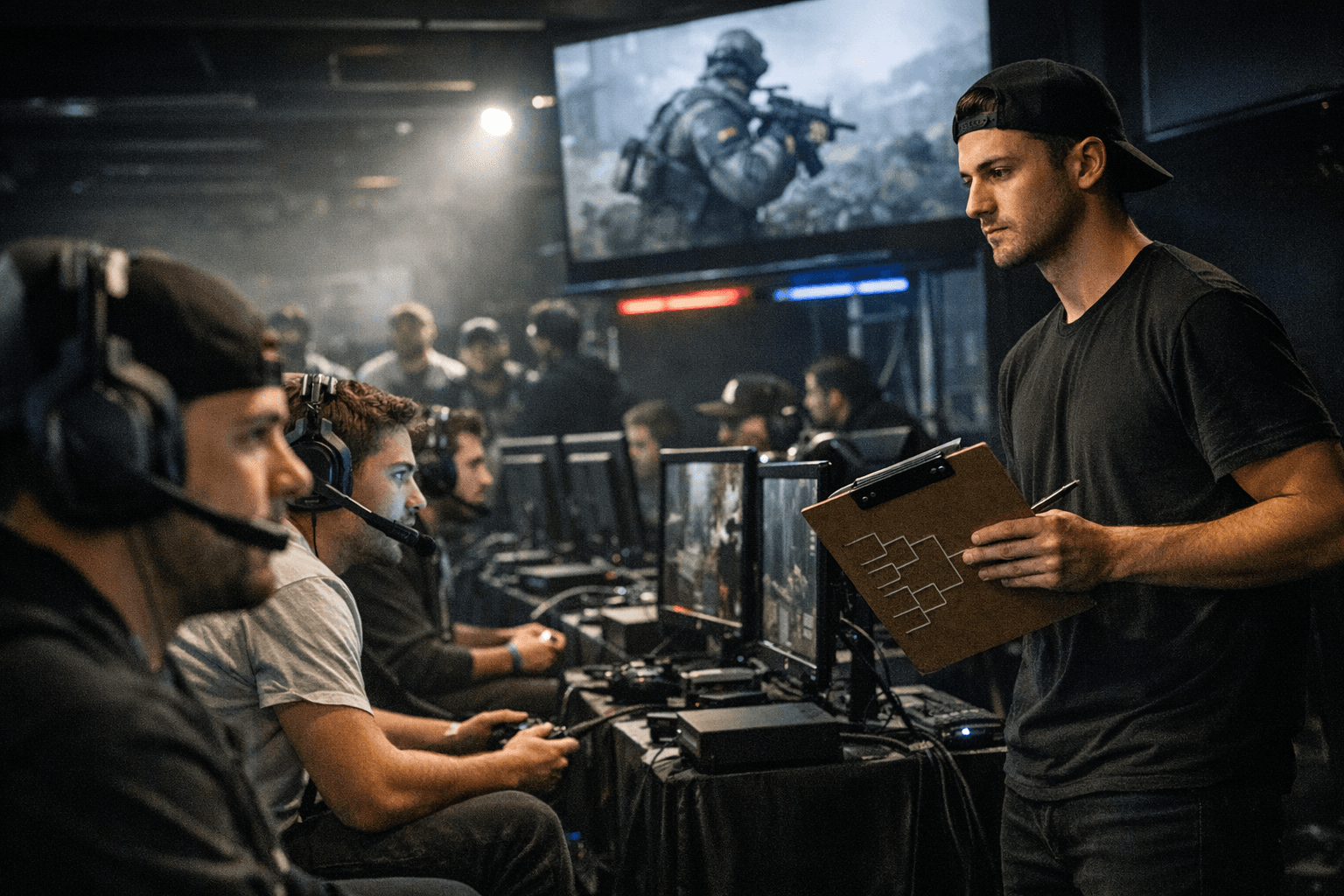
Running a Call of Duty tournament is one of the most rewarding things you can do for your community. Whether it's eight friends grinding Hardpoint in a Discord server or a 128-player open bracket with a prize pool, the architecture underneath every successful event is the same: a clear format, airtight rules, the right bracket software, and a private match setup that mirrors how the pros play. Get those four pillars right and the drama takes care of itself.
Choosing Your Format
The first decision is also the most consequential, because the wrong format for your player count will either leave your lobby half-empty or run until 2 a.m. with nobody left to watch.
In a single-elimination bracket, each team competes in one match per round. The loser is immediately eliminated, and the winner advances until only one team remains. It's brutal, fast, and works beautifully for 8 to 32 players when time is a constraint. Single elimination is ideal for short, competitive events and situations where time constraints are important, like weekend tournaments or quick contests.
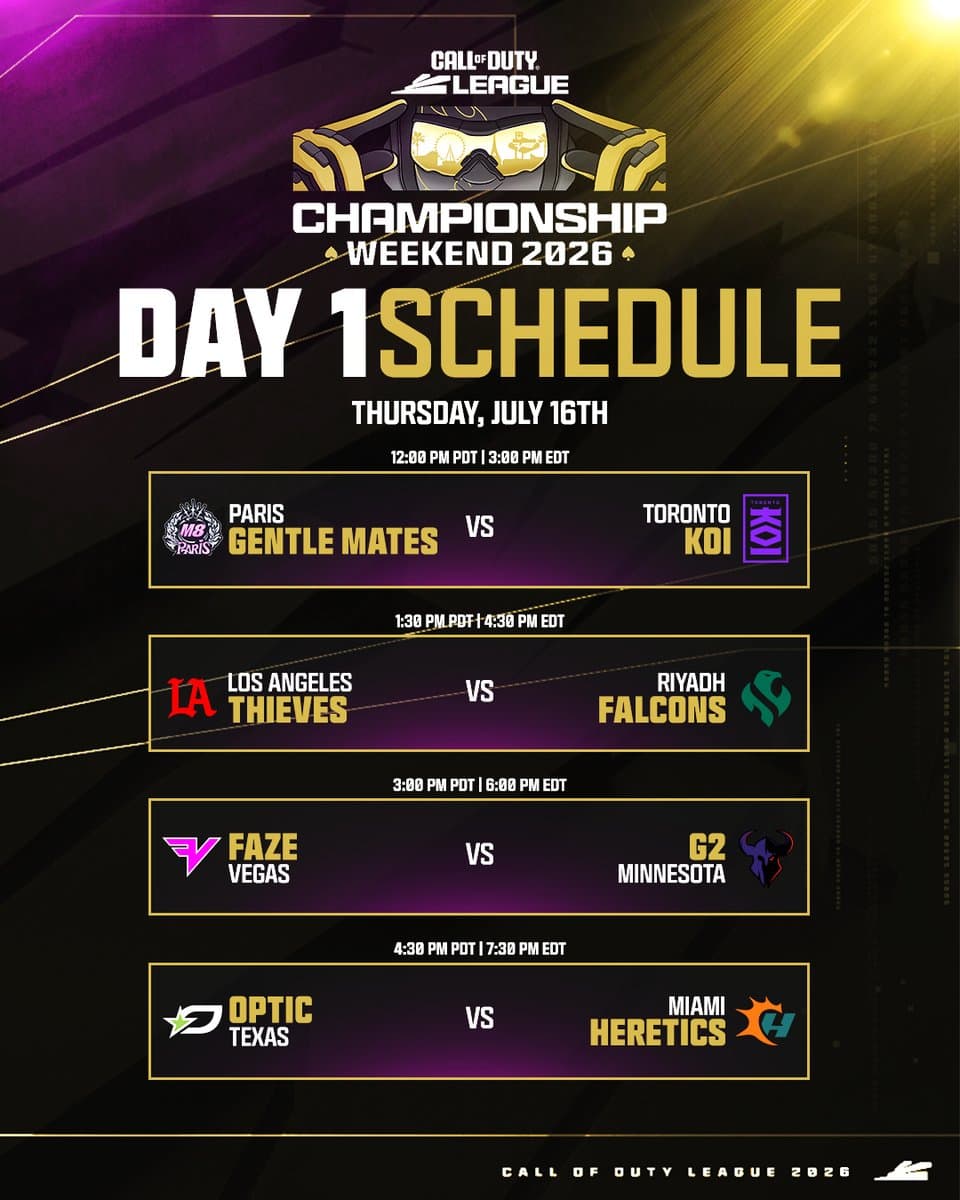
For anything larger or anywhere you want a second chance to matter, double elimination is the gold standard. Double elimination runs as a bracket until one final team remains as the winner. The CDL uses it at every Major: each of the 12 franchises is placed into a double-elimination bracket based on seeding from online qualifiers, with the top eight teams starting in the winner's bracket while the bottom four start in the elimination bracket. Copying that structure for a 16-to-64-player event gives every registered team a real reason to keep competing after their first loss.
For smaller pools of 6 to 16 players with roughly equal skill, a round robin group stage is worth considering. Each group matchups against the other groups in a round-robin format, with each matchup consisting of multiple drops or maps competing with a set scoring system. Round robin produces more accurate final standings but requires significantly more time, so use it only if your schedule has room to breathe.
A Swiss-style format is the smart middle ground for 32 to 128 teams when you can't run a full round robin. In a 64-team Swiss tournament, the top 16 teams are determined after 6 matches by comparing teams' records, with placement decided by record and ties broken using a Buchholz score. Swiss is how large-scale Call of Duty: Mobile qualifiers seed their playoff fields, and it scales cleanly to your player count without inflating the bracket.
Setting Your Match Format
Once the bracket structure is locked, decide how many maps each match covers. The standard grassroots approach, borrowed directly from sanctioned play, is:
- Qualifying/early rounds: Best of 1 (BO1)
- Playoffs: Best of 3 (BO3)
- Semifinals: Best of 3 or Best of 5
- Grand Finals: Best of 5 or Best of 7
The CDL events use a best-of-five format up until the Grand Finals where a best-of-seven determines the eventual winner. For community brackets, running BO1s in early rounds keeps things moving; saving BO3s for playoffs is where the real tension builds.
The three competitive game modes to rotate through are Hardpoint, Search and Destroy, and Control. These can be selected in the map and mode selection menu, and all three are found in the core modes. For a standard BO3 series, run one Hardpoint, one Search and Destroy, and one Control as the decider.
Nailing the Map Veto and Seeding
Map veto is where your tournament starts to feel like a real competitive event. For LAN tournaments, maps are determined for each match through a veto process in which teams provide their picks and bans to a referee, with the higher-seeded team deciding whether to be Team A or Team B. For online play, run the veto in your Discord or bracket platform's match chat before the lobby is created.
Seeding matters more than most grassroots organizers realize. Teams are seeded by their accumulated points at the close of registration, with the higher seed determined by the team closest to zero in the ranking. If this is your first event and nobody has competitive history to draw from, seed randomly and note the results for your next tournament.
Setting Up the Private Match
Every competitive CoD match runs through a private lobby, and the host has full control over conditions. You can set time limits, score limits, the number of teams, and toggle hardcore mode, along with many other options including health settings and team killing rules. Critically, playing in a multiplayer private match does not count toward a player's rank or statistics, so there's no concern about boosting or stat padding.
The hosting team carries real responsibility. The hosting team may not drop host at any point during the match, and dropping host during or after a map's completion will result in a penalty based on the game mode type. Make sure your most stable internet connection is hosting, and designate a backup host before the tournament starts.
Restricted Items and Rules
Running a clean bracket means specifying what gear and attachments are allowed before a single match is played. The CDL Challengers ruleset is the cleanest reference document available: any functional content, including weapons, operator skills, perks, utility, scorestreaks, and attachments, that is newly added to the game is considered restricted until exactly 21 days from the day it becomes available in-game for all players internationally, after which it will be considered unrestricted unless added to the restricted list.
For community tournaments, a simplified restricted list works fine. Include a comprehensive list covering restricted weapons, attachments, killstreaks, equipment, field upgrades, and perks. Publish this list at registration, not on match day.
On conduct: should a player purposefully disconnect during a match on more than one occasion, disciplinary measures should be taken. Specify your penalty structure up front. A common community ladder is warning on first offence, game forfeit on second, and match forfeit on third. Punishments can range from a 2-0 loss, replay, penalty points, exiting the tournament early, a temporary ban, or a permanent ban.
Require all participants to screenshot the end-of-match scoreboard. All participants are encouraged to record all matches played in order to have evidence to provide to an administrator if their opponent is accused of using any prohibited item.
Check-In and Match Logistics
All participants should check in at least 10 minutes before play starts. Build a 15-minute grace window into your schedule: teams have a 15-minute grace period to arrive at their station after a match has been called, and at the administration's discretion, penalties may range from a game loss to a match loss. Without a published grace policy, late-team disputes will derail your entire bracket.
Roster rules are equally important. A team must consist of 5 main players (required) and 1 to 2 reserved players (optional), and once the competition starts, changing of players is not allowed except in the case of reserved players. Players must only use their registered accounts. The CDL Challengers series formalizes this further: for online competitions, competitors are required to have an account for their corresponding platform and an Activision account to connect to online services and compete.
Picking Your Bracket Platform
The right software makes check-ins, bracket progressions, and result reporting automatic instead of manual.
Challonge prioritizes ease of use, letting you set up basic brackets incredibly fast for casual or local events, excelling in quick, no-frills setup. Challonge is owned by tech giant Logitech and has hosted over 31 million brackets. It supports single/double elimination, round-robin, Swiss, and group stages, with tools for seeding, check-ins, live scoring, and participant management — and the free tier is sufficient for public tournaments with unlimited participants.
Battlefy supports single and double-elimination formats, leaderboards, and seamless integrations with Discord, Twitch, and other tools for real-time updates, and it is completely free for core tournament management with no platform fees.
Toornament is easy to create a tournament on and is used in esports operations for many popular game developers including Riot Games, Ubisoft, and Bethesda. It's the better choice if you expect to grow into a recurring league with a dedicated audience.
For most first-time organizers running 6 to 128 players on a tight budget, Challonge or Battlefy will handle everything without costing a dollar.
Running the Day
Post your bracket publicly so every team can track their next match without pinging you every five minutes. Build 20-minute buffers between match slots to absorb tech delays. Assign at least one admin per 16 players to handle disputes and keep lobbies moving.
Track progress live: as matches progress, keep the bracket updated in real time so that everyone has access to the latest results and can follow the action as it unfolds.
The difference between a tournament people talk about for months and one that collapses in the semifinals almost always comes down to preparation done in the week before, not decisions made during the event. Lock your rules, seed your bracket, test your private match settings, and every laser-tagged kill from round one to the Grand Finals grand finals map will mean exactly what it's supposed to mean.
This article was produced by Prism’s automated news system from verified source data, official records, and press releases, then run through automated quality and moderation checks before publishing. The system is built and supervised by the people who set the standards it runs under. Read our full AI policy.
Did this article answer your question?