Yulin opens Silk Road calligraphy exhibition with global artists
Yulin’s Silk Road calligraphy opening paired 250 works with a school demo and a library lecture, turning a show into a lesson in brushwork.
More than 250 calligraphy artists from China and abroad gathered in Yulin, Shaanxi Province, on June 26 for the opening of Silk Road, Civilization, Heritage, a touring exhibition that put 250 works on display and then sent the day’s energy into a primary school and a public library.
The show was built around scale and range. CCTV said 250 works were selected for the final display, including 100 by council members of the China Calligraphy Association, 100 by Yulin local artists and 50 by overseas calligraphers from Italy, South Korea, the United States and France. More than 250 artists had been invited to participate, giving the opening a roster that reached far beyond the city’s own calligraphy circles. The event was organized by the Yulin Municipal People’s Political Consultative Conference and the China International Cultural Exchange Center.
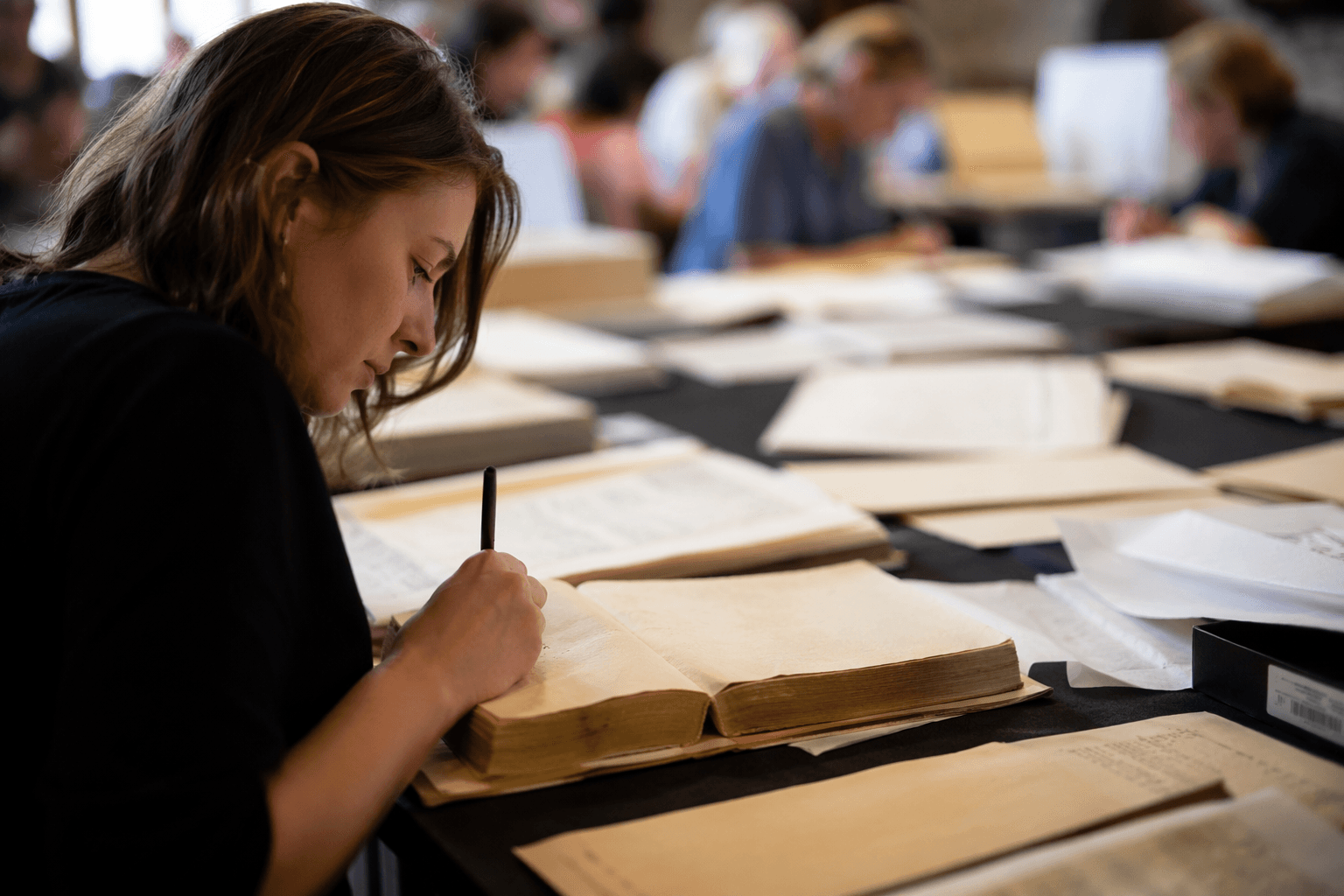
The exhibition also carried a preservation angle. Representative artists donated works to the Yulin Municipal People’s Political Consultative Conference and the Yulin City Archives, turning finished pieces into civic holdings rather than leaving them only on gallery walls. Local political and cultural figures joined senior calligraphers Mao Guodian and Zheng Xiaohua at the opening, where the message was clear: calligraphy was being presented not only as tradition, but as a living medium for exchange.
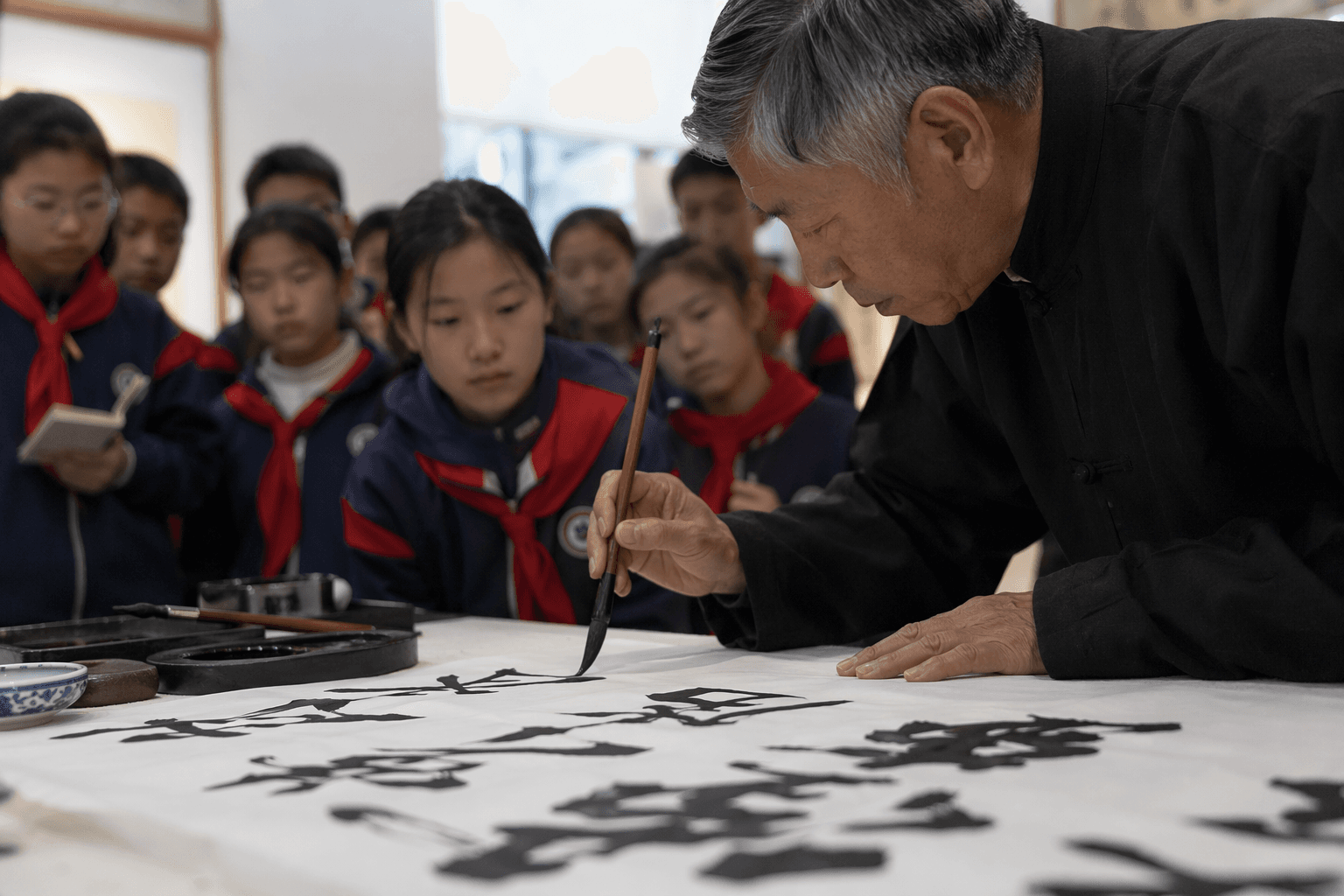
That idea became practical in the afternoon at Yulin No. 18 Primary School. Artists demonstrated brushwork, gave live critiques of student pieces and walked children through posture, brush holding and basic technique. For beginning learners, the value was in the details, from how the wrist settles to how the brush meets the paper, making the exhibition feel less like a remote cultural showcase and more like a working lesson in the fundamentals.
Zheng Xiaohua later carried that lesson into Yulin Library, where he delivered a lecture on the cultural value and contemporary mission of Chinese calligraphy. He framed the art as a carrier of civilization, identity and international communication, extending the day’s conversation from the exhibition hall to a room built for study. Yulin Library says it was founded in 1959, renamed in 1983 and is now a national first-class library; its current building opened in 1991, and a new complex is under construction with an estimated investment of 97.8671 million yuan, space for 950,000 volumes and 1,000 seats.
The sequence matched a broader local pattern. In May 2026, Yulin launched an “intangible cultural heritage into universities” campaign aimed at building school-local cooperation and cultivating young inheritors. This exhibition followed the same logic, moving calligraphy out of a single display moment and into classrooms, archives and public lecture halls where new hands could begin to learn.
This article was produced by Prism’s automated news system from verified source data, official records, and press releases, then run through automated quality and moderation checks before publishing. The system is built and supervised by the people who set the standards it runs under. Read our full AI policy.
Did this article answer your question?