A-Class catamarans push high-tech innovation in singlehanded racing
A-Class cats turn singlehanded racing into a test bed for carbon, aramide and sail-shape ideas, and the class still shows where high-performance multihulls are headed.
The fastest singlehanded catamarans in the world are also one of sailing’s sharpest innovation labs. The A-Class is built as a development class, not a conventional one-design fleet, so the point is not to freeze the fleet in one shape but to keep testing what speed looks like inside a tight rule box. That is why the class still matters to anyone watching the future of high-performance multihulls.
Why the A-Class still pulls the sport forward
The International A-Division Catamaran Association describes the A-Class as one of the fastest singlehanded racing boats in the world, and that claim is backed by the way the class is structured. Most racing classes try to lock everyone into the same platform; the A-Class does the opposite, giving designers and sailors room to explore new materials, new section shapes, and new ideas in sail craft. The association says that freedom has turned the class into a pure high-tech boat.
The history matters too. The class history traces the A-Class to England in 1956, when the former International Yacht Racing Union founded it. Some later rules documents use different wording and say the class was originally recognized in England in 1962, so the official paper trail is not perfectly consistent. What is consistent is the class’s identity as a performance laboratory rather than a cruising platform.
The rule box that makes the experiment work
The A-Class is small by multihull standards, and that size is part of the appeal. Class documents set the maximum overall length at 5.49 meters, or 18 feet, and the maximum sail area at 13.94 square meters, or 150 square feet. A class profile describes the boat as 18 feet long, carrying 150 square feet of rig area and weighing only 75 kg, which is why the association calls it “very much a Formula One car in catamaran form.”
That compact rule box is where the engineering conversation gets interesting. In an A-Class, hull stiffness, mast bend characteristics, sail shape and weight control are not side issues, they are the main game. The class rules also rely on measurement forms for sail, mast and hull, which is another sign that this is a development scene with a serious technical framework rather than a free-for-all.
What A-Class ideas have spread into mainstream multihulls
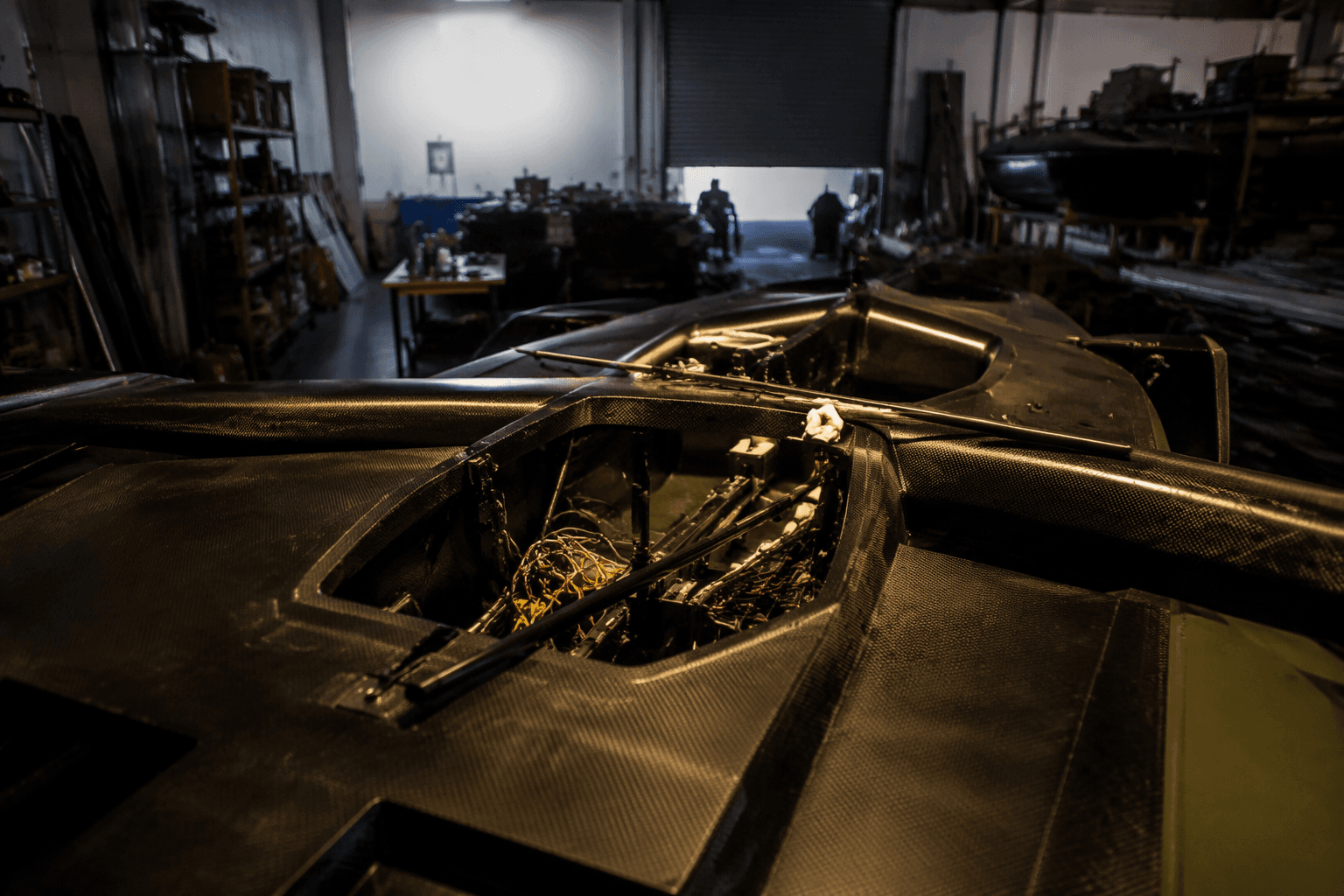
The clearest legacy of the class is the way it normalizes advanced materials. The association highlights modern materials such as carbon and aramide in series production of both hulls and masts, and that language now feels familiar across performance catamarans. Even where a production boat is far less extreme than an A-Class, the expectation of lighter, stiffer structures owes a lot to classes that keep pushing the ceiling.
Just as important is the design mindset. A-Class sailing keeps the focus on how small changes affect speed, so the wider multihull world has inherited a language of precise rig tuning, refined sail shapes and careful weight management. The practical payoff is easy to see: if you are comparing modern performance cats, the A-Class shows which ideas are becoming standard kit and which ones still require a dedicated race program to prove out.
A few of the ideas that have clearly filtered outward include:
- carbon spars and carbon hull construction in performance builds
- aramide use where stiffness and weight savings matter
- deeper attention to mast bend and sail shape
- ultra-light displacement as a design goal, not a marketing slogan
That influence does not mean the A-Class itself is easy to own. The very things that make the class so influential, its exacting measurements, constant development pressure and race-first priorities, also keep it out of reach for many ordinary owners who want simple, forgiving multihull cruising. The class helps set the direction for the market, but it does not try to become the market.
Why the class remains a living scene, not a relic
The A-Class is not confined to a few historic clubs. The class profile says the boats are spread worldwide, with large fleets in Australia and other regions, which shows how durable the class has become as an international technical niche. In the United States, US Sailing’s listing for the United States A-Class Catamaran Association shows about 111 members, small in absolute terms but enough to sustain a serious racing community.
World Sailing still treats the class as an active part of the sport, with dedicated sections for documents, news, champions, measurers and events. That institutional footprint matters because it confirms the A-Class is not just a museum piece preserved by nostalgia. It is still being measured, still being raced and still being managed as a live class with its own rules and governance.
The clearest sign of that ongoing relevance is the 2026 International A-Class Catamaran World Championships, scheduled for 5 to 14 November 2026 in Tampa, Florida, USA, and hosted by Davis Island Yacht Club. The event is split between classic and open fleets, which fits the class’s dual identity as both a historical line and a development platform. For a fleet this compact, the scale of the championship scene is proof that the class still has work to do.
That is the real value of the A-Class story. It starts with a singlehanded catamaran that looks almost too light and too specialized to matter broadly, then ends up explaining how modern multihulls learn to be faster. The class still matters because it keeps doing what it was built to do: turn expensive, demanding experimentation into the ideas the rest of the fleet eventually uses.
This article was produced by Prism’s automated news system from verified source data, official records, and press releases, then run through automated quality and moderation checks before publishing. The system is built and supervised by the people who set the standards it runs under. Read our full AI policy.
Did this article answer your question?