All American Marine Begins Construction on 78-Foot Catamaran Research Vessel for UTMSI
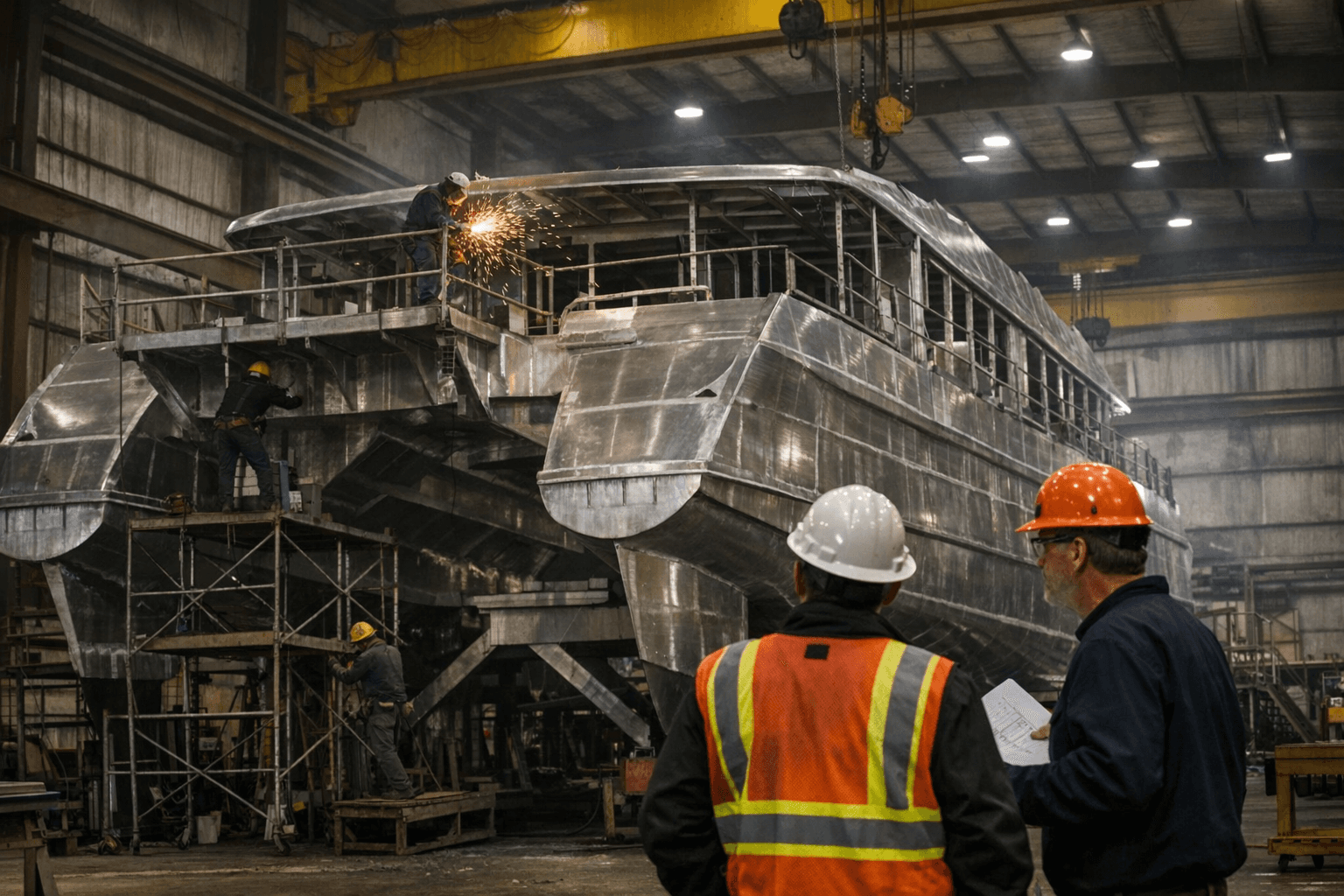
A 78-foot aluminum catamaran built on Teknicraft's hydrofoil-assisted platform is now under construction in Bellingham for the University of Texas Marine Science Institute.
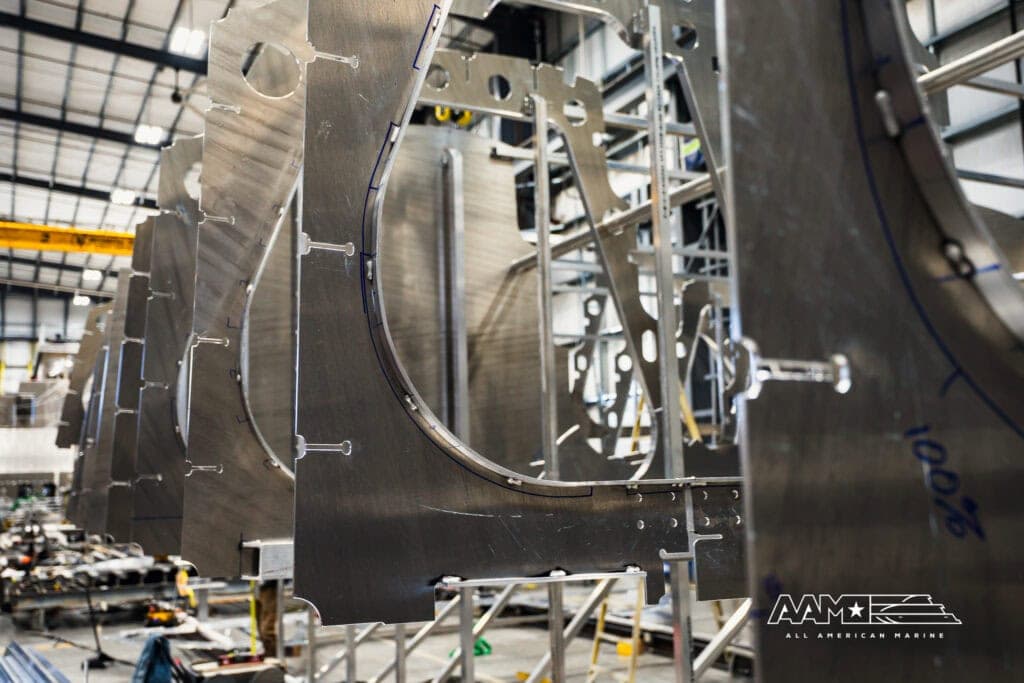
All American Marine in Bellingham, Washington has broken ground on a 78-foot aluminum catamaran research vessel for the University of Texas Marine Science Institute, a build that will put a Teknicraft-designed, hydrofoil-assisted hull to work across some of the Gulf of Mexico's most demanding scientific territory.
The 78-foot by 26.7-foot vessel is built on Teknicraft Design's proven multi-purpose research platform and will be powered by twin 803-hp Caterpillar C18 Tier 3 diesel engines. Cruising speed comes in at about 20 knots, with the ability to slow to survey speeds as low as 3 knots. The 1,600-gallon fuel capacity is sized for extended offshore missions, and the vessel will be inspected to U.S. Coast Guard Subchapter T standards.
What makes this hull particularly notable in the research vessel world is the Teknicraft hydrofoil-assisted design integrated into the catamaran. The adjustable hydrofoil system manages lift and drag across varying sea conditions, with the intended effect of improving stability, reducing resistance, and pushing fuel efficiency across the full operating speed range. For a platform that needs to sprint at 20 knots between ports and then crawl at 3 knots over a transect line, that kind of adaptability matters.
UTMSI, based in Port Aransas, Texas, will use the vessel for scientific research, survey, and academic teaching missions throughout the Gulf of Mexico, with an operational envelope stretching up to 150 nautical miles from shore. Planned expeditions will take the vessel across the Texas shelf, into major river deltas, through salt dome regions, and out to the Flower Garden Banks. For day operations, the vessel accommodates up to 30 passengers; extended offshore missions will carry up to 14 personnel.
"This vessel represents an investment not just in infrastructure, but in people, discovery, and Texas's coastal future," said Dr. Sharon Herzka, Director of UTMSI. "By expanding access to modern, purpose built research capabilities, we're empowering scientists and students to ask bigger questions, pursue new collaborations, and deliver the science needed for generations to come."
Ron Wille, president of All American Marine, framed the build around the platform's operational flexibility. "The Teknicraft platform allows a single vessel to support a wide range of scientific missions while maintaining the reliability and operational efficiency researchers depend on," Wille said.
The Flower Garden Banks, a pair of coral reef caps sitting roughly 100 miles offshore in the northwestern Gulf, represent some of the most ecologically significant and logistically remote research sites in the region. Getting a purpose-built, fuel-efficient catamaran on station there, one that can carry a full scientific party on a multi-day run, is exactly the kind of capability gap this vessel is designed to close.
This article was produced by Prism’s automated news system from verified source data, official records, and press releases, then run through automated quality and moderation checks before publishing. The system is built and supervised by the people who set the standards it runs under. Read our full AI policy.
Did this article answer your question?