Aquila 50 Yacht shows foils can boost speed and efficiency
Aquila’s foil-equipped 50 Yacht hit 21.7 knots at 2,750 rpm and burned 165 l/h, making the case that lift can buy real speed, comfort, and range.
Foils changed the 50 Yacht’s personality, not just its top end
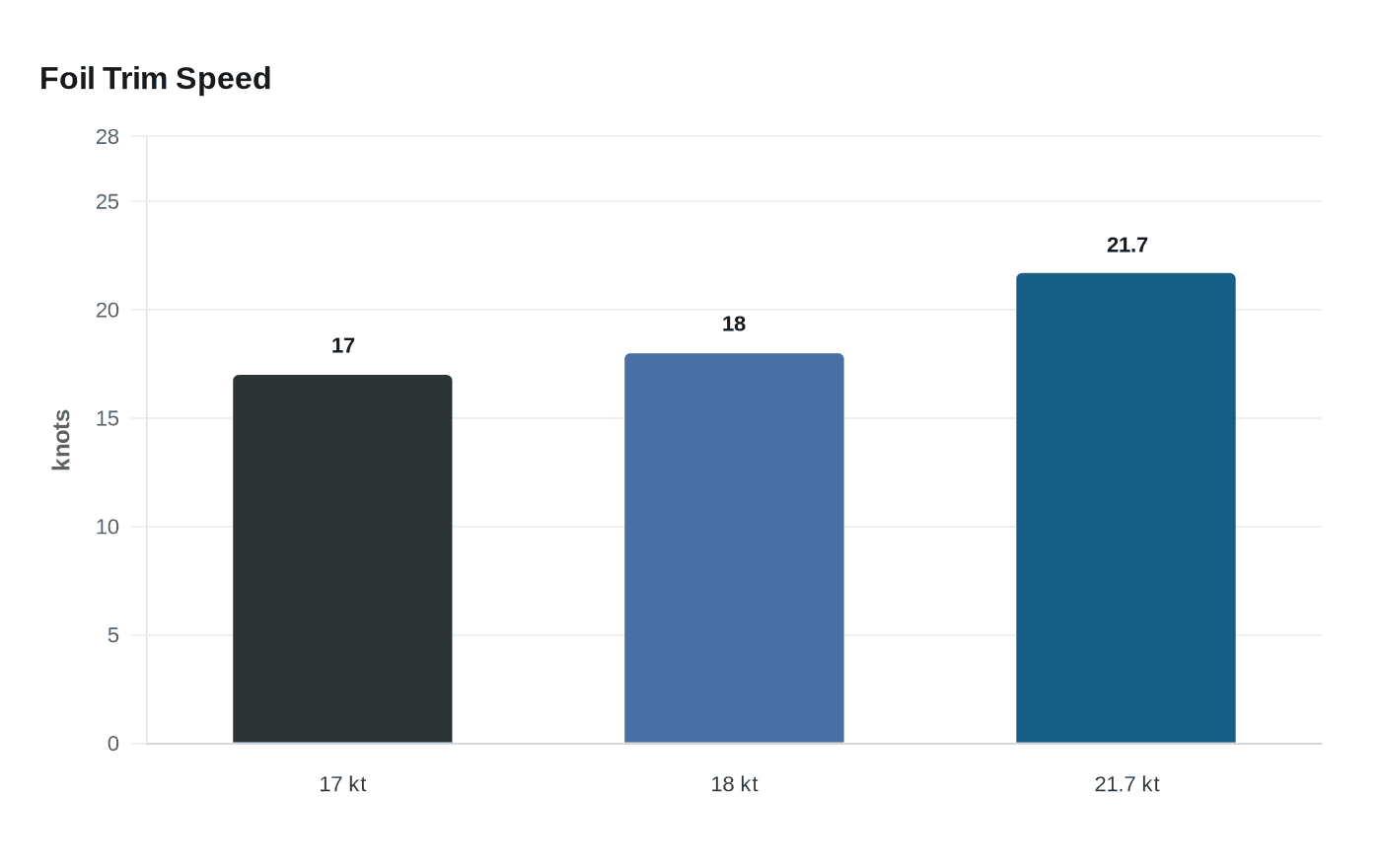
The Aquila 50 Yacht starts to look like a different boat once the foils are engaged. In foil trim, the power cat begins lifting at 2,500 rpm, then climbs from 17 to 18 knots and reaches 21.7 knots at 2,750 rpm, all while burning 165 litres an hour. That is the kind of number set that makes a foil package worth a serious look, because it points to speed and efficiency together, not one at the expense of the other.
What matters most here is attitude. In flat water, the hull bulbs rise farther out of the water, which is the visual clue that this is not a cosmetic add-on. The system is taking load off the hulls, reducing drag, and changing how the boat carries itself. At full throttle, the 50 Yacht reportedly pushed past 25 knots and stayed remarkably stable, which is exactly the sort of behavior owners want from a cruising power cat that still has to feel composed when the pace goes up.
The numbers are the story
Aquila’s foil system on the 50 Yacht is built around one main forward foil and two smaller aft foils. That setup was tested on hull number 29 in La Grande-Motte, France, with twin 550 hp Yanmar engines, after an earlier evaluation of the model in Clearwater, Florida on twin 380 hp Volvo Penta D6 engines. The key point is not just that the boat got faster, but that the foils started doing useful work at practical cruising rpm, not only at the edge of the envelope.
The reported 165 litres per hour is the number that should get owners leaning in. Multihulls World said that figure was roughly 20 percent lower than the maximum-rpm figures observed with the 380 hp engines, which suggests the foil package is helping the boat move more cleanly through the water rather than simply chasing a higher headline speed. For anyone buying with fuel bills, not brochure claims, in mind, that is the real test.
- Lower burn at similar speed usually means more miles between fuel stops.
- More lift usually means less drag, which often helps the boat stay efficient once on plane.
- A stable run past 25 knots matters because speed is only useful if the ride stays usable.
If you translate that into ownership questions, the logic is simple:
That is why this story has appeal beyond the usual foil hype. It is not a racing novelty bolted onto a cruising hull for talking-point value. It is a production power cat showing that lift can be tuned into everyday benefits.
Aquila is pushing foils as a platform feature
Aquila says the Hydro Glide foil system is optional on the 42 Yacht, 46 Yacht, and 50 Yacht, and standard on the 42 and 46 Coupe models. The company also describes the 36 Sport as widely regarded as the leading production foiling boat in the world. That matters because it shows the builder is treating foil assistance as a family of solutions, not a one-off experiment attached to a single model.
Aquila says the goal is to improve performance, fuel efficiency, and ride comfort across its power catamarans. That combination is the reason foils are moving from conversation-piece status into actual buying consideration. If a system can add speed, reduce burn, and smooth the ride without making the boat nervous, it stops being a gimmick and starts becoming part of the design language.
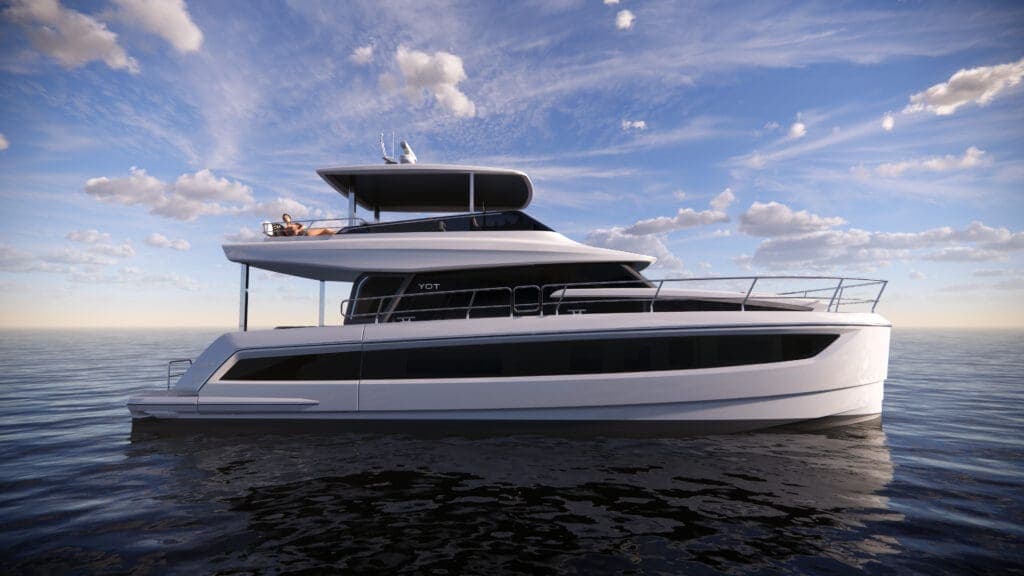
The 50 Yacht fits that strategy neatly. Aquila positioned it as an inboard flybridge yacht in the range alongside the 42 Yacht, 44 Yacht, 54 Yacht, and 70 Luxury. It replaces the outgoing Aquila 48, and the launch framing made clear that this is the next step in the line, not just a reskin. Launch coverage described the boat as 52 feet 2 inches long with a 25-foot-6-inch beam, which gives it the sort of wide, stable platform that makes foil assistance especially interesting on a production cat.
Why the 50 Yacht launch matters beyond the spec sheet
Aquila introduced the 50 Yacht publicly at the Fort Lauderdale International Boat Show, held from October 30 to November 3, 2024. The model was presented as a new Explorer design with high freeboard, a standard 3-cabin, 3-head layout, and an optional 4-cabin, 4-head layout with captain’s quarters. That makes it easy to see the target buyer: someone who wants a serious cruising boat with real interior flexibility, not just a speed machine.
The price context puts the performance story into sharper relief. Independent launch coverage placed the on-water price at just under $2 million, and the U.S. standard-engine package was reported as twin 480 hp Volvo Penta D6s. Against that backdrop, the foil option is not a cheap flourish. It is an equipment choice that has to justify itself through better cruising behavior, lower operating cost, and a more comfortable day on board.
That is where the hull test results become important. A boat this size and this price is not being bought for a drag race. It is being bought for long coastal hops, family cruising, entertaining, and the ability to keep moving efficiently without feeling like the motors are working too hard. The reported lift out of the water, the 21.7-knot cruise at 2,750 rpm, and the stable 25-plus-knot top run all point in the same direction: the foil package is changing how the 50 Yacht does real work.
The practical verdict for buyers
Foils still will not be for every power-cat buyer. If your use case is short local runs at low speed, the extra complexity may not matter much. But if you spend time covering distance, care about burn rate, and want a boat that stays composed as speed rises, the Aquila 50 Yacht makes a strong case that foil assistance is now a real-world upgrade.
The important shift is this: the conversation is no longer about whether foils can make a boat look fast. It is about whether they can make a family-size cruising cat go farther, burn less, and ride better while still holding more than 25 knots when you want to open it up. On the evidence Aquila is putting in front of buyers, that answer is getting harder to dismiss.
This article was produced by Prism’s automated news system from verified source data, official records, and press releases, then run through automated quality and moderation checks before publishing. The system is built and supervised by the people who set the standards it runs under. Read our full AI policy.
Did this article answer your question?