Catamarans Evolve Into Remote-Work Homes for Cruising Sailors
By the end of 2025 a clear shift emerged: more people are using catamarans as rolling remote-work bases, and that shift is changing what buyers want and how builders design new models. Improved communications, power systems, and onboard comforts are making longer stretches of working from sea practical, affecting choices from deck layout to battery capacity.

A year-end reflection looking back at developments in 2025 highlighted a growing trend: catamarans are increasingly being outfitted and chosen to serve as mobile remote-work platforms. Owners and testers reporting extended stays afloat said better connectivity, bigger battery banks and more comfortable accommodation have pushed the lifestyle from weekend cruising into viable weeks- or months-long living and working aboard.
Those involved in testing new boats and attending boat shows throughout the year described how practical improvements have made a difference. Reliable communications stacks that combine boosted LTE, integrated Wi-Fi and satellite options now allow video calls and large file transfers while on passage or at anchor. Advances in lithium battery systems, more effective inverter designs and expanded solar arrays mean vessels can run air conditioning, refrigeration and office electronics without constant engine runs. Interior layouts have shifted to favor dedicated living spaces that double as work areas, and deck plans increasingly consider sheltered spots where broadband reception is strongest.
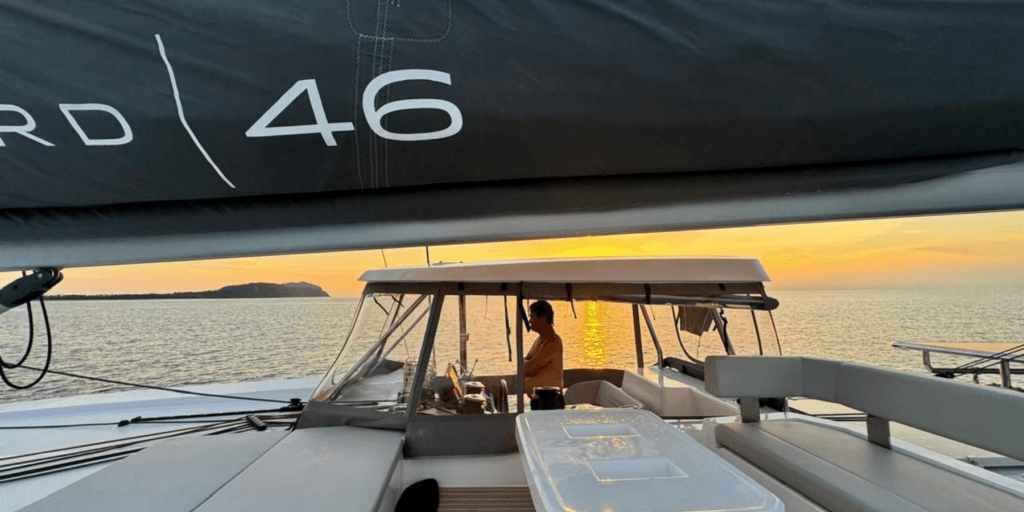
Firsthand experience from work periods in the Caribbean and Mediterranean reinforced the practicality of the approach. Time spent working on deck or from a raised salon demonstrated what matters in day-to-day life: comfortable seating for long hours, phone and laptop power access, quiet engine and generator operation, and reliable climate control. Those real-world trials translated into clearer buyer priorities by the time owners and brokers were placing orders for new models.

The market response has been swift. Buyers now list connectivity, battery capacity, and flexible indoor-outdoor living spaces near the top of their checklists, and designers are responding by integrating larger battery banks, thoughtful cable routing and adaptable cabin furnishings. Deck layouts are being evaluated for both social use and signal reception, and builders are adding features such as shade structures and plug-and-play charging points to support long-term remote working.
For anyone considering a catamaran as a remote-work platform, prioritize reliable communications and energy autonomy. Verify satellite and cellular coverage maps for your intended cruising grounds, assess installed battery capacity and charging options, and look for layouts that provide a quiet, comfortable workspace with good ventilation and natural light. As demand shapes new-model design, owners can expect more factory options aimed at on-the-water professionals, making the cruising lifestyle more accessible for those who need to keep a laptop open at sea.
This article was produced by Prism’s automated news system from verified source data, official records, and press releases, then run through automated quality and moderation checks before publishing. The system is built and supervised by the people who set the standards it runs under. Read our full AI policy.
Did this article answer your question?