Catlante Néo showcases cabin charter’s lasting appeal in catamarans
A cabin on the Catlante Néo is the easiest way into catamaran life, with shared comfort, a set itinerary and none of the full-boat overhead.

Why cabin charter still has legs
A cabin on the Catlante Néo is the cleanest entry point into the catamaran lifestyle: you get the cruising rhythm, the food, the crew and the social atmosphere without having to own a multihull or fill an entire boat with friends. That is the appeal Catlante has spent more than 20 years refining, and it is why the company now presents itself as France’s leading shipowner for crewed cruises, whether you book by the cabin or take a private charter.
The model has lasted because it solves a very specific problem in the market. A full-boat charter can be expensive and complicated, while ownership brings maintenance, berth, insurance and scheduling headaches. Cabin charter splits the difference, giving you access to a well-run sailing holiday on a large catamaran while keeping the price and logistics closer to a packaged trip than a yacht-management project.
The Catlante Néo as a floating shared holiday
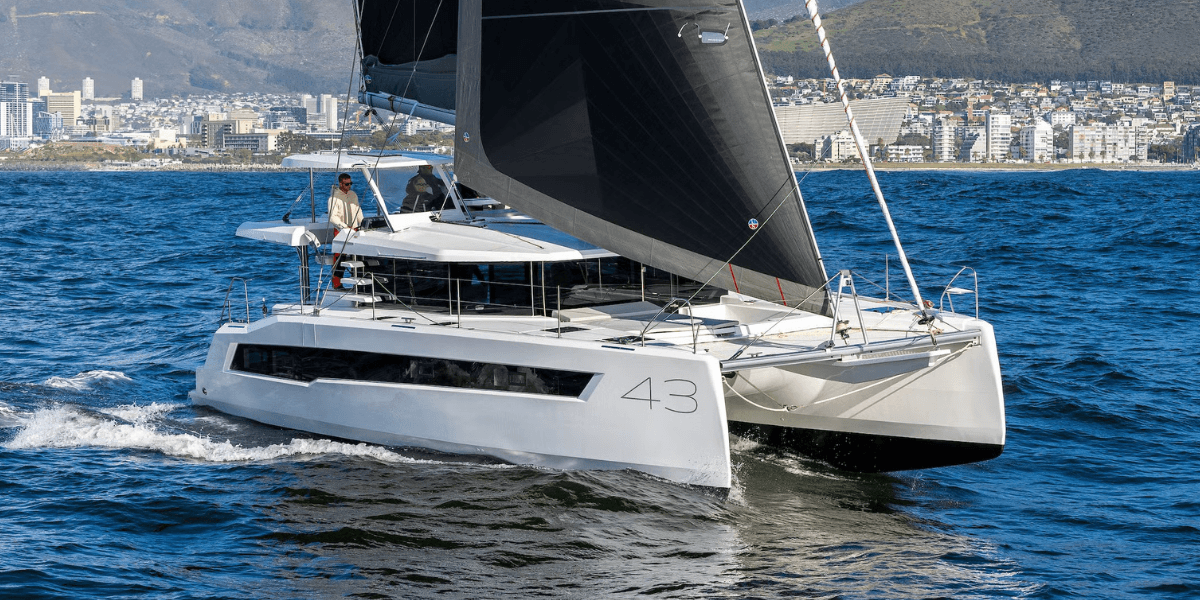
The boat at the center of the story is the Catlante Néo, Catlante’s newest multihull, a Samana 59 custom-built in France by Fountaine-Pajot. It carries six cabins, accommodates 12 to 14 passengers, and is run with a three-person crew, which is exactly the scale that makes cabin charter feel intimate without becoming private-boat territory.
That layout is paired with the kind of amenities that matter on a shared cruise more than on a performance delivery run. The Néo has a flybridge, a large aft-deck table for 12 to 14 people, air-conditioned cabins, private bathrooms, a bar fridge, bean-to-cup coffee machines, a water-and-ice fountain, snorkeling gear, paddleboards and two-seater canoes. In other words, it is set up less like a technical showcase and more like a comfortable social platform that happens to sail.
What the onboard experience is actually selling
The core product is not just a berth and a route, it is the atmosphere that develops when strangers are placed on the same boat for several days. On the Marseille run to the Frioul Islands, the experience leaned on a highly welcoming crew, good food and a balance between time under sail and time ashore. That mix matters, because cabin charter succeeds when the boat gives you enough privacy to relax but enough shared space to make conversation feel natural.
That human element is why the format keeps finding an audience. The writer came away surprised by both the diversity of the guests and the quality of the experience, which is a useful reminder that cabin charter is not a compromise product for people who could not get a full charter together. It is a distinct social format, and for many travelers that is the point. You are not just booking a hull, you are buying into a temporary community that is shaped by the crew as much as by the itinerary.
Why Marseille and the Frioul Islands fit the model
Marseille is a strong launch point because the destination is close enough to feel immediate, yet varied enough to give a short cruise real texture. The Frioul archipelago off the city is made up of four islands, Pomègues, Ratonneau, If and Tiboulen, and it sits within the Calanques National Park. It is also promoted for protected fauna, flora, beaches, coves and maritime history, which makes it an unusually rich setting for a compact shared-cruise format.
That geography supports the whole cabin-charter logic. Instead of spending days just getting somewhere, the boat can combine easy sailing, swimming, shore time and the kind of local discovery that makes a short trip feel complete. For a guest who wants the feeling of a catamaran holiday without the burden of planning a private route, Marseille to Frioul is a practical, legible doorway into the lifestyle.
Who this model suits, and where the tradeoffs sit
Cabin charter fits travelers who want comfort and sociability but do not want to assemble a group, negotiate every meal or manage a whole yacht. It also suits people who are curious about catamarans and want to test the format before committing to ownership, private charter or some future shared-ownership structure. The boat gives you the signature multihull space and stability, but the product stays accessible because the cost is divided and the service is bundled.
The tradeoff is just as important to name. You give up total control over the schedule, the people on board and the privacy of having the whole vessel to yourself. You are sharing the aft deck, the dining table and the daily rhythm, so flexibility gives way to curation. For the right guest, though, that is not a drawback, it is the feature that makes the trip feel lively rather than merely luxurious.
Why the 25-year story matters now
Catlante’s longevity gives the model credibility at a time when the multihull market keeps expanding in different directions. The company says it has been developing its all-inclusive cabin-cruise concept for 25 years, and it was founded in 2003. By 2023, Montefiore Investment and BPI France had backed a new phase of growth, while third-party coverage put Catlante’s passenger count above 100,000 by 2024.
That scale matters because it shows cabin charter is not a novelty, it is a durable segment with real demand behind it. Catlante’s current brochures even position the Catlante Néo as an accessible Provence option, with departures from Marseille starting at €1,290 per person for a 4-day all-inclusive cruise. That price point, the shared-boat format and the refined onboard setup explain why the model still works: it opens the catamaran world to people who want the experience more than the ownership burden.
This article was produced by Prism’s automated news system from verified source data, official records, and press releases, then run through automated quality and moderation checks before publishing. The system is built and supervised by the people who set the standards it runs under. Read our full AI policy.
Did this article answer your question?