European Expedition Catamaran Combines Aluminum, Hybrid Power, Polar Design
OC 194 turns the catamaran into a true expedition platform, pairing aluminum, hybrid drive, and a ketch rig for ice, range, and heavy-weather control.
A catamaran built for ice, not just islands
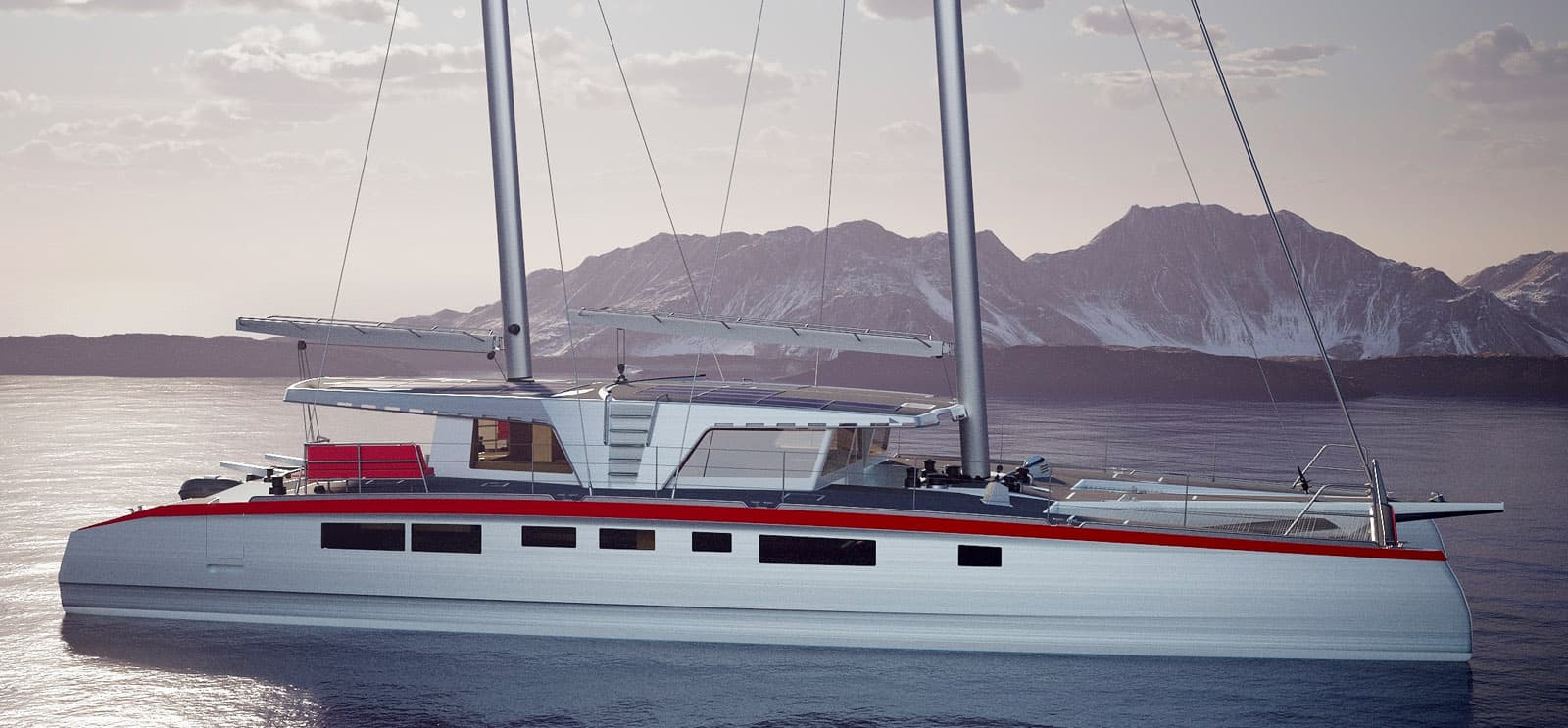
OC 194 is trying to solve a very specific problem: how to give serious passagemakers the speed, deck volume, and shallow-draft advantages of a catamaran without losing the strength and handling needed for cold-water, high-latitude work. That is why this new Owen Clarke Design concept is not being framed as another luxury cruiser, but as a “high latitude explorer sailing catamaran” aimed at the Pacific Northwest and operation near ice.
The result is a boat that challenges one of the oldest assumptions in multihull ownership. For years, catamarans have been associated with warm-water cruising, charter fleets, and tropical anchorages. OC 194 pushes in the opposite direction, suggesting that a multihull can be a serious expedition machine if the structure, rig, and machinery are all tuned for the mission.
Why this catamaran is different
The design layers several unusual choices into one platform. Reinforced aluminum is specified for ice navigation and demanding conditions, retractable daggerboards help keep draft manageable in shallow water, and hybrid propulsion is included to reduce fuel burn on long passages. The ketch rig is the other big tell: instead of chasing maximum sail area, the sail plan is meant to simplify handling and make the boat easier to manage when the weather turns serious.
That combination matters because standard production cats usually optimize for comfort, easy sailing, and family cruising. OC 194 is doing something else entirely. It is trying to carry more payload, stay controllable in rough weather, and stretch farther between fuel stops while still preserving the room and stability that make catamarans appealing in the first place.
A private expedition yacht, not a superyacht-scale science project
At around 22 meters overall, the yacht is large enough to carry meaningful supplies, spare parts, and expedition gear, but still small enough to remain a private vessel rather than a giant superyacht program. That size sweet spot is part of the concept’s appeal. It suggests a boat that can support real exploration without demanding the budget, crew, and logistical footprint of a much larger yacht.
The interior is also said to be optimized for polar conditions, which pushes the design firmly into the expedition category. That means insulation, systems thinking, and livability in cold climates matter just as much as open-plan styling or charter-friendly cabin layouts. On a boat like this, comfort is not about beach-club aesthetics, but about keeping the crew functional when the weather, water temperature, and remoteness all work against you.
The trade-offs that matter most
For catamaran buyers, OC 194 is worth watching because it is built around trade-offs that standard production cats rarely have to confront.
- Load-carrying: the aluminum structure and 22-meter size are meant to support real expedition payloads, not just luggage for a holiday cruise.
- Heavy-weather handling: the ketch rig reduces sail area and should make the boat easier to reef and balance under pressure.
- Redundancy: hybrid propulsion adds another layer of operational flexibility when fuel efficiency and backup power both matter.
- Range and access: daggerboards and a polar-minded layout widen the mission profile beyond smooth-water cruising grounds.
Those are not abstract design buzzwords. They are the details that decide whether a catamaran can cross remote waters, linger off a cold coast, or operate with some resilience when conditions become less forgiving.
Why Merfyn Owen’s return matters
There is also a human-story angle that gives the project extra weight. Owen Clarke Design says Merfyn Owen and Allen Clarke first met in 1987, formed a working partnership in 1993, and created the current LLP in 2002. If construction goes ahead, Merfyn Owen would be returning to multihulls for the first time in nearly thirty years, which is a notable marker in a studio with deep roots in offshore design.
That background helps explain why this concept is getting attention. Owen Clarke Design says its portfolio includes eighteen Class 40 yachts and eight Vendée Globe IMOCA Open 60s, credentials that suggest real familiarity with boats built to survive hard miles. In other words, this is not a novelty sketch from a team that has never had to think about failure modes, load paths, or offshore reliability.
The timing and the build path
The project, identified as OC 194, was described with aluminum cutting files due in the first quarter of 2026, followed by construction once a builder is chosen through a vigorous tender process. That puts the concept into a real development pipeline rather than an idle presentation piece.
The location also helps define the brief. A boat intended for the Pacific Northwest of the United States has to deal with cool water, long distances, remote anchorages, and more variable conditions than the sunbelt catamaran lifestyle most buyers picture first. That is a very different use case from a marina-based cruiser that moves between warm-water stops and predictable trade-wind routes.
Why the market should care
The broader significance is that multihull explorer yachts are starting to look less like anomalies and more like a niche with design momentum. Owen Clarke Design said in a 2024 post that multihull explorer yachts are rare and catamaran ketches are rare, which makes OC 194 unusual on two levels at once. It is rare in mission and rare in rig choice.
Comparable recent projects show that this idea is not happening in isolation. Rossinavi’s Seawolf X, a 42.8-meter aluminum hybrid-electric catamaran delivered in August 2024, showed how a multihull can be pushed into high-end hybrid territory. HH Catamarans’ HH44, a 44-foot catamaran with hybrid engines and solar arrays, was named Sailing World’s 2024 Boat of the Year, proving that efficiency-focused multihull design has market recognition. Owen Clarke Design’s own 2024 Meerkat concept, an ice-reinforced aluminum centreboard blue-water cruising catamaran, also points to a clear design thread.
That is what makes OC 194 interesting to serious passagemakers. It is not asking whether a catamaran can be comfortable. It is asking whether a catamaran can be strong enough, self-sufficient enough, and manageable enough to work in places where people usually expect to see expedition monohulls. If it comes together as intended, it could mark a meaningful shift in how long-range multihulls are imagined for cold-water cruising.
This article was produced by Prism’s automated news system from verified source data, official records, and press releases, then run through automated quality and moderation checks before publishing. The system is built and supervised by the people who set the standards it runs under. Read our full AI policy.
Did this article answer your question?