Family aboard Bali 4.2 logs 2,260 nautical miles in first year afloat
A family’s first 365 days on a Bali 4.2 turned 2,260 nautical miles into a lesson in space, routine and real cruising, not highlight-reel sailing.
Two thousand two hundred and sixty nautical miles tells a very different story from a glossy passage montage. In the first 365 days aboard their Bali 4.2, Laura, Enrique, Aizea and Bandit turned the Mediterranean into a working home, with Athens, Greece as the point from which the year can be read in full. The route began at Port Ginesta in Barcelona in late summer 2024, and what followed was less about a single epic crossing than about how a family keeps moving, keeps adapting and keeps a boat comfortable enough to live on day after day.
A first year measured in miles, not headlines
The itinerary itself is the clearest proof that extended cruising is built from ordinary decisions repeated well. Majorca and Menorca came first, then southern Sardinia and northern Sicily, followed by Puglia, Albania and the Ionian Islands. After that, the family circumnavigated the Peloponnese and spent time in the Saronic Islands before settling in Athens. That is a cruising record shaped by seasons, weather windows and the practical need to keep the pace sustainable.
That matters because it separates liveaboard reality from charter-week fantasy. A short holiday passage can be judged by arrival and anchorage scenery; a year afloat has to work as a household. The Mediterranean route shows how a family can stitch together islands, coastlines and anchorages into something closer to a rolling domestic routine than a single voyage, while still preserving the sense of movement that makes sailing feel alive.
Why the Bali 4.2 suits the job
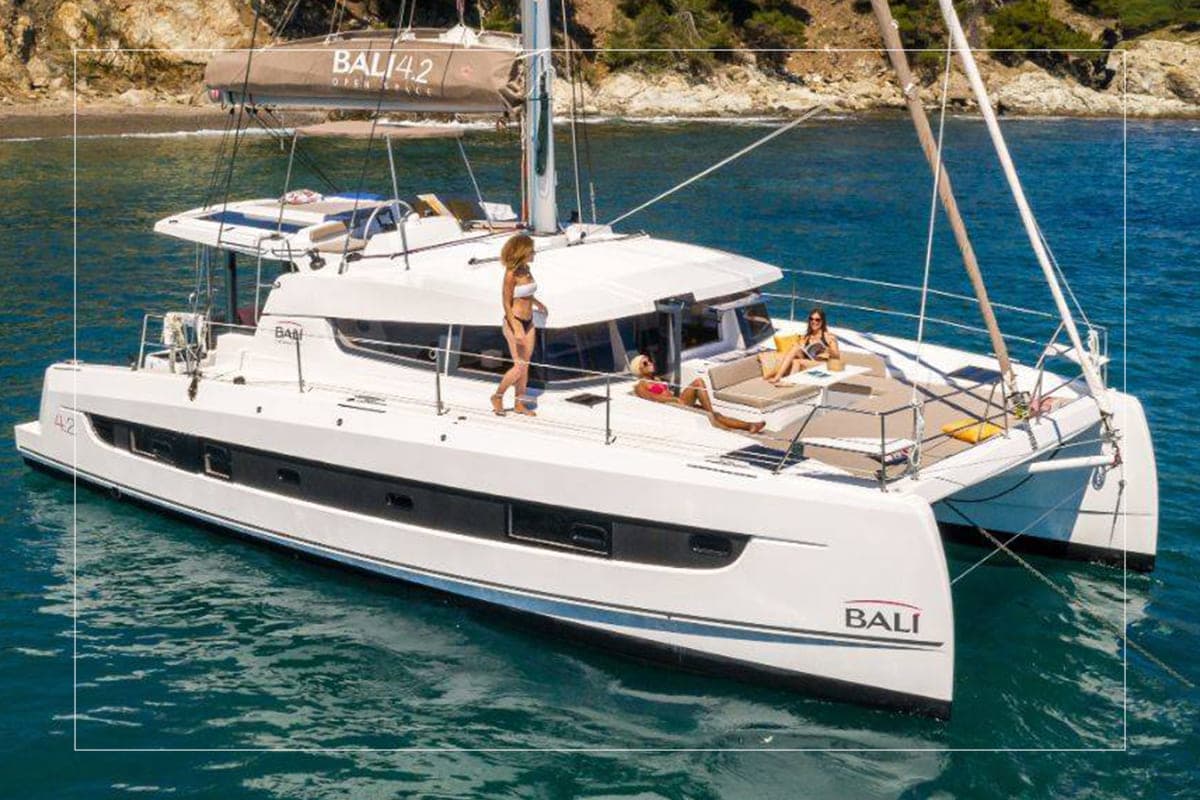
The boat at the centre of the story is part of the reason the year works at all. Bali Catamarans describes the Bali 4.2 as having the largest usable surface area in its class, and that claim fits neatly with the needs of a family living aboard rather than just cruising through. Volume is not a luxury in that context; it is what keeps meals, homework, wet gear and quiet time from colliding every hour.
The layout also explains why the model has such broad appeal among cruising families. The flybridge helm station is designed for easy maneuvering, whether sailing solo or as a couple, which is a serious advantage when the crew has to be flexible. Add the Bali door and rigid foredeck concept, built to create more open living space, and the boat starts to look like a platform for everyday life as much as for sailing.
That practical focus sits within Catana Group’s 40 years of experience in catamaran design and construction. The Bali 4.2 is offered in 3-cabin and 4-cabin versions, which reinforces the point: this is a multihull built for real households, not just for show. The appeal is not simply that it looks spacious at the dock, but that it gives families room to settle into routines without giving up the ability to move efficiently from island to island.
What hundreds of ordinary days change
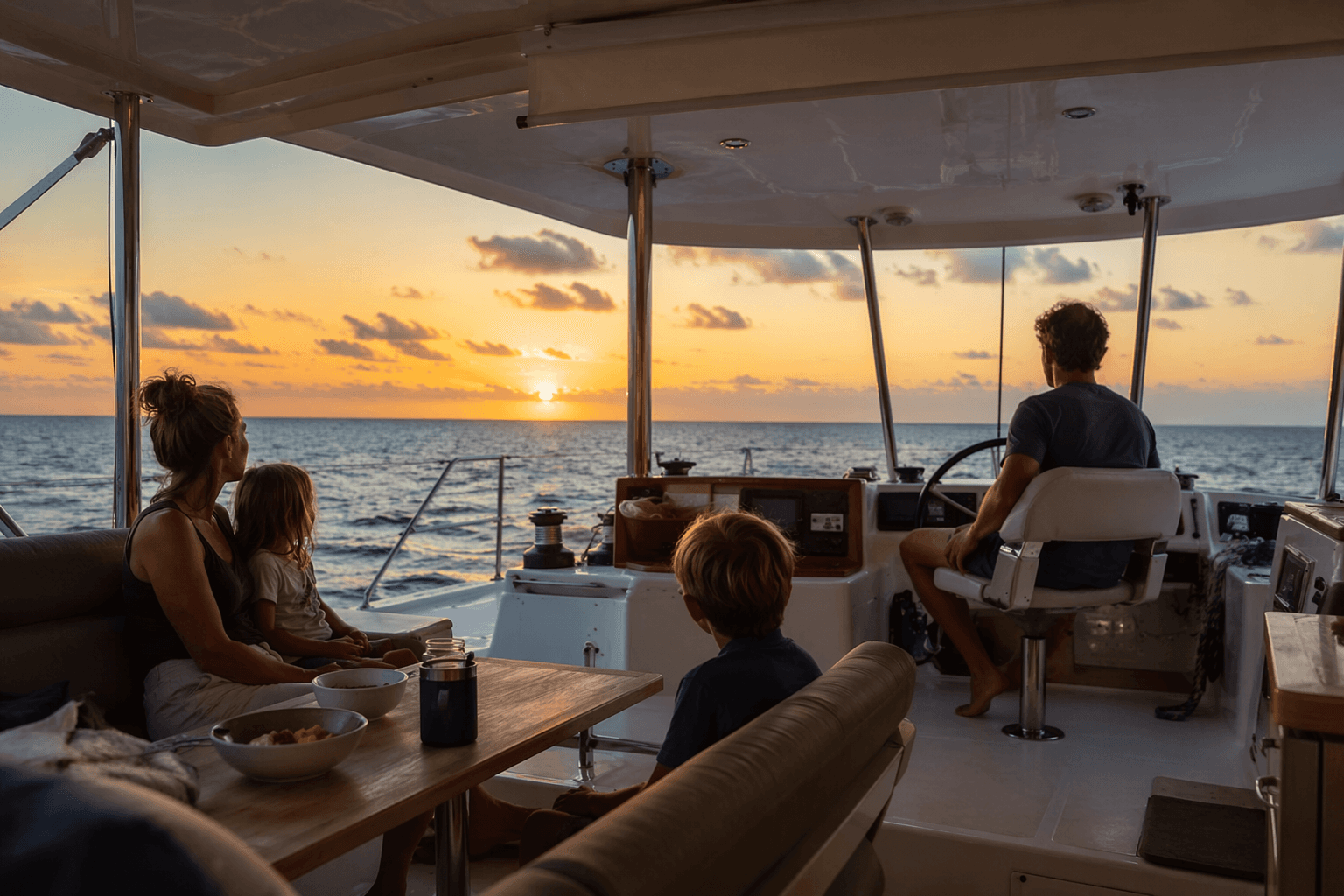
The most valuable part of this story is not the route list, impressive as it is. It is the reminder that a year aboard changes the shape of the day-to-day job. Laura’s role, as described in the profile, stretched well beyond one title: skipper, schoolteacher, meteorologist and washing machine. That is the lived truth of extended cruising. The boat becomes the workplace, classroom, weather station and laundry room all at once.
A family cruise also changes how you think about pace. The route from Barcelona to Athens was not built around one grand finish line; it was built around staying comfortable, staying flexible and letting the boat support the life on board. That is where the difference lies between a holiday passage and a floating home. Once the first few weeks pass, the real question is not where the next scenic stop is, but how the crew keeps the system of daily life running.
For anyone thinking about a similar step, the transferable lessons are blunt and useful:
- Choose a boat with genuine living volume, not just a strong profile at the dock.
- Favor helm and deck layouts that make short-handed maneuvering realistic.
- Treat the route as a sequence of seasons and weather decisions, not a fixed wish list.
- Plan for the family rhythm first, then fit the sailing around it.
- Build the boat around repeated daily use, because that is where the compromises show up.
The pet-friendly side of liveaboard cruising
Bandit is part of what makes this story resonate beyond the usual owner-boat audience. A separate Multihulls World feature follows Laura and her family sailing 2,500 miles with their dog and pulls advice from other pet-owning cruisers from Canada, France, Puerto Rico and Switzerland. That wider perspective underlines something the catamaran community already knows: pets are not an odd exception in liveaboard cruising, they are part of a growing reality.
Once a dog is part of the crew, the boat’s livability matters even more. Deck flow, shaded spaces, easy access and enough room for everyone to breathe all become part of the decision-making. The Bali 4.2’s open-plan thinking and high-volume layout fit that brief well, which helps explain why the story lands as more than a family diary. It reads like a practical case study in how a multihull can support children, pets and the repetitive logistics of life underway.
What the first year really teaches
The Mediterranean track from Port Ginesta to Athens is memorable because it never pretends that life aboard is only about the best anchorage or the prettiest crossing. It shows that the value of a catamaran is revealed in the accumulation of days, in the small routines that make a family feel settled while still moving, and in the way a well-designed multihull can carry both adventure and domestic life without forcing one to disappear. That is the real lesson of the first year: the miles matter, but the ordinary days are where the cruising life actually takes shape.
This article was produced by Prism’s automated news system from verified source data, official records, and press releases, then run through automated quality and moderation checks before publishing. The system is built and supervised by the people who set the standards it runs under. Read our full AI policy.
Know something we missed? Have a correction or additional information?
Submit a Tip