Father and daughter cross the Atlantic again aboard charter catamaran
Aurore Hernandez is crossing the Atlantic again with her father, this time aboard a day-charter catamaran that proves charter boats can go bluewater.

A family passage, not just a delivery
Aurore Hernandez was five when her father first took her across the Atlantic. Three decades later, she is on the same kind of adventure again with Christian Hernandez, only this time the boat is Palm Pleasure 2, a Punch 21.10 DC day-charter catamaran being delivered to Aruba in the Dutch Caribbean just off Venezuela.
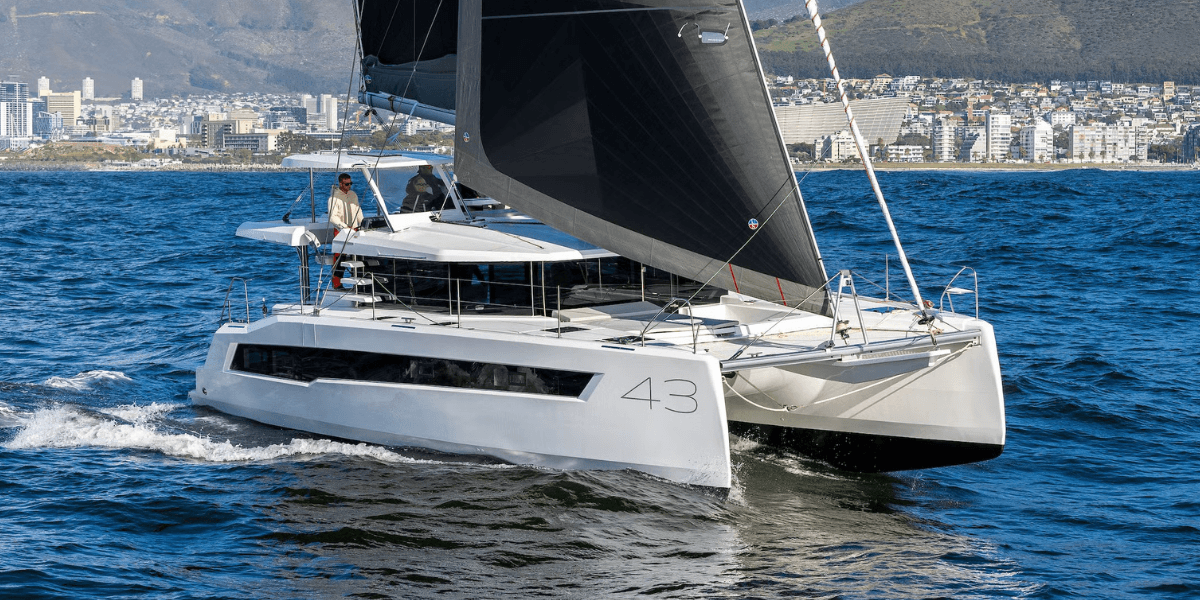
That is what makes the story land with catamaran owners and buyers. This is not a private cruising yacht hidden in a luxury marina routine. It is a charter platform, a boat built to work in guest-facing service, yet here it is proving that a modern day-charter multihull can be pushed into genuine offshore duty without losing the comfort and pace that make catamarans so appealing in the first place.
What changes when a day-charter cat goes offshore
The clearest shift is in how the boat is used. On charter, a catamaran is about open decks, easy movement, fast turnover, and a crowd-friendly layout. On passage, the same platform becomes a delivery boat, with the crew focused on watchkeeping, sail trim, rest, and the steady management of life at sea rather than day-use convenience.
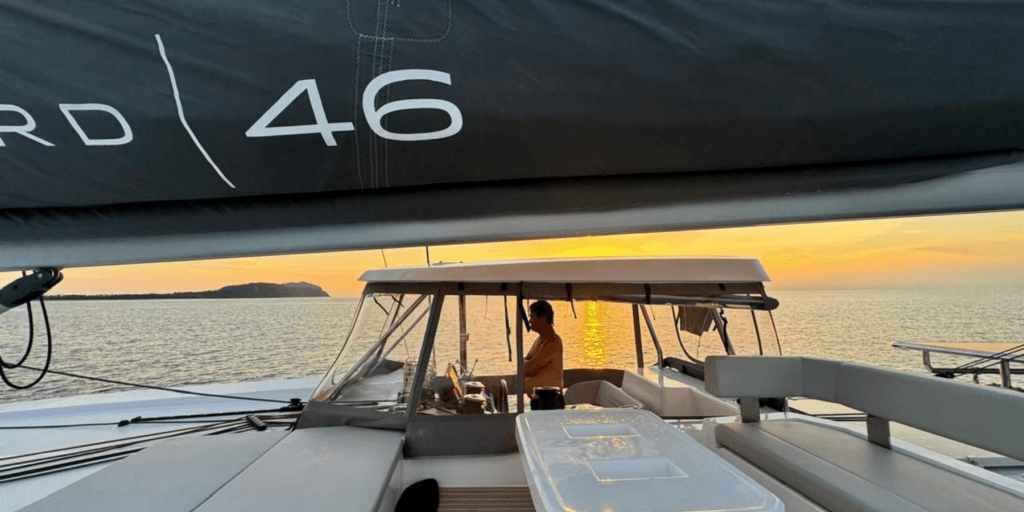
Multihulls World’s account makes that change visible in the onboard rhythm. The crew worked through yoga on deck, long showers, and meals ashore when landfall allowed, which gives the passage a quieter, more human shape than the word “Atlantic crossing” usually suggests. In practice, that is the real offshore lesson here: a charter cat can do serious miles, but only if the people aboard are willing to shift from holiday cadence to passage cadence.
The crew list also tells the story. There were five people alongside Christian Hernandez, who was aboard as captain, rigger and sailmaker, with Aurore Hernandez and a journalist joining the delivery. That mix is not accidental, because it reflects the way a working multihull crosses oceans now, with skills stacked across sailing, rigging, reporting, and family history.
The route to the Canaries shows how the boat earns its keep
Palm Pleasure 2 departed on Friday, April 24, from Vila Real de Santo António, Portugal, and headed for Aruba. That routing matters because Aruba is a long way from the Portuguese coast, and the first checkpoint was the Canary Islands, a classic staging ground for Atlantic passages.
The first leg reportedly went mostly under sail, on starboard tack, in a steady northerly wind of around 20 knots. At times, the boat even sailed wing-on-wing, which is exactly the kind of detail that reassures anyone who still thinks of day-charter cats as fair-weather platforms only. Palm Pleasure 2 arrived in Las Palmas around midnight on Monday, April 27, and that arrival underscored the point: the boat is not merely ornamental offshore, it is being used as a real passage-maker.
For catamaran sailors, this is where the story becomes practical. A charter cat that can hold a clean offshore rhythm, stay comfortable enough for a mixed crew, and keep moving efficiently under sail is not just a bigger toy for day trips. It is a versatile piece of sailing hardware that can transition from business use to delivery use with the right planning and the right people aboard.
Christian Hernandez’s legacy gives the crossing its depth
Christian Hernandez is more than a father on a reunion passage. He is the founder of Multicap Caraïbes in Martinique and Multicat Algarve in Portugal, which places this Atlantic crossing inside a much longer multihull story. Multihulls World says Multicap Caraïbes built dozens of plywood and epoxy catamarans over a 23-year period, from 1987 through 2010, so the family name is tied to production, not just ownership.
That legacy matters because the Punch range itself has been revived in Portugal under Multicat Algarve. The broader lineup now spans from 12.70 to 21.10 meters and includes day-charter, medium-charter, and long-charter versions, which is a serious signal to the market that this is not a one-off experiment but a structured family of boats with a defined charter role.
You can see the progression in the numbers. A Multihulls World technical page lists the Punch 1370 at 13.70 meters long, with a 7.40-meter beam and 8.50 tons of displacement. Multicat Algarve’s own information on the Punch 1510 Day Charter says it launched in 2023, measures 15.10 meters, carries an 8.22-meter beam, and is built around day-charter capacity. The 21.10 sits at the top end of that revived range, and that alone tells you how far the concept has grown.
Why the 21.10 changes the conversation for charter buyers
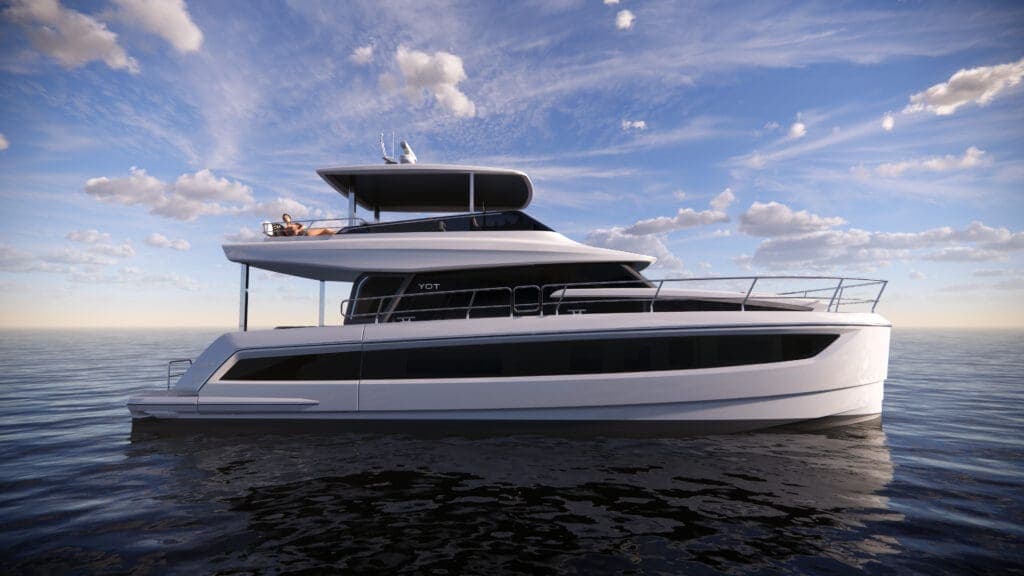
The most surprising number in the story may be the one that best explains the platform’s power: the Punch 21.10 Day Charter is designed to accommodate 100 passengers. That is a serious crowd for a multihull, and it makes the Atlantic crossing even more striking because it shows that a boat conceived for day use can still be part of an offshore delivery structure.
For charter operators, that is more than a novelty. It points to a category of catamaran that can serve guests in port, move efficiently between islands, and still handle the demands of bluewater passage when delivery or repositioning calls for it. For buyers watching the market, Palm Pleasure 2 is a reminder that the modern charter cat is no longer limited to short coastal loops or sunshine cruises.
What Christian and Aurore Hernandez are repeating, then, is larger than a family memory. It is a proof of concept for a revived multihull lineage, one that connects Martinique, Portugal, and the Dutch Caribbean through boats built to work hard, carry people comfortably, and cross oceans when needed.
This article was produced by Prism’s automated news system from verified source data, official records, and press releases, then run through automated quality and moderation checks before publishing. The system is built and supervised by the people who set the standards it runs under. Read our full AI policy.
Did this article answer your question?