Gotland Horizon X catamaran signals hydrogen-ready ferry future
Gotland Horizon X turns hydrogen-ready multihull talk into a real build order, showing which ferry-era ideas could reach future cruising catamarans.
Why Horizon X changes the conversation
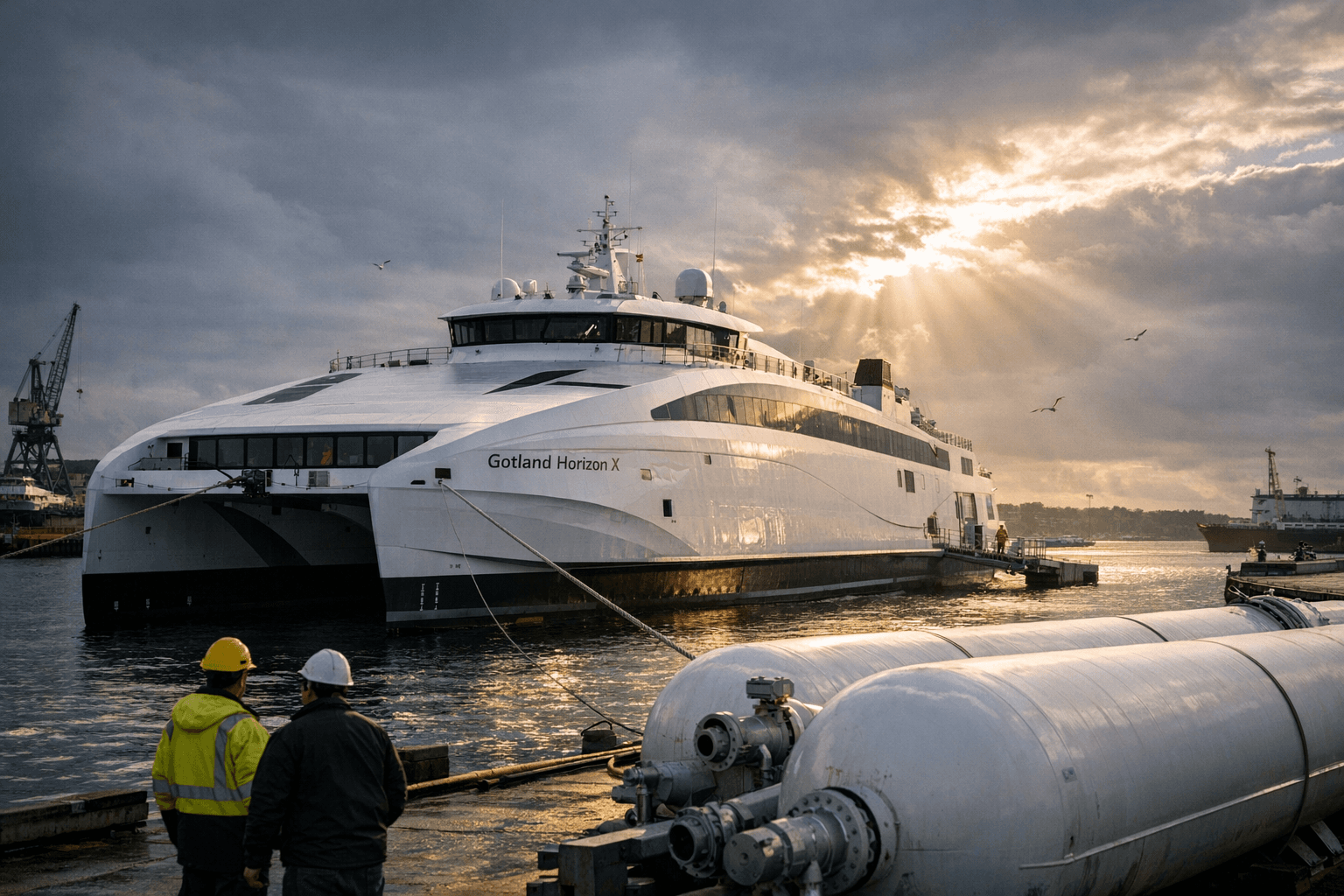
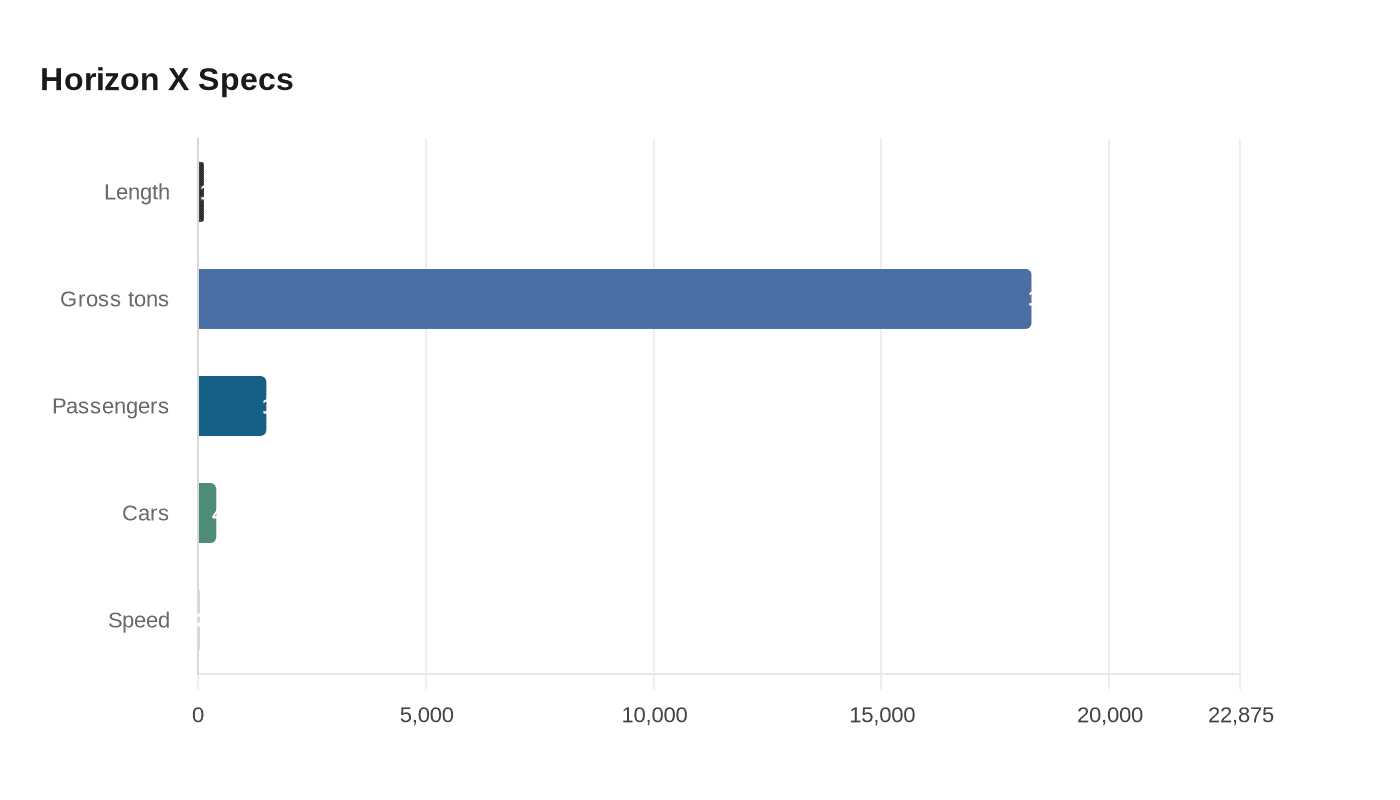
Gotland Horizon X is not just another big ferry project, it is one of the clearest signs yet that large multihull design is moving into the decarbonization era for real. At 130 meters long, with a projected 18,300 gross tons, space for 1,500 passengers and 400 cars, and a service speed of 30 knots, it sits in the rare category where scale, speed and fuel strategy all have to work together. For the catamaran world, that matters because the same design logic that makes a fast ferry efficient is now being pushed toward a future where alternative fuels are part of the brief from day one.
Gotlandsbolaget says the Horizon series is its single most important initiative for reducing the climate impact of shipping, and that claim gives the project its weight. The company traces the concept back to 2009, when it began developing a fossil-free crossing vision between Gotland and the Swedish mainland. In other words, this is not a trendy add-on to an existing fleet plan, but a long-running attempt to redesign the route itself around lower emissions.
What is genuinely new about this catamaran
The headline shift is that Gotland Horizon X is being treated as hydrogen-ready as a practical design choice, not as a paper concept or a marketing promise. That is a meaningful difference. Plenty of marine projects talk about future fuels; far fewer commit a large, commercial-scale vessel to a fuel architecture that is meant to be adaptable from the outset.
Austal said in February 2025 that it had won a contract worth between A$265 million and A$275 million from Gotlandsbolaget of Sweden to design and build a 130-meter combined-cycle, hydrogen-ready vehicle passenger ferry. That same month, the project had already moved far beyond idea-stage talk. Austal and Gotlandsbolaget first announced development plans in April 2023, and by October 2024 DNV had granted approval in principle, confirming the design complied in principle with rules relating to gas-fuelled ship installations and the International Code of Safety of Ships Using Gases or Other Low Flashpoint Fuels.
That sequence matters for owners and builders alike. It shows the project has moved from concept, to memorandum of understanding, to classification review, to contract award, and into construction. For a large multihull, that is the point where a future-fuel idea stops being speculative and starts becoming a template other operators can study.
The propulsion architecture is the real story
The most important engineering detail is the propulsion system itself. Coverage describes a unique combined-cycle arrangement that uses gas and steam turbines, and industry reporting says this is a first for high-speed craft worldwide. That makes Horizon X more than a hydrogen-friendly hull with a conventional engine room bolted on.
Gotlandsbolaget says the vessel can run on a variety of fossil-free fuels in both liquid and gaseous form, including hydrogen. Some coverage goes further and describes Horizon X as the world’s first large-scale catamaran capable of operating on 100% hydrogen fuel. Whether that specific claim ultimately proves out in service, the strategic point is already clear: the ship is being designed around fuel flexibility, not fuel lock-in.
For catamaran enthusiasts, this is the part worth watching closely. Large multihulls have often been associated with speed, smooth passages and route efficiency. Horizon X suggests a bigger role, where the catamaran form becomes the platform for next-generation transport programs that still need to carry people and vehicles while cutting emissions.
What is still experimental, and why that matters
Not everything about Horizon X is settled science. The fuel system is future-facing, but the wider hydrogen ecosystem still depends on bunkering, storage, safety procedures and port readiness. The International Maritime Organization’s net-zero framework is also still under development, and it is intended to create mandatory fuel-intensity targets for large ships. That means the regulatory pressure is rising, but the final commercial shape of the market is still being formed.
There is also an important detail in the public reporting that owners should read carefully: some material describes a 35-knot top speed and a crossing time under three hours, while newer reporting puts the vessel at 30 knots. That difference is a reminder that concept-stage numbers can shift once a project moves toward buildable reality. It is a healthy sign, not a setback. It shows the project is being refined for actual operation rather than left as a glossy design study.
Another point to watch is timing. Gotlandsbolaget says the ship was ordered in 2025 and is due for delivery in 2028, while a later industry report says service entry is scheduled for 2029. That may reflect the gap between delivery and commercial launch, or simply different timetable assumptions. Either way, the practical message is that the build is real and the delivery horizon is close enough to force decisions now on fuel supply and shore infrastructure.
Why yacht owners should care about a ferry
This is where the story reaches beyond commercial shipping and into the catamaran yacht world. Large multihull design has always been about efficiency, but Horizon X points to a future where efficiency alone is no longer enough. Fuel flexibility, low-emission operation and system integration are becoming part of what defines a serious multihull platform.
The trickle-down potential is easy to see:
- Hull form and resistance control will matter even more as designers try to make alternative-fuel boats practical at speed.
- Multi-fuel machinery spaces may influence the way future cruising cats are laid out, especially where range and redundancy are prized.
- Shore-side infrastructure, from bunkering to safety procedures, will shape where big catamarans can operate and how they are serviced.
- The industry’s pressure to meet IMO fuel-intensity targets will accelerate the move from theoretical green tech to buildable systems.
For yacht owners, the headline is not that a ferry is trying something new. It is that one of the most ambitious large catamaran projects in the world is treating hydrogen readiness as an operational requirement, not a side story. That mindset is exactly how ferry-sector ideas often migrate into broader multihull design.
The benchmark to watch
Gotland Horizon X is heading toward delivery in 2028, with a high-speed, 130-meter catamaran package that blends capacity, speed and alternative-fuel ambition in a way the sector rarely sees all at once. It is backed by a long development arc dating to 2009, supported by DNV’s approval in principle, and framed by Gotlandsbolaget as a core climate strategy rather than a one-off experiment.
That combination makes it a reference point, not just a vessel order. If large multihulls are going to help define the next phase of low-emission maritime transport, Horizon X is one of the clearest signs of what that future will look like: faster, more efficient, fuel-flexible and built around the infrastructure pressures that are already arriving.
This article was produced by Prism’s automated news system from verified source data, official records, and press releases, then run through automated quality and moderation checks before publishing. The system is built and supervised by the people who set the standards it runs under. Read our full AI policy.
Did this article answer your question?