Grenada couple rebuild hurricane-damaged Lagoon 450S, step by step
Raf and Sascha are rebuilding a hurricane-hit Lagoon 450S the hard way, and their Grenada setup shows exactly how to keep a damaged cat salvageable.
How the rebuild starts: level the hulls, then build the workshop
Raf and Sascha’s Lagoon 450S is the kind of project that reminds you why the first move in a major refit is not glamorous. Before the fiberglass dust starts flying, they moved the hurricane-damaged catamaran to a new spot in the boatyard and leveled it carefully so the hulls would not be distorted. That one decision sets the tone for the whole rebuild: if the boat is sitting wrong, every repair that follows can be compromised.
They also did something that many owners talk about but few fully commit to, they built a real working shop right behind the boat. A shipping container now sits at the stern with a long bench, a sink, tools, spares, and materials inside. For a rebuild like this, that is not a luxury. It is what keeps the work moving when every part of the job depends on having the right piece within arm’s reach.
The practical lesson hidden in the setup
This is where the story gets especially useful for any cat owner staring at a damaged platform and wondering where to begin. The order matters: stabilize the boat first, then organize the worksite, then open up the structure. Raf and Sascha also ran into an everyday problem that will feel familiar to anyone doing serious yard work, the original ladder was too awkward for carrying tools and materials.
So they built a new staircase. That sounds minor until you are climbing up and down all day with epoxy, fairing tools, and replacement parts. Safer access is not a side issue on a refit, it is part of the schedule, part of the budget, and part of whether the project keeps momentum after the first burst of optimism wears off.
What is being repaired inside the Lagoon 450S
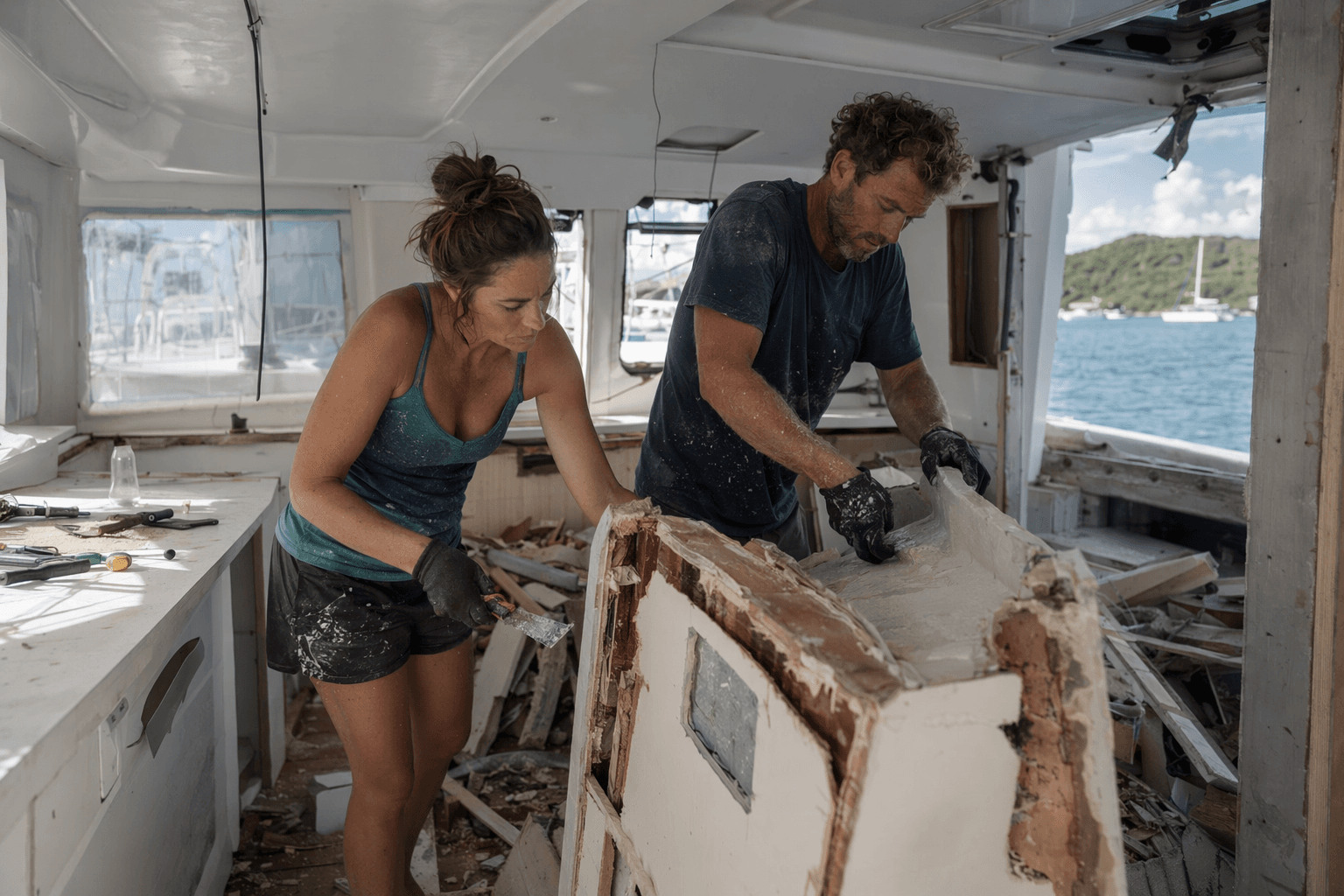
Inside the boat, the work is messy and exacting. Raf and Sascha are cutting out fiberglass from the underside of the coachroof and rebuilding strength that was compromised when the boat lay upside down in the mangroves in Carriacou after Hurricane Beryl. That kind of repair is not about cosmetics. It is about restoring a load-bearing structure that has already been through one of the worst kinds of abuse a cruising cat can suffer.
They have also been working through trial and error to get the epoxy consistency right. That detail matters because bad mix behavior slows everything down, and on structural work, the wrong viscosity can make the difference between a clean bond and a repair you will have to revisit. In a project like this, consistency is not just a chemistry lesson, it is a survival skill.
The exterior damage is just as serious
Outside the hull, Raf and Sascha brought in Fiberglass Pro Grenada to remove damaged hull sections, dig out rotten balsa core, and replace it with foam core and epoxy. That sequence tells you a lot about the scale of the damage. Once core material is rotten, you are not patching a surface problem, you are rebuilding the laminate from the inside out.
The forward crossbeam needed attention too, because hurricane damage had left it held together with timber and rope lashings. Before the repairs could continue there, they even had to move a bird’s nest from the beam. It is the kind of detail that makes a refit feel real: the damage is structural, but the work site is still alive, still occupied, and still full of surprises.
Why this Lagoon 450S is such a demanding platform
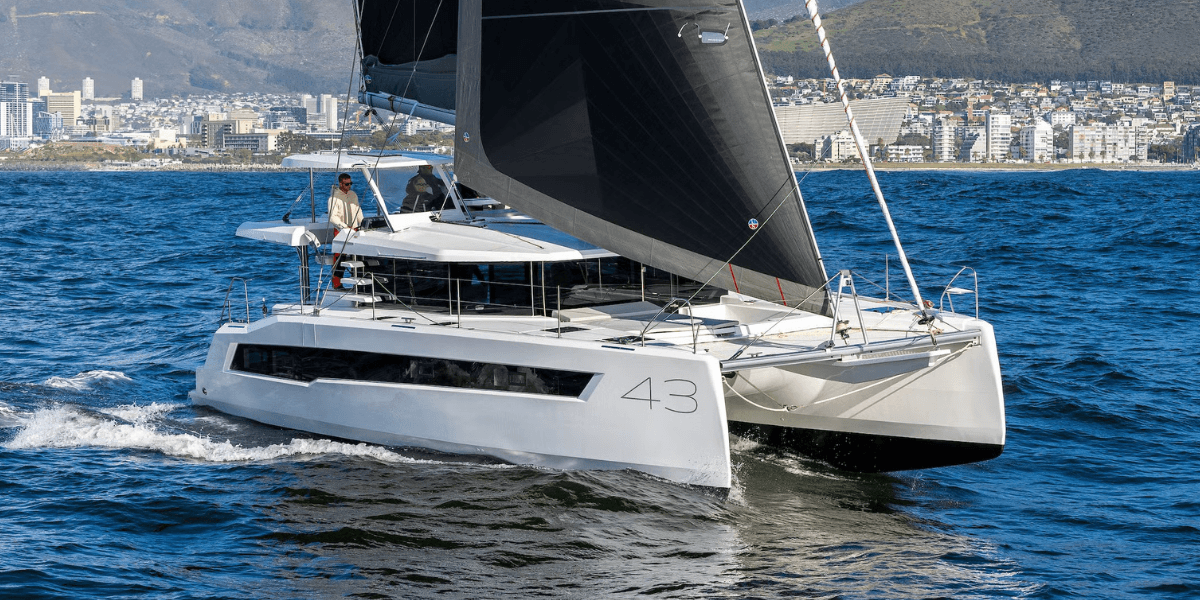
The boat itself is a Lagoon 450S, the Sport Top version of the Lagoon 450. Lagoon lists it at 13.96 m, or 45'10", with a beam of 7.87 m, or 25'10", and 130 m², or 1,399 sq ft, of upwind sail area. Those numbers help explain why this is not a backyard repair. A cat of this size needs proper support, proper access, and a yard that can actually handle the load.
That is where Spice Island Marine Services comes in. The Grenada yard says it has been operating since 1984, and its Marine Travelift has a 70-ton capacity, with a maximum boat length of 85 feet and beam of 25 feet. For a large multihull that has been dragged out, flipped, and towed in after disaster, that kind of infrastructure is the difference between a salvageable rebuild and a dead-end project.
The storm behind the story
The rebuild only makes sense when you remember what Hurricane Beryl did to Carriacou. It made landfall on July 1, 2024, as a high-end Category 4 hurricane. The United Nations said the island was virtually flattened, and OCHA reported that 98% of infrastructure in Carriacou and Petite Martinique was heavily damaged or destroyed.
That context matters because it explains why a boat like this ends up upside down in mangroves in Tyrrel Bay in the first place, and why getting it to Grenada for repair is such a big step. Raf and Sascha’s cat was not simply damaged at sea. It was caught in a disaster zone, dragged out, flipped right-side-up, and moved to a yard where the long recovery could actually begin.
Why people are watching this rebuild
Part of the appeal of Spear It Animal is that Raf and Sascha have built an audience around showing the hard parts, not the glossy ones. Their YouTube channel had 334K subscribers in the search result surfaced on May 14, 2026, and it describes itself as the “RAW and UNFILTERED reality” of off-grid boat life. That reach gives this refit unusual visibility, but the reason people keep watching is simpler than subscriber count: they are showing what it actually takes to bring a wrecked cruising cat back to life.
Multihulls World has also described them as blue-water buddy boat sailors whose separate cruising lives turned into a relationship after they crossed paths in the Caribbean. That backstory gives the rebuild another layer, because this is not just a repair diary. It is a long, public test of whether a boat, a partnership, and a plan can all survive the same storm.
The wider multihull scene is moving this way too. The repair-and-reuse conversation has become mainstream enough that events like the Canet-en-Roussillon Second-hand Multihull and Refit Show drew a record 40 multihulls on display in 2024. Raf and Sascha’s Lagoon 450S fits right into that culture: not as a showpiece, but as proof that a damaged cat can still be worth saving if the support, sequencing, and persistence are right.
The lesson from their Grenada boatyard is plain enough. Level the hulls first, set up the shop behind the boat, fix the access, then cut into the structure with a plan. That is how you keep a hurricane-damaged Lagoon 450S from becoming scrap, and how a brutal wreck in the mangroves turns into a rebuild that still has a future.
This article was produced by Prism’s automated news system from verified source data, official records, and press releases, then run through automated quality and moderation checks before publishing. The system is built and supervised by the people who set the standards it runs under. Read our full AI policy.
Did this article answer your question?