Gunboat G4 Timbalero3 puts catamaran speed at the center
Timbalero3 turns the Gunboat G4 into a dockside test of priorities: speed and response on one side, cruising softness on the other.
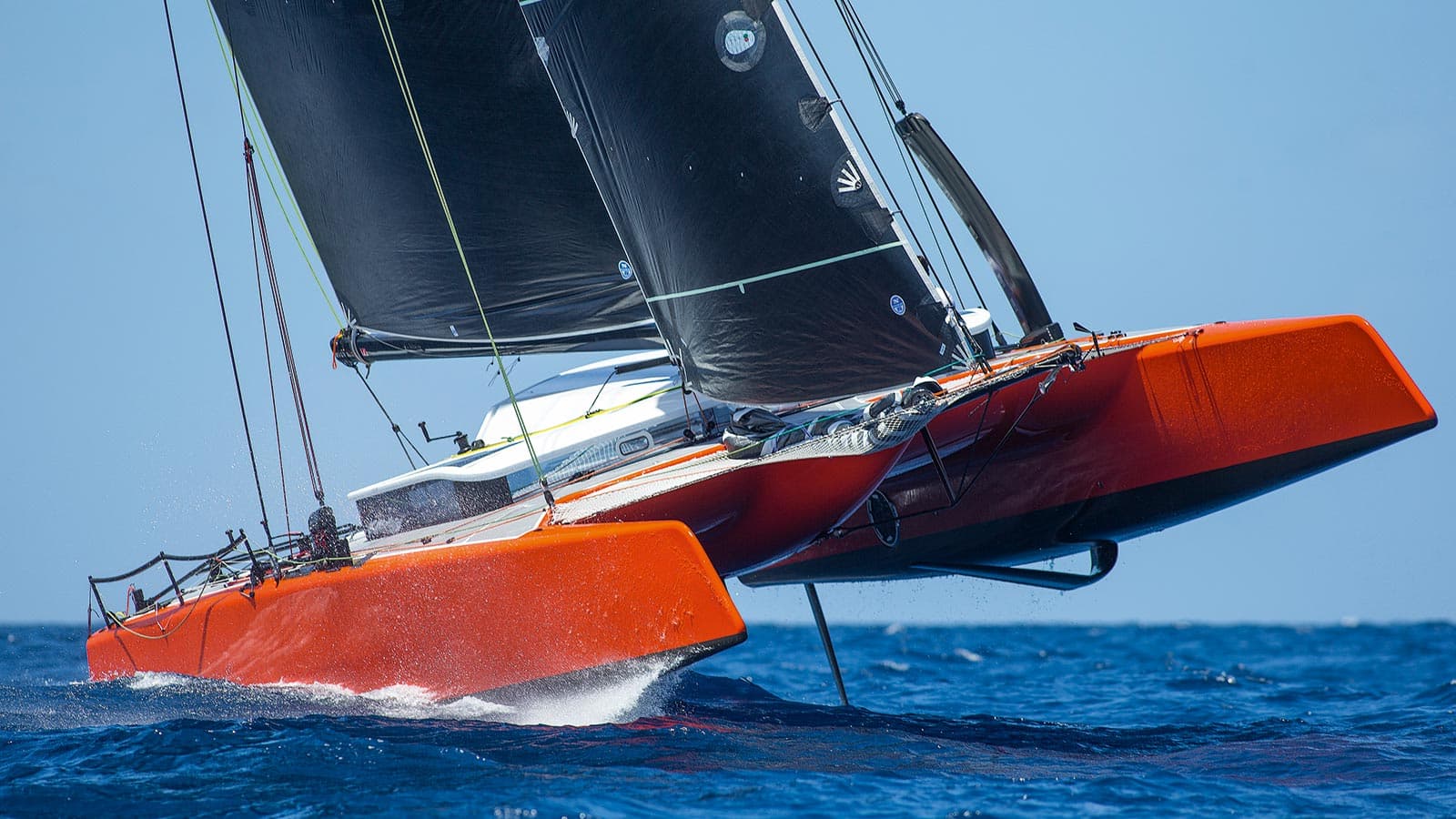
Timbalero3 turns the Gunboat G4 into a catamaran you judge by how it feels under sail, not by how generous the lounge looks at anchor. That is why the boat stands out in a market full of comfort-first multihulls: it puts acceleration, liveliness, and a race-adjacent edge right at the center of the conversation.
Why Timbalero3 matters in the catamaran conversation
Gunboat has long occupied a recognizable corner of the multihull world, where the appeal is not simply “fast for a catamaran” but fast enough to change the mood on board. The G4 line extends that identity with a sailing yacht that is meant to be experienced, not merely admired from the dock, and Timbalero3 gives readers a concrete example of what that philosophy looks like when it is built into a modern cruising platform.
That matters because catamaran buyers now sort boats by use case with unusual precision. Some are comparing carbon performance cruisers, some are looking at family-friendly hybrids, others want aluminium explorers or long-range liveaboard models. Timbalero3 lands squarely in the performance camp, and it makes that choice legible in a way brochures often do not: the point is not just more speed, but a more visceral sailing feel.
The Gunboat G4 formula is speed with amenities, not speed at any cost
The appeal of the G4 is that it does not read like a stripped-out race boat. It is still a modern cruising yacht, which means the amenities expected in this segment remain part of the package, but the handling brief is different from the softer, more traditional cruising cats that dominate charter-style thinking. Gunboat’s reputation rests on high-performance multihulls, and Timbalero3 sits inside that lineage without pretending that comfort and pace are the same thing.
That distinction is exactly why the boat resonates with readers who spend time comparing lifestyle boats. A charter-friendly catamaran can sell volume, shade, and relaxed motion; Timbalero3 sells the sensation of the boat responding when you ask more of it. In the performance-cat world, that response is a feature, not a side effect, and the G4 makes it a visible part of the ownership proposition.
What the onboard experience is really selling
The strongest part of the Timbalero3 story is the on-water impression. The feature captures the sounds, the acceleration, and the way the boat feels when driven, which is the real language of performance catamaran enthusiasm. Owners in this corner of the market are not only buying a layout; they are buying the reaction in the helm, the quickness through the water, and the sense that the boat rewards active sailing.
That is why a fresh launch matters so much to this audience. A new G4 is not just another model update. It becomes a benchmark for whether a well-known performance brand still delivers the emotional hit that made people pay attention in the first place. Timbalero3 gives that benchmark in a form sailors can picture immediately: a boat that answers steering and trim with more urgency than a typical cruising cat.
What buyers gain, and what they give up
The tradeoff is the part that matters most to actual buyers standing on the dock. A speed-first setup like the G4 usually brings a more engaged, more athletic sailing life, but it also narrows the margin for the easygoing habits that make many catamarans popular in the first place. The more the platform leans into precision and pace, the less it resembles the soft, forgiving feel associated with traditional cruising cats.
That has practical consequences in everyday use. A performance catamaran often asks more from the crew, more from sail handling, and more from the people living with it across a season. What owners gain is flying performance and a sharper connection to the water; what they give up is some of the comfort-first accessibility that makes broader-market catamarans feel effortless.
- More speed and more responsive handling
- More race-adjacent sailing energy
- Less of the plush, settled feel that defines many cruising cats
- A platform that rewards attention rather than passive ownership
For readers cross-shopping the market, that tradeoff is the whole story:
That is why the boat is so useful as a reference point. It shows exactly where the performance end of the spectrum starts to pull away from the mainstream comfort model, and it does so without reducing the choice to an abstract debate about “fast versus luxurious.”
Why the story hits now
The broader catamaran market has made the choice between comfort and performance feel sharper, not softer. Buyers are increasingly deciding between charter-style layouts, liveaboard-friendly platforms, and sailing machines that make the passage itself the attraction. Timbalero3 matters because it gives that discussion a real, current boat to point at, one that embodies the idea that a multihull can still be about speed first.
That is especially valuable for aspirational buyers who want a premium catamaran but are not looking for a floating apartment. Gunboat’s G4 pitch suggests that some owners still want the thrill of a boat that reacts, accelerates, and carries itself with purpose. In that sense, Timbalero3 does more than showcase a new model. It tests whether the market still rewards a catamaran that leans hard into performance and asks buyers to accept the compromises that come with it.
The dockside verdict
Timbalero3 makes the Gunboat G4 feel like more than another high-end launch. It turns speed into the main event and forces the familiar catamaran question into sharper focus: do you want the calm, spacious version of multihull ownership, or the one that comes alive when the breeze fills in? The answer is written into the boat itself, and that is what makes the G4 such a useful marker in today’s performance-cat conversation.
This article was produced by Prism’s automated news system from verified source data, official records, and press releases, then run through automated quality and moderation checks before publishing. The system is built and supervised by the people who set the standards it runs under. Read our full AI policy.
Did this article answer your question?