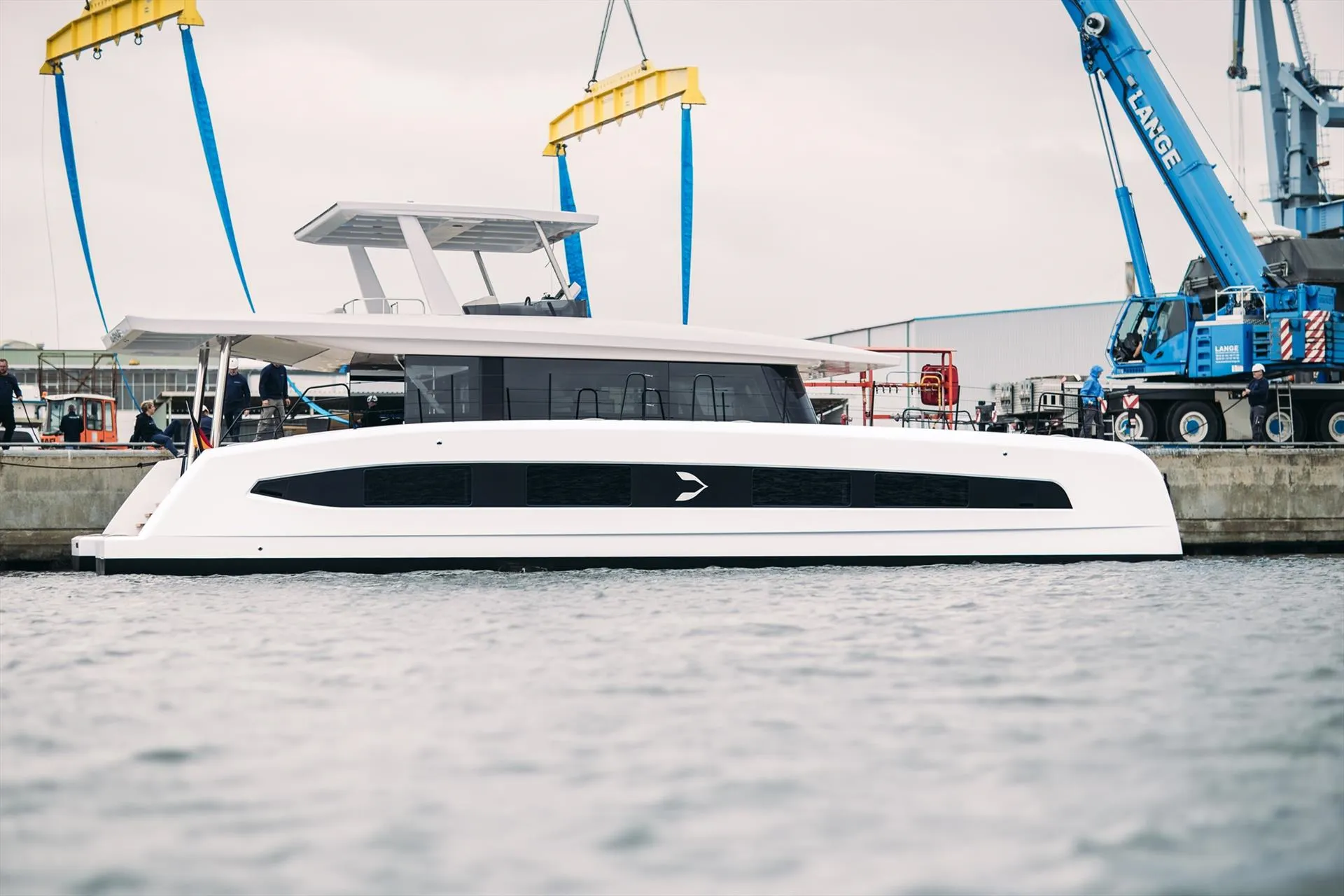
How to size a sailing catamaran, balancing length, sail area and weight
The fastest shortlist starts with the triad: length, sail area and weight. Every berth fee, speed gain and payload compromise traces back to those three numbers.

On the dock, a tape measure turns a catamaran search into a brutally practical question: what are you willing to give up? Length, sail area and weight are the three levers that shape almost every answer, from a family liveaboard to a bluewater passagemaker. More waterline length brings speed potential, more sail area brings driving power, and less weight lets the boat accelerate and carry less drag through the water.
The triad that actually decides the boat
Terho Halme’s 11.5.2008 article, How to dimension a sailing catamaran?, frames the tradeoff around those three variables. A long boat can be faster and more spacious, but it also grows more expensive, asks more of the rig and structure, and can push the project beyond what you can finance.
The same applies to sail area and weight. More sail can make a cat come alive in light air, but too much sail area can capsize the boat in a breeze. A lighter platform usually feels livelier and carries less resistance, but Halme also warns that a boat that is too light may not stand in one piece. On the other side of the scale, too-slim hulls leave little room for you and your friends, plus the gear, water, food and systems a cruising boat really needs.
Length: speed, space and the berth problem
Length is the first number most shoppers understand because it is easy to see and easy to compare. Boat Design Net puts the tradeoff bluntly: more waterline length means a faster boat. That speed gain is real, but so is the practical cost. Longer cats usually need bigger slips, larger turning room, more structure, and a bigger rig to match the platform, which means the budget grows in more than one direction.
Length also changes how a boat works as an ownership space. Add it and you usually gain load-carrying room, better separation for cabins and systems, and a calmer feel offshore. Add too much and marina life gets harder, financing can get tighter, and the boat can become a project instead of a season. For buyers comparing coastal cruising to passagemaking, length is the first place the shortlist starts to split.
Sail area: the throttle, the strain and the safety margin
Sail area is the most obvious performance lever, but it is also the one that most directly loads the rest of the boat. More sail area means more driving force, especially when you want to keep speed up in softer air. It also raises loads on the rig, beams and cross-structure, which is why a big sail plan can make a cat feel energetic one day and punishing the next.
Under the C Class catamaran measurement rules, sail area shall not be more than 27.868 square meters, or 300 square feet.
Weight: the hidden variable buyers feel at sea
Weight is the lever that often gets underestimated because it does not look as glamorous as a long waterline or a tall rig. In practice, it can decide whether the boat feels quick and responsive or sluggish and overworked. Less weight means less drag through the water and quicker acceleration, which is why a carefully managed light boat can feel far more alive than its brochure numbers suggest.
But weight also buys things buyers actually want: durability, tankage, storage, sound structure and cruising comfort. Once you load water, fuel, stores, spare parts, tools, toys and the rest of normal life aboard, the boat may behave very differently from the empty version on the sales dock.
How the triad changes the shortlist by use case
A performance cruiser usually favors length, disciplined weight and enough sail area to stay efficient in lighter air. That is the recipe that gives a responsive helm and the kind of sailing performance rarely found in typical cruising cats. A family liveaboard often moves the other way, accepting more displacement and a more conservative rig in exchange for payload, comfort and a layout that works when the boat is full of real-life gear.
For passagemaking and bluewater use, the buyer’s eye shifts from brochure speed to what the boat can carry and how it behaves once loaded. Load-carrying ability, bridge-deck clearance, structural integrity and seaworthiness, windward ability, deck-surface design and ease of handling matter most when the miles pile up.
What to compare when you are standing on deck
The smartest dockside comparison is not just length against length. It is the way the whole platform handles the three levers together.
- Check how much sail the boat carries for its size, then think about how often you will want to reef.
- Look at the weight story honestly, including tanks, systems and the gear you will actually bring aboard.
- Judge whether the hull volume, bridge-deck clearance and structure support the kind of cruising you want.
- Ask whether the berth, slip fees and marina access make sense for the length and beam you are considering.
- Feel whether the boat is being sold as a performance platform or a comfortable floating home.
Why the handling feels different offshore
Kim Klaka’s Sailing catamaran performance metrics, published in The Australian Naval Architect, volume 22, number 4, November 2018, describes cat performance with measurable variables and equations, not a single magic number. Grainger Designs argues that multihull performance depends on the factors that determine speed and that manufacturers need a more credible way to present performance potential. That is why two cats with similar lengths can feel wildly different once they leave the dock.
This article was produced by Prism’s automated news system from verified source data, official records, and press releases, then run through automated quality and moderation checks before publishing. The system is built and supervised by the people who set the standards it runs under. Read our full AI policy.
Did this article answer your question?