Iran unveils 100-knot catamaran missile boat for Gulf swarms
Iran’s new 27 Rajab puts a trimaran hull and 100-knot speed in the spotlight, underscoring why multihull stability and deck efficiency matter beyond the military world.

A trimaran hull built for speed and steadiness has reappeared in the harshest possible test case: a fast attack craft that Iranian media say can run at about 100 knots and carry two sea-based cruise missiles. For catamaran and multihull readers, the 27 Rajab is a stark reminder that when designers chase platform stability, speed, and usable deck space, the same architecture can serve very different missions.
Iran’s Islamic Revolutionary Guard Corps unveiled the vessel on May 31, 2026, at Tehran’s Enghelab Square, during the 90th consecutive night of rallies there. The craft, described in Iranian reporting as a low-profile fast attack watercraft, uses a trimaran hull form that officials say improves stability and maneuverability in rough water. Iranian outlets also said it can operate in waves up to three meters high, a figure that will sound familiar to anyone who has watched multihull owners prize a firm platform in short, messy seas.
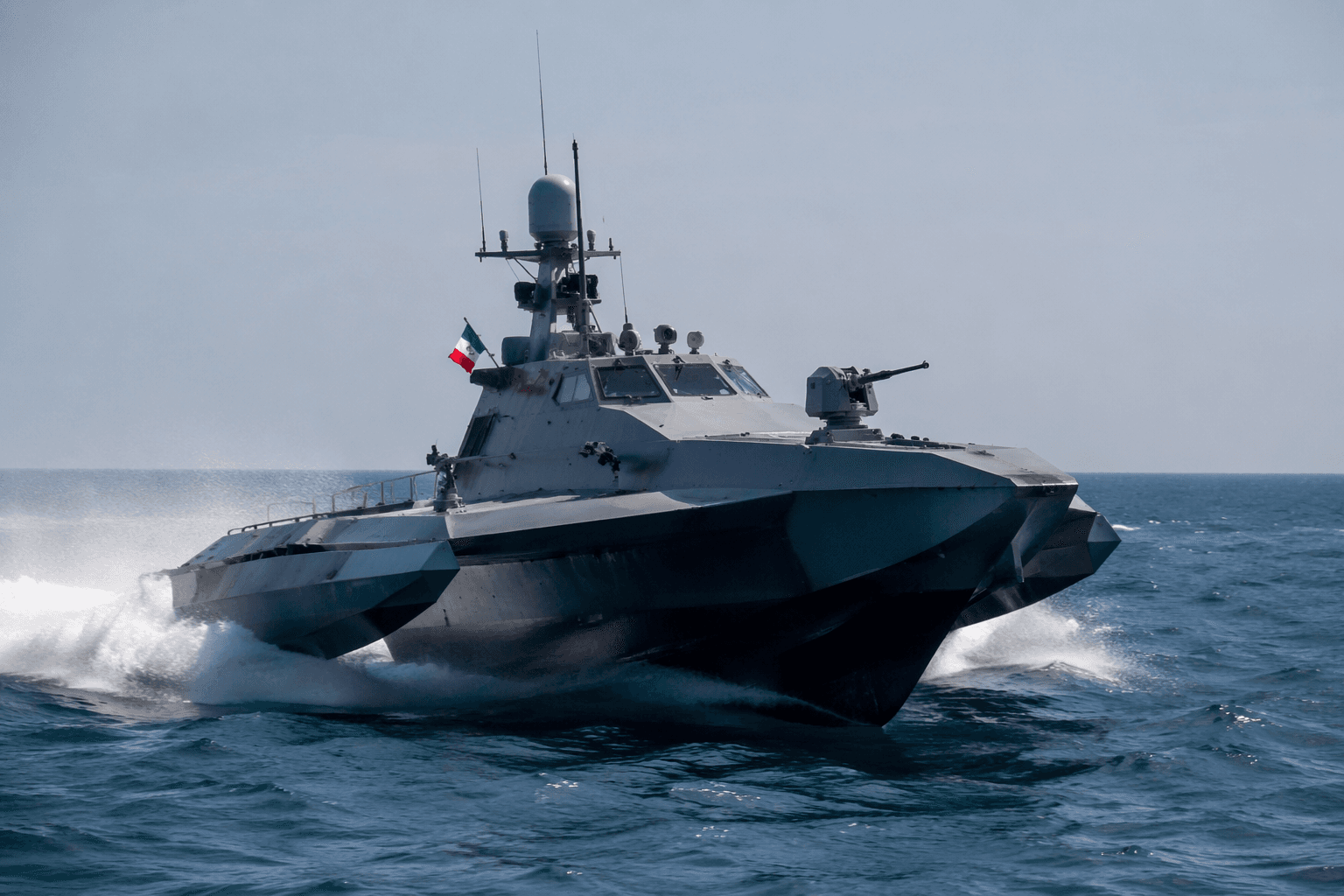
The headline number is speed. Iranian media placed the 27 Rajab at about 100 knots, or roughly 185 km/h, with the ability to launch two cruise missiles carrying a 700-kilometer range. That weapon fit is military-specific, but the hull lesson is broader: a light, narrow multihull can be an efficient way to keep the center of gravity low and the ride controlled while carrying a meaningful payload. In civilian terms, that is the same basic appeal behind high-speed power cats and offshore performance trimarans, where the goal is to keep a boat level, fast, and predictable when conditions build.
The wider doctrine around the vessel is also relevant to multihull design. The IRGC Navy has long leaned on what analysts call a “mosquito fleet” strategy, using swarms of small, fast craft in the shallow, crowded waters of the Persian Gulf and the Strait of Hormuz. That chokepoint carries roughly one-fifth of global oil supplies, and Defense News reported in May 2026 that the U.S. military said vessels in the strait had a secure lane even as mine warnings remained in place. The same coverage also described U.S. and Iranian forces exchanging fire in the Gulf in May, underscoring how tightly packed waterways reward shallow draft, rapid acceleration, and nimble handling.
For recreational builders and buyers, the military use case does not translate into missile launchers or swarm tactics, but it does sharpen the case for multihulls. A stable, fast platform with a wide working deck remains one of the clearest advantages of the catamaran and trimaran family. The 27 Rajab is built for confrontation, not cruising, yet its hull form still points to the same design logic that keeps offshore cat owners interested: speed is useful, but controlled speed on a stable platform is what really counts.
This article was produced by Prism’s automated news system from verified source data, official records, and press releases, then run through automated quality and moderation checks before publishing. The system is built and supervised by the people who set the standards it runs under. Read our full AI policy.
Did this article answer your question?