Jarkko Jämsén Shapes Superyachts and Experimental Catamarans with Nordic Precision
Jämsén’s real influence is showing up where performance meets restraint: lighter structures, cleaner lines, and smarter multihull layouts that feel built for the next wave of catamarans.
A Finnish designer with a wide wake
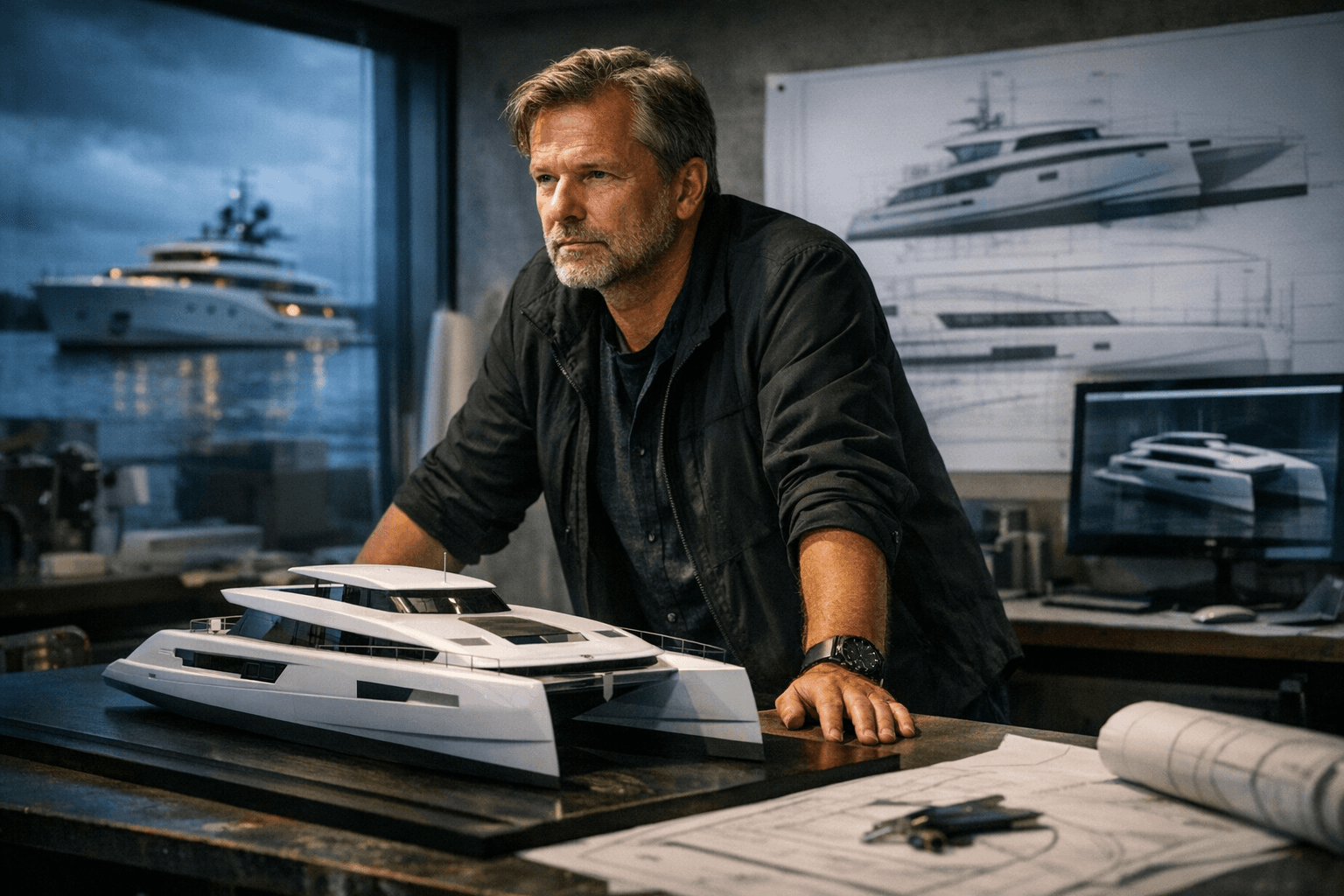
Jarkko Jämsén has become one of the quieter power brokers in yacht design because his work does not lean on spectacle for its own sake. Based in a waterfront studio in Helsinki, he moves between superyachts, experimental multihulls, production boats, and high-performance adventure vessels with a style that keeps coming back to the same point: shape should serve the boat first.
That background matters because Jämsén is not a one-track stylist. He is a co-founder of Aivan, the Nordic design and innovation studio founded in 2007, and his marine work also runs through Navia in Helsinki and his own Jamsen yacht-design agency in Monaco. Add degrees in wooden boat building, industrial design, and naval architecture, and you get a designer who understands both the craft bench and the loads acting on the hull.
The early clues are unusually direct
Jämsén’s story starts with a boat he designed and built himself at 17, a Sea Bright Skiff. That detail still reads like the key to his whole approach: he did not come up through abstract sketching alone, but through actually making a boat float, move, and hold together.
He has also said that designing Finland’s presidential yacht, Kultaranta VIII, was the major break in his career. That commission placed him in a rare category, because presidential and flagship yachts force a designer to balance ceremony, function, and absolute precision. If you want to understand why Jämsén’s work carries weight with owners and builders, that is the place to start.
Why catamaran builders should pay attention
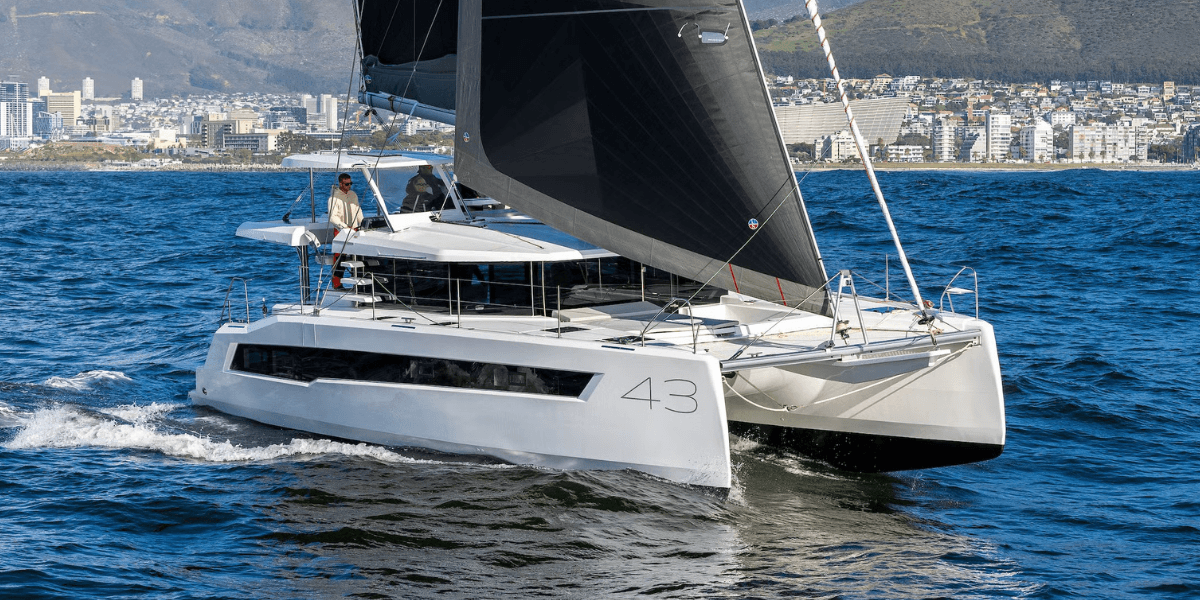
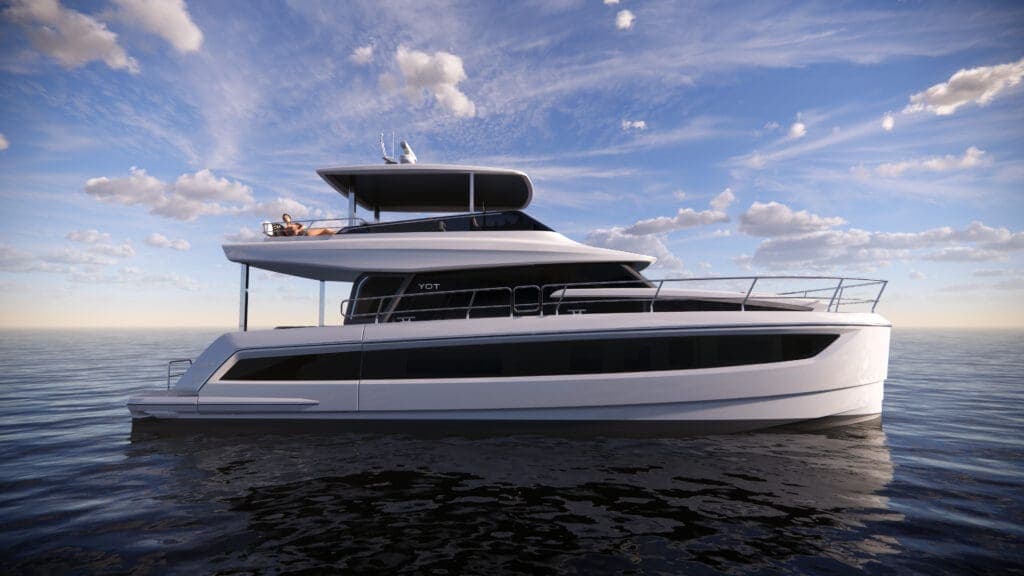
Jämsén’s influence on multihulls is not about chasing a trendy silhouette. It is about the way he treats performance and visual purity as the same problem. SuperYacht Times even keeps a category for yachts with Jämsén designs and catamaran hulls, which is a useful clue that his thinking has already crossed into multihull territory.
Three design choices from his broader body of work are the ones to watch on future catamarans:
- Weight-saving as a design principle, not a final tweak.
Raven RS 111 makes this plain. The 33.83m sailing yacht, delivered in 2023, uses carbon, Nomex, and hydrofoils, and Aivan says weight-saving was central to its development. On catamarans, that same logic tends to show up in lighter superstructures, more disciplined material choices, and less visual clutter above deck.
- Clean, functional surfaces that do not fight the hull form.
Jämsén’s best-known work does not rely on decorative lines for identity. Instead, the boats feel resolved, almost inevitable, which is exactly the kind of discipline multihull owners increasingly notice in the bridge deck, coachroof, and side-deck treatment. Watch for future catamarans to borrow that calmer, more integrated look rather than piling on aggressive angles.
- Space used with intention, not just volume used up.
Catamarans already win on beam, but Jämsén’s design language suggests that the next step is not simply more room. It is better room: more usable circulation, cleaner transitions between indoor and outdoor zones, and layouts that make the wide platform feel deliberate rather than oversized.
Pi shows how far the discipline can scale
If Raven is the lesson in lightness, Pi is the lesson in scale. The yacht, originally known as Syzygy 818, is a 77.25m motor yacht powered by two MTU diesel engines and reported to reach 18.4 knots. That combination of size and speed is not accidental, and it shows Jämsén’s comfort with large, technically demanding projects.
Pi also won Boat International’s Motor Yacht of the Year 2020, which matters because it confirms that his work lands with the people judging not just looks, but execution. For readers tracking where multihull design is headed, Pi is a reminder that restrained aesthetics and serious engineering do not belong to different camps. The best designs now are expected to deliver both.
Raven is the cleaner multihull signal
Raven RS 111 is the more obvious signpost for what comes next. The 33.83m sailing yacht uses carbon, Nomex, and hydrofoils to reduce weight and increase stability and lift, and the concept is built around functional and aesthetic design at the same time. That is exactly the formula many future catamarans are likely to chase, especially in performance-oriented and experimental builds.
The practical takeaway for catamaran watchers is simple: future launches will probably keep pushing toward lighter structures, more advanced appendages, and a more engineered visual calm. If a new multihull looks stripped down without feeling bare, and if it seems to float visually as much as it does physically, that is the Jämsén influence showing through.
Axopar proves the ideas were never confined to superyachts
Jämsén’s reach is not limited to one-off flagships. Axopar says its boats have been developed with his design input from day one, and that long-running relationship has been central to the brand’s award-winning fast-adventure concept. That is important because it shows his thinking is not reserved for the top end of the market.
For catamaran design, that matters in a very practical way. The same habits that make a high-end yacht feel coherent, such as clear sightlines, disciplined massing, and efficient use of deck space, can filter down into the smaller and more numerous boats that shape what buyers expect next. In other words, the ideas do not stay in the superyacht lane.
The bigger signal for multihulls
Boat International’s directory says Jämsén has designed three yachts and interior-designed one yacht above 24 metres, which tells you how selective and high-level his portfolio is. Yet his name still turns up in discussions that cross from monohulls to catamarans because his design language is built around engineering logic, not category habits.
That is why he matters to anyone watching the next generation of multihulls. The future catamarans most likely to stand out will probably borrow his priorities: lighter construction, cleaner styling, and layouts that make every square metre do real work. Jämsén’s influence is not loud, but it is already visible in the boats that look and feel the most resolved.
This article was produced by Prism’s automated news system from verified source data, official records, and press releases, then run through automated quality and moderation checks before publishing. The system is built and supervised by the people who set the standards it runs under. Read our full AI policy.
Did this article answer your question?