La Rochelle tests F18 crews with shifting winds and tight standings
Five races in 5 to 20 knots left Bader/Peters and Demesmaeker/Tas tied at 11 points in La Rochelle.
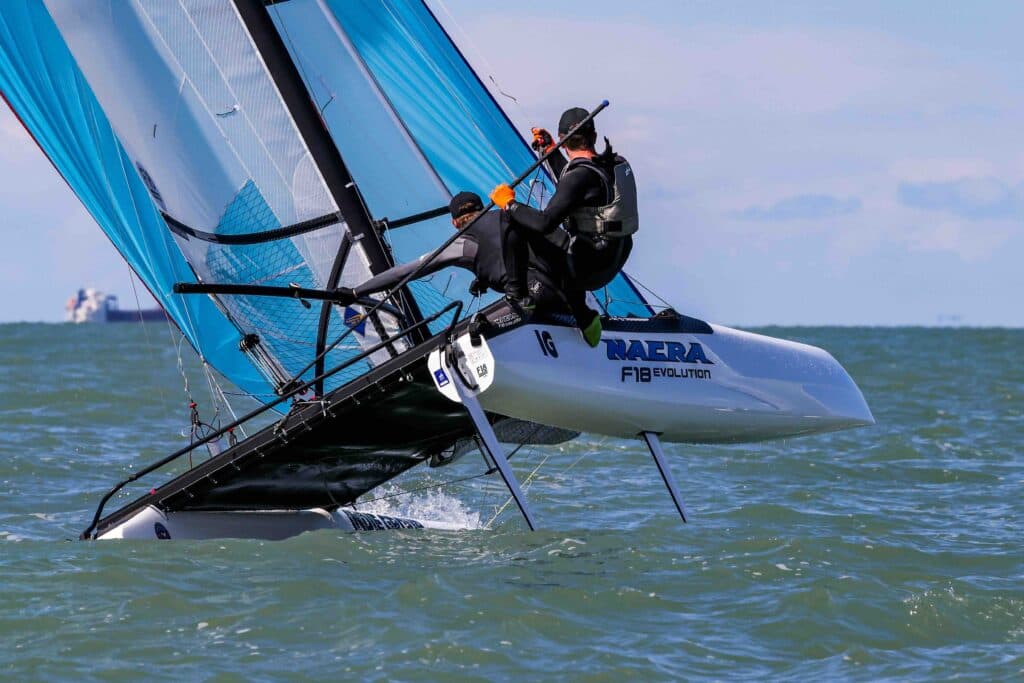
La Rochelle turned into a straight test of timing and nerve when the F18 European Tour finally got racing on Friday, May 16, after a Thursday cancellation. The day delivered both ends of the catamaran spectrum: unstable morning breezes of 5 to 10 knots, then a solid 20-knot Atlantic sea breeze that changed the racecourse completely.
The stage brought 28 crews from eight nations to the Port des Minimes during the Semaine de La Rochelle Voile Légère, with La Rochelle Nautique running the event at a venue the Association française de formule 18 describes as one of the largest marinas in Europe. That setting matters in F18 sailing because the class has made La Rochelle a reference stop, a place where crews are judged not just on boat speed but on how quickly they read shifting water, pressure lines, and the moving edge of the sea breeze.
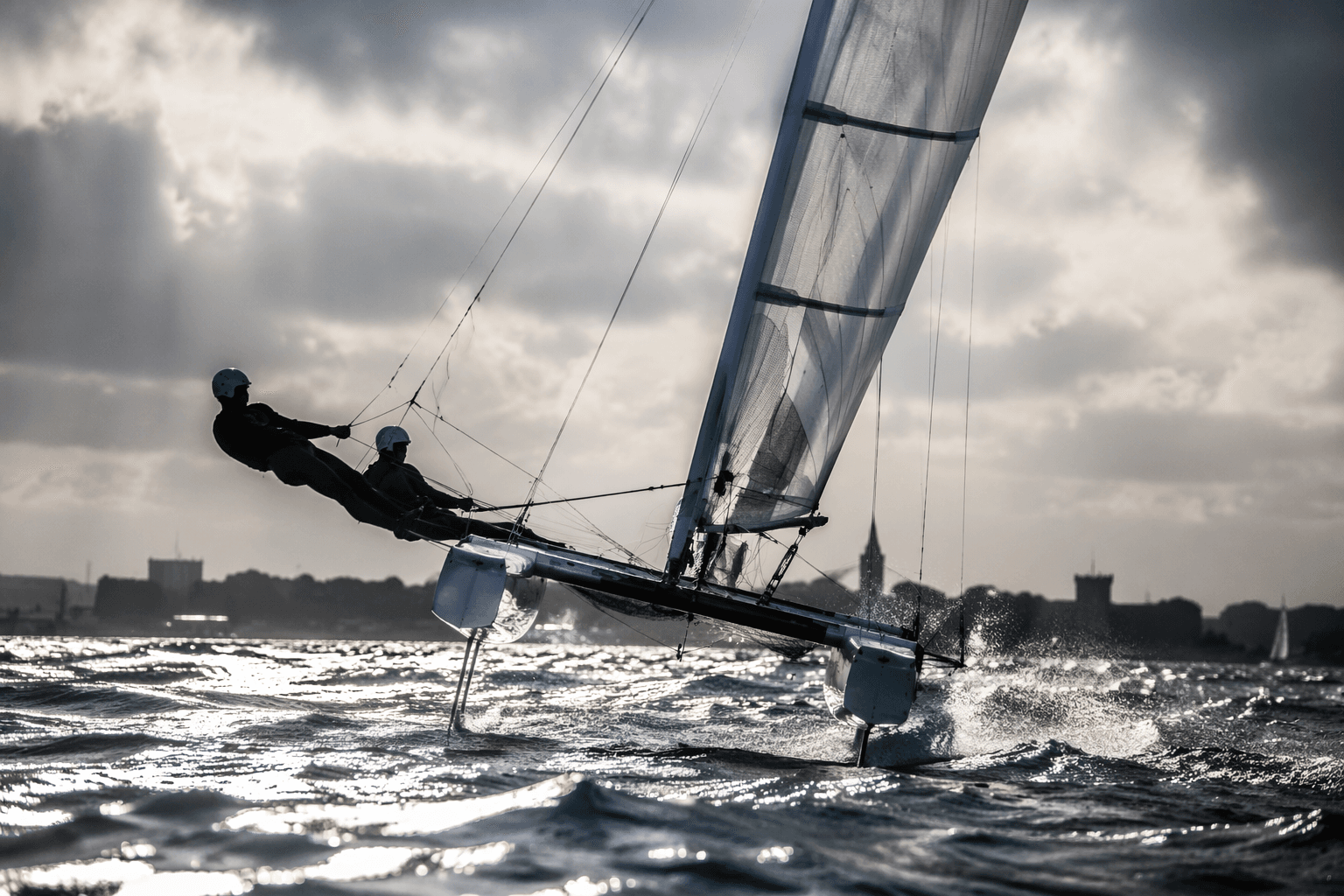
Five races were completed on day two, and the standings tightened immediately. French crew Cédric Bader and Yves Peters and Belgian pair Patrick Demesmaeker and Gilles Tas were tied at the top on 11 points, while the Argentine combination of Smith Cruz Gonzalez and Mariano Heuser sat third as the fleet separated itself in the changing conditions. The Barcelona winners Demesmaeker and Tas arrived in France with momentum, but La Rochelle asked for a different skill set than a clean scoreboard would suggest: patience in the lighter morning air, then full control once the breeze built and the boats were regularly pressing into the class’s high-speed range.
That swing from cautious finesse to proper power sailing is exactly what the European Tour was built to expose. The 2026 circuit has four acts in four countries, starting in Barcelona, continuing in La Rochelle, then moving to Dervio on Lake Como from July 3 to 10, and finishing in Hellevoetsluis in the Netherlands from September 25 to 27. The class says the tour is meant to become the central competitive framework for F18 sailing in Europe this year, and La Rochelle gave that idea a very practical test: the best crews were the ones who could change gears without losing rhythm.
The weekend was also set up to broaden beyond standard fleet racing, with more course racing and a coastal raid around Fort Boyard and Île d’Aix before the return to La Rochelle. That mix of tactical buoy racing and longer navigational work is part of why the class treats the venue so seriously, and why a canceled Thursday only sharpened the focus once the boats finally launched into the breeze.
This article was produced by Prism’s automated news system from verified source data, official records, and press releases, then run through automated quality and moderation checks before publishing. The system is built and supervised by the people who set the standards it runs under. Read our full AI policy.
Did this article answer your question?