Le Rêve shows how a Lagoon 620 excels in New England charters
Le Rêve shows how a 2017 Lagoon 620 still wins in New England, with three air-conditioned staterooms, steady handling and a layout built for charter life.
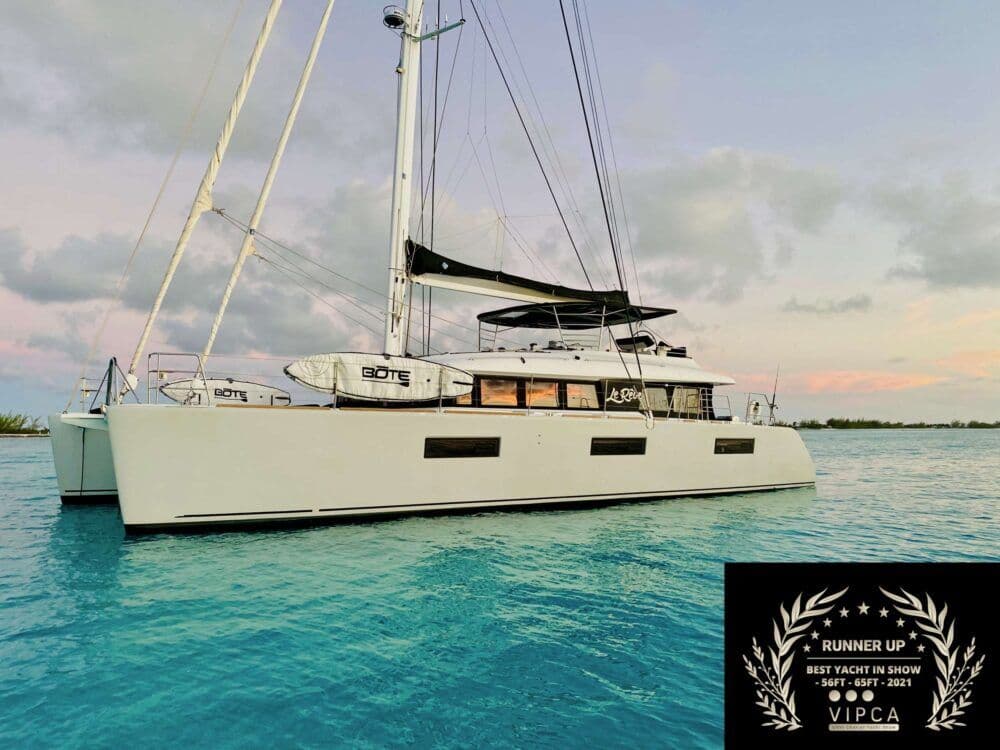
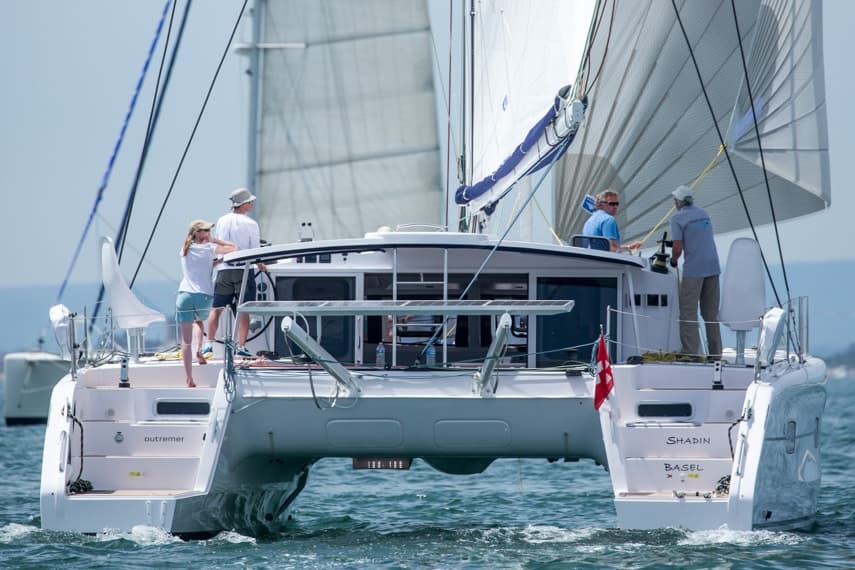
Le Rêve makes the strongest case for the Lagoon 620 by doing something the charter market rarely rewards: it still feels right without trying to look new. In New England, where Maine’s coast, Nantucket, Newport and Martha’s Vineyard ask more of a yacht than postcard polish, this 2017 catamaran shows why an established platform can still anchor a premium week.
New England changes the charter brief
The setting matters here. New England is not the default Caribbean-blue charter script, and that is exactly why Le Rêve stands out, because the region rewards boats that can handle variable weather, quick shifts in comfort and long, sociable days underway. The result is a charter proposition built around maritime character, scenic anchorages and a more textured cruising rhythm.
That same boat is also marketed for the Virgin Islands and the Bahamas, which tells you something important about how brokers see it. Le Rêve is not being sold as a one-region specialist, but as a flexible luxury platform that can move between distinct charter cultures without losing its appeal.
Why the Lagoon 620 still works
The numbers still hold up. The Lagoon 620 is about 62.04 feet long with a beam of 32.81 feet, and Lagoon’s technical data places it at 18.90 meters by 10.00 meters with twin 150 hp engines. Add the published draft of about 5.09 feet, twin spade rudders and a fractional sloop rig, and you have a cruising catamaran that is designed to be manageable as well as spacious.
Performance is part of the value, but so is the feeling onboard. Published sail figures put the downwind sail area at 445 square meters, with a mainsail of 146 square meters and a genoa of 91 square meters, enough canvas to keep the boat lively when the route opens up. That matters in New England, where the charter experience often swings between calm, scenic motors and stretches where the boat needs to stay composed as the wind builds.
The layout is the selling point
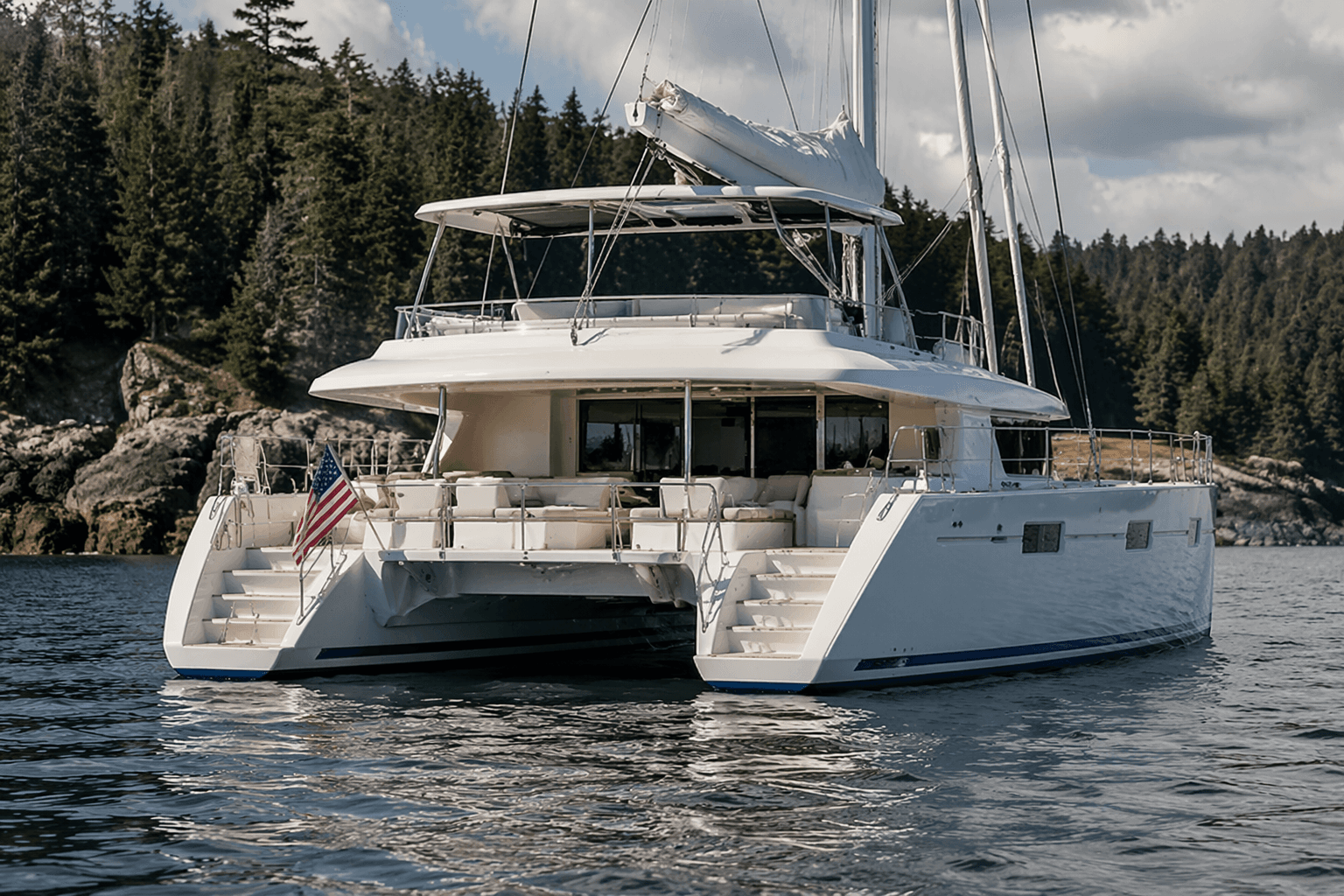
Ritzy Yachts markets Le Rêve as an owner’s-edition luxury charter catamaran, and the layout explains why that message lands. The yacht offers three air-conditioned staterooms, gourmet meals, a large sun-deck and a design that favors easy movement between zones. On a charter week, that means the boat can support both privacy and social time without forcing guests to choose one or the other.
The aft cockpit is the central social space, which is exactly where a serious charter catamaran should put its energy. That area supports sheltered dining and the indoor-outdoor flow that makes multihulls so effective for longer trips, while the gull-wing bridge-deck design is intended to improve comfort in heavier seas. In practical terms, that combination gives guests a smoother place to gather when the weather turns or when the day simply becomes about staying aboard and enjoying the boat.
A design with staying power
The Lagoon 620 was produced from 2009 to 2020, and 169 examples were built. That kind of run tells you the platform was not a brief styling exercise, but a model that found broad acceptance with owners, charter operators and guests.
Its pedigree also helps explain why it remains relevant. The 620 is commonly credited to VPLP Design, with interior design by Nauta Design and exterior styling by Patrick le Quément, a combination that gives the boat a strong identity without pushing it into novelty for novelty’s sake. Broker material often frames it as a bridge between production boatbuilding and the superyacht world, and Le Rêve benefits from exactly that balance.
The economics still make sense
There is a useful signal in the market numbers. Charter listings put Le Rêve around US$42,000 to US$46,000 per week, while brokerage listings show 2017 Lagoon 620s in the roughly US$1.6 million range. That is squarely premium territory, but it also shows that the boat sits in a part of the market where strong charter appeal and usable resale value can coexist.
A broker listing adds another layer of credibility, noting that Le Rêve was runner-up for Best Yacht in Show at the 2021 St Thomas Yacht Show. That kind of recognition does not replace guest experience, but it does reinforce the idea that the boat’s presentation, layout and charter fit still register with the people who see these yachts up close.
Why the boat still matters in New England
Le Rêve is a useful reminder that charter value is not always about chasing the newest launch. In New England, the better question is whether a catamaran can deliver comfort, handling and a strong onboard life in a region that asks for all three, and the Lagoon 620 answers that question cleanly.
That is why Le Rêve works so well as a New England charter platform. It turns a familiar 2017 model into a current advantage, and it proves that on the right itinerary, a well-sorted Lagoon 620 can still feel like the smartest boat in the anchorage.
This article was produced by Prism’s automated news system from verified source data, official records, and press releases, then run through automated quality and moderation checks before publishing. The system is built and supervised by the people who set the standards it runs under. Read our full AI policy.
Know something we missed? Have a correction or additional information?
Submit a Tip