Leopard Catamarans Guide Buyers Toward True Offshore Self-Sufficiency
Leopard’s new guide strips away brochure gloss and asks one brutal question: can this cat live offshore for weeks at a time? Tankage, redundancy, and storage decide the answer.
The offshore question Leopard wants buyers to ask
Many yachts look expedition-ready until you measure what matters offshore: tankage, payload tolerance, systems redundancy, storage, and whether the boat is actually liveable when the weather turns ugly at 3 a.m. Leopard Catamarans’ long-range cruising guide pushes straight at that gap between image and reality, arguing that serious passagemaking is not coastal hopping with nicer cushions. It is weeks without a marina, 1,000-mile runs in shifts, remote anchorages, and the need to keep moving when the nearest technician is a thousand miles away.
That is the heart of the guide’s message. A true offshore catamaran is not the one with the flashiest salon or the slickest brochure photo, it is the one that buys you autonomy, margin, and calm when shore support disappears. Leopard frames that difference clearly, and it matters because “long-range” can mean anything from a relaxed island loop with marina stops to a genuine bluewater program built around self-sufficiency.
Start with the mission, not the styling
The first buying filter is brutally simple: what kind of sailing do you actually intend to do? If the plan is coastal cruising with frequent marina nights and easy provisioning, almost any comfortable cat can feel capable. If the goal is the offshore life, the boat has to be judged by a different standard, one built around endurance, repairability, and how much discomfort it can absorb without punishing the crew.
That is why Leopard’s guide pushes buyers to think beyond sales language. The right question is not whether the boat looks ready for an ocean crossing, but whether it can remain self-sufficient when the crossing takes longer than planned, the weather window narrows, or the next harbor is not a practical option. Serious buyers should read every glossy claim through that lens.
Tankage is freedom, not just capacity
Offshore self-sufficiency begins with the basics: fuel, water, and provisions. World Cruising Club’s own guidance on bluewater cruising emphasizes seaworthy design, reliable rigging, good fuel and water capacity, and the ability to stay self-sufficient for extended periods. That is not abstract theory. It is what turns a catamaran from a weekend platform into a passagemaker.
A useful filter is to ask how long the boat can extend its original plan without stress. Bigger tanks help, but the real test is whether the boat has a practical strategy for living far from services. World Cruising Club points to gear such as a watermaker, solar panels, and a hydrogenerator, alongside disciplined resource management. That combination matters more than any single spec sheet number, because offshore cruising is often won by quiet efficiency rather than brute capacity.
Redundancy should be visible, not implied
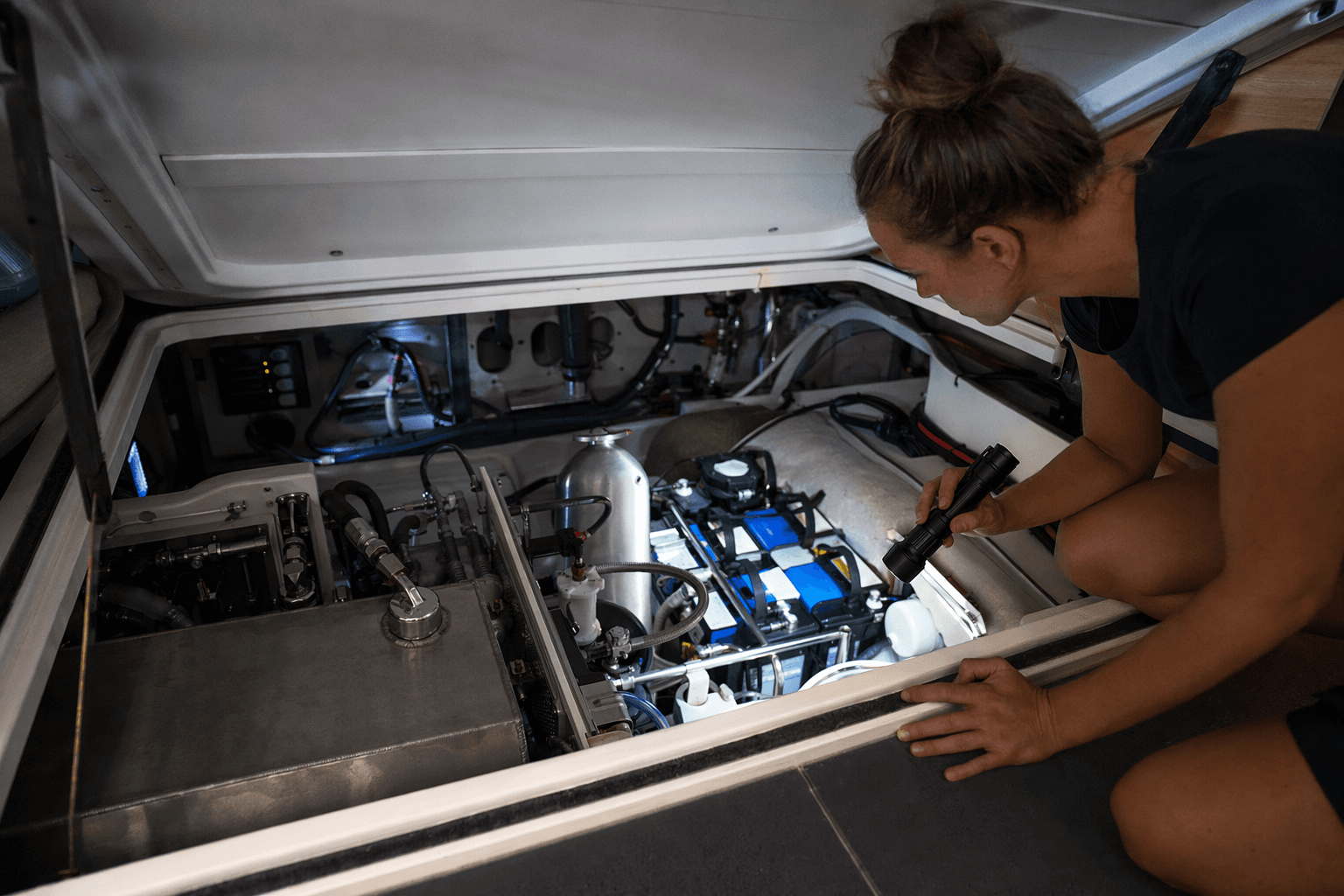
A bluewater catamaran should be understandable when something breaks. Leopard’s guide stresses onboard systems that can be maintained and repaired without immediate marina support, and that is where many attractive boats fail the offshore test. A buyer should look for sensible access to systems, clear layout, and enough redundancy that one failure does not cancel the entire passage plan.
This is not paranoia, it is practical seamanship. If a pump, charging system, or steering component becomes a crisis at sea, the boat has not been designed for true autonomy. The best offshore cats reduce mystery, because mystery becomes expensive when it arrives in the middle of a squall.
Payload tolerance is the hidden make-or-break issue
One of the most common mistakes in catamaran shopping is assuming that a boat that sails beautifully empty will still perform once loaded for real cruising. Offshore life adds weight fast: spares, tools, sail inventory, food, water, spare lines, fishing gear, and all the little items that make long passages easier. If the hulls settle, the motion changes, performance drops, and the boat stops feeling like the elegant platform you saw on the dock.
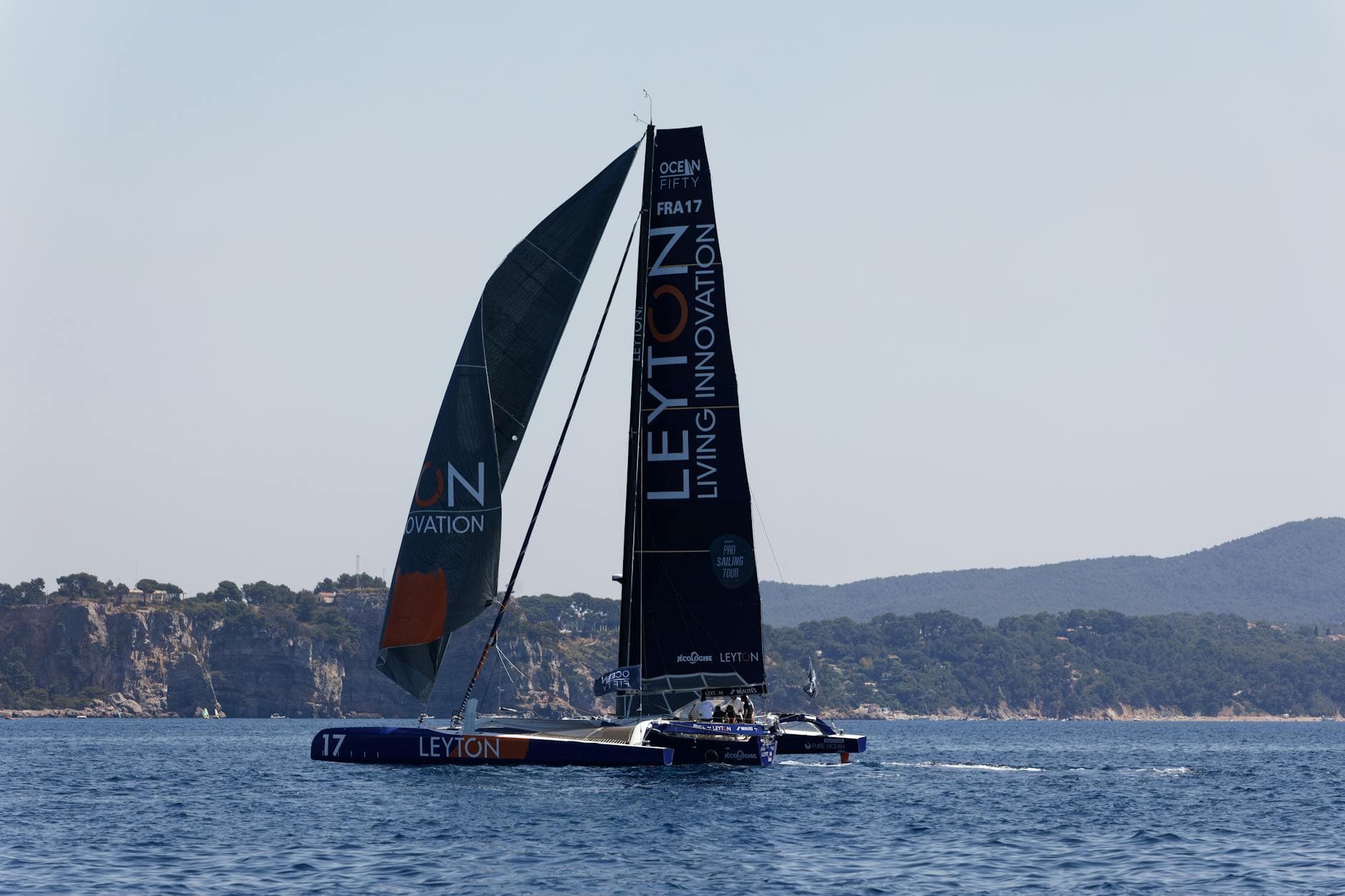
That is why Leopard’s guide treats storage and comfort as more than lifestyle features. The boat has to carry its cruising load without losing the qualities that make long-distance sailing manageable. A cat with a big salon but poor payload tolerance may be pleasant in port and disappointing at sea.
Liveability underway matters as much as square footage
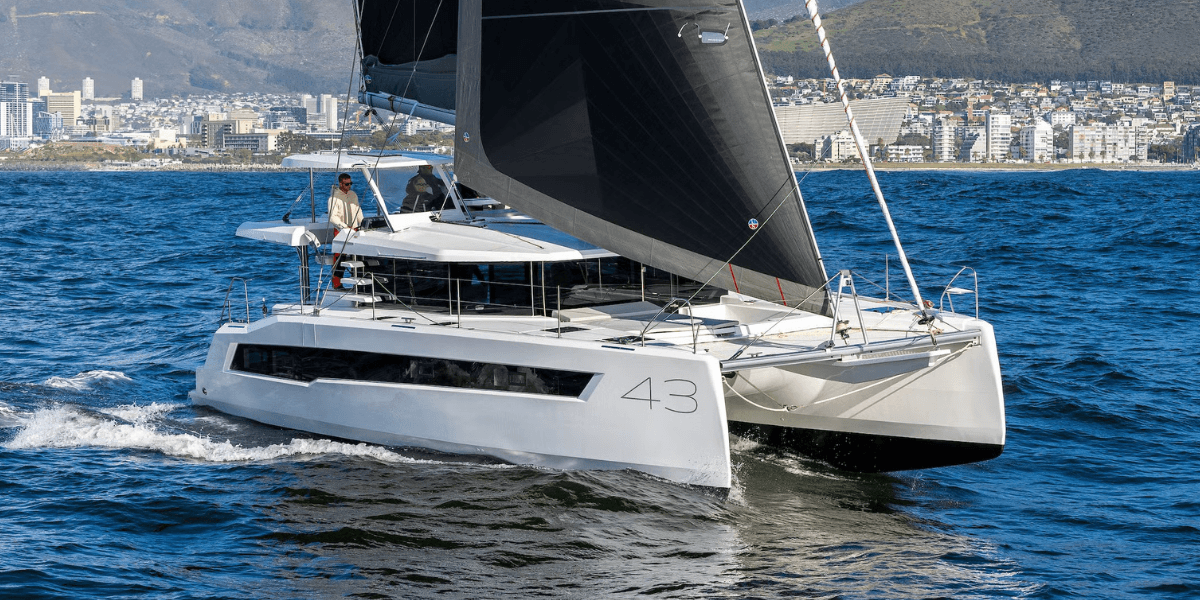
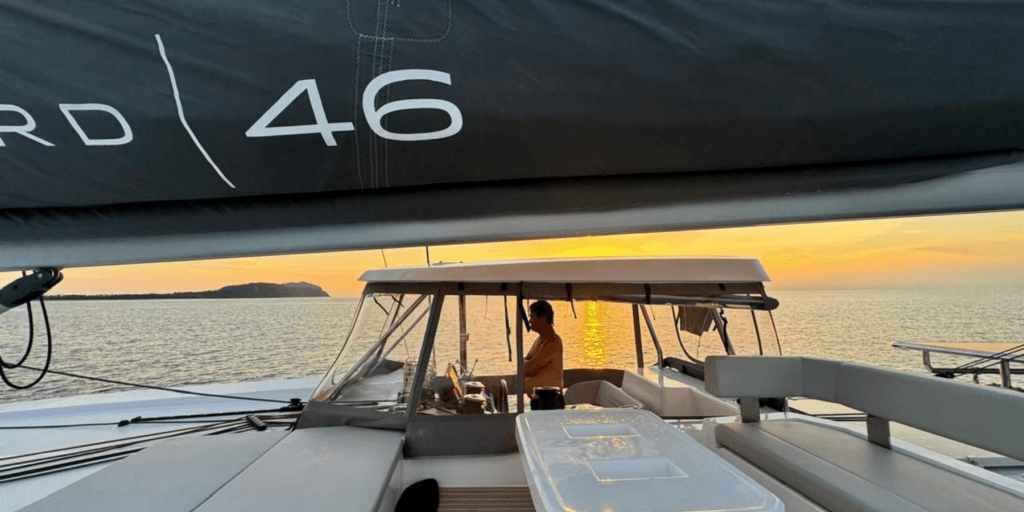
A 1,000-mile passage is lived in shifts, not admired from the cockpit. The boat has to support sleep, watch rotation, food prep, and movement around the cabin when the motion gets tiring. Leopard’s framing of long-range cruising, and its emphasis on liveaboard comfort in the all-new Leopard 52, points to the reality that offshore boats are judged by how well they function after day four, not how they photograph at anchor.
Leopard describes the Leopard 52 as built for “blue water passagemaking” and long-term liveaboard comfort, and that pairing is revealing. Offshore buyers want more than speed or volume, they want a boat that remains civilized when the crossing stretches on and the crew is tired. That is the difference between a floating apartment and a working home at sea.
Why Leopard’s voice carries weight
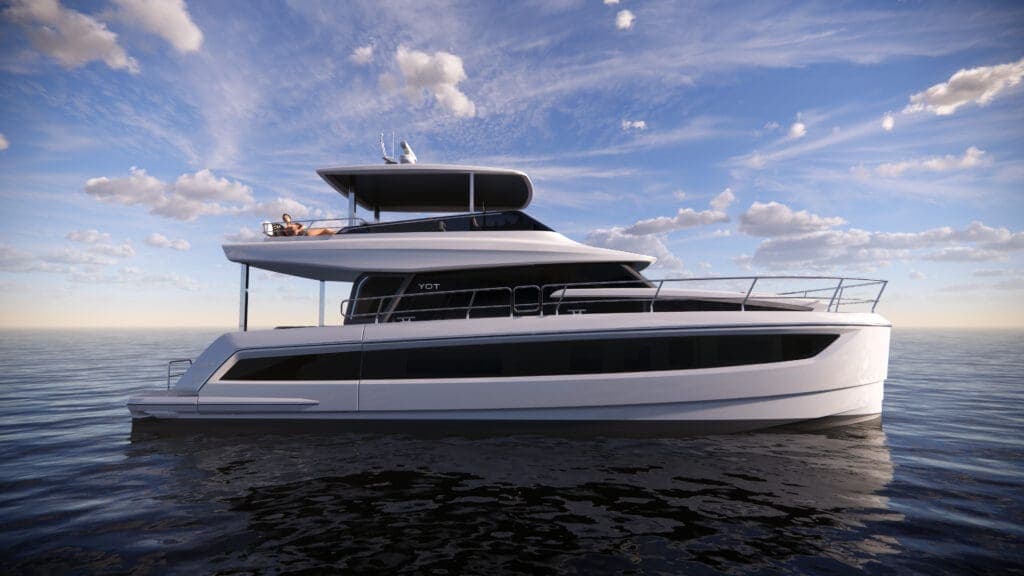
Leopard’s positioning is tied to Robertson and Caine, a builder with scale and history behind its claims. Company and industry reporting says the South African manufacturer reached its 3,000th boat in April 2025, employs more than 2,600 permanent staff, and has a pedigree that includes 23 sailing catamarans and 7 powercats. It also says Cape Town deliveries alone total more than 8 million blue-water ocean miles.
That matters because offshore credibility is easier to trust when it has been tested across a large fleet and a long production history. Leopard’s website describes its range as “spacious, robust, performance-driven blue water cruising catamarans,” which places the brand squarely inside the offshore conversation rather than the marina-only one. The scale of Robertson and Caine gives that claim more than a marketing gloss.
The broader bluewater standard is moving in the same direction
Leopard is not making this argument in isolation. Cruising World’s recent coverage of bluewater catamarans, including the Vision 444 ES and the Seawind 1370, reflects a market where buyers are increasingly making mission-first decisions. The question is less “what is popular?” and more “what will actually work for the voyage I want to do?”
The history of multihulls also helps explain why this debate keeps sharpening. Multihulls World traces catamarans and trimarans back to the single-hull model in the 1960s, with multihulls later becoming important in offshore racing and recreational boating. What was once niche is now central to the modern cruising conversation, which means the standards have gotten tougher, not looser.
The real test before you sign
The right offshore catamaran gives you something that is hard to put on a brochure: peace of mind. It lets you carry enough fuel, water, and stores to absorb surprise; it lets you maintain essential systems without a parade of yard visits; and it keeps the crew comfortable enough to keep going when the weather, distance, or schedule stops being polite. That is the standard Leopard’s guide is really pushing, and it is the one serious buyers should use on every multihull they inspect.
If a cat looks ready for the ocean but cannot live independently when the ocean gets inconvenient, it is still a coastal cruiser with good photography. The boats that earn the bluewater label are the ones that give their owners real choice once shore support falls away.
This article was produced by Prism’s automated news system from verified source data, official records, and press releases, then run through automated quality and moderation checks before publishing. The system is built and supervised by the people who set the standards it runs under. Read our full AI policy.
Did this article answer your question?