Mastervolt Mac Plus IP67 tackles growing multihull power demands
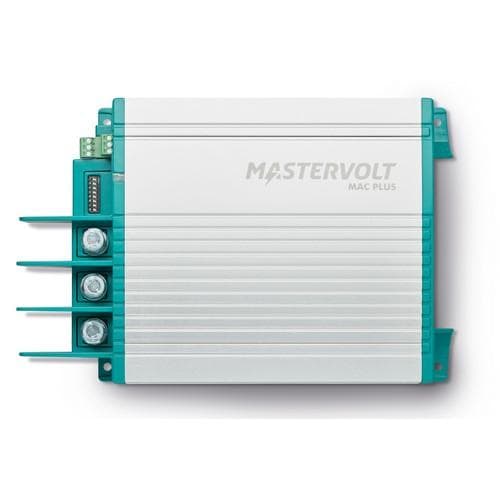
A waterproof DC-DC converter only earns its keep when the boat is wet, the loads are heavy, and the batteries must cooperate. Mastervolt’s IP67 Mac Plus is built for exactly that.
When the charger has to live in the spray zone
On a modern catamaran, the DC-DC converter is no longer background hardware. Mastervolt’s Mac Plus IP67 is aimed at the boats where house loads, starter banks, and mixed voltages have turned energy management into the real architecture of the cruise. That matters because recent multihulls carry lithium-ion or LiFePO4 banks, solar, desalination, air-conditioning, and heavier electronics suites, all of which ask far more from charging than a simple alternator hookup ever did.
The appeal of the waterproof version is simple: it is built for exposed environments. An IP67 enclosure and reinforced aluminum housing put it in the category of gear that can be installed in wet lockers, open machinery spaces, or other spots where dampness and salt air are part of the job description, not an exception.
Why catamarans stress charging systems
The Mac Plus line is designed around bi-directional charging, which means it can charge both service and starter batteries instead of acting like a one-way accessory. On a catamaran, that is not a small detail. The propulsion side and the hotel side now overlap constantly, and a cruising boat is expected to sit like a small off-grid house while still keeping enough power to move safely under engine.
Mastervolt says the wider Mac Plus family uses a 3-step+ charging algorithm and can work with modern alternators, which helps keep output stable for sensitive loads. That stability is exactly what a boat with lithium retrofits and networked electronics needs. If the charger is feeding a system that includes a lithium house bank, a starter bank, and delicate onboard equipment, it is the difference between a tidy electrical plan and a setup that needs constant babysitting.
Who actually needs the IP67 version
The waterproof model makes the most sense when the charger is not living in a perfectly dry technical locker. It is the right upgrade when the installation has to survive real boat life, not just ideal conditions. That includes boats with wet or semi-exposed machinery spaces, lockers that see condensation or spray, tender and outboard charging setups, and lithium retrofits that need clean, stable charging in a compact space.
It also fits larger multihulls where more than one battery bank, and more than one voltage, have to be managed together. In those boats, the charger is not simply topping up a battery. It is helping hold the whole electrical system together without custom workarounds or a long trail of compromises.
How it scales on bigger boats
Mastervolt’s Mac Plus line is not just about surviving in a damp locker. It is meant to scale. The company says multiple waterproof units can be run in parallel, with charging capacity above 100A, which is a clear signal that the platform is aimed at bigger multihulls and heavier onboard demand.
That matters because the electrical story on a modern cruising cat is usually not one simple upgrade. It is solar feeding a house bank, the alternator helping when the engines run, tender batteries needing their own charge path, and lithium chemistry expecting a more disciplined charging profile than older lead-acid banks. The Mac Plus family is designed to sit in the middle of that tangle and keep the whole system coordinated rather than improvised.
Integration is part of the value
The product also fits the networked-boat reality that many owners now expect. Mastervolt says the Mac Plus can integrate with MasterBus and CZone in compatible configurations, and the wider notes point to NMEA 2000 integration as well. That matters on a multihull because owners increasingly want charging systems to talk to the rest of the boat without custom hacks or isolated islands of gear.
The brand’s own positioning reinforces that this is not a niche marine-only box. Mastervolt says the line is intended for mariners, RV users, emergency vehicles, commercial vehicles, and other off-grid applications. That broader reach makes sense. The same problem is showing up everywhere: multiple battery banks, different voltages, sensitive loads, and a demand for charging hardware that can keep up without failing in harsh conditions.
The practical takeaway for owners
Mastervolt first expanded the Mac Plus family with 36V and 48V DC-DC chargers in 2023, then pushed the concept into a waterproof IP67 form for tougher installations. The logic is straightforward: if the charger is going to live anywhere near the real mess of catamaran ownership, it should be able to handle the environment as well as the battery chemistry.
That is why the IP67 upgrade is not for every boat, but it is the right answer for the boats that have already outgrown simple charging. If the locker is wet, the machinery space is exposed, the tender battery needs a dependable charge path, or the lithium retrofit has made the old rules obsolete, the Mac Plus IP67 is doing a very specific job. It keeps the lights on, the starter bank ready, and the power system coherent enough that the rest of the boat can do what catamarans are now expected to do: cruise hard, live comfortably, and keep moving when the electrical load gets serious.
Know something we missed? Have a correction or additional information?
Submit a Tip