TS40 trimaran targets 20-knot cruising and 3,000-mile range
The TS40 pushes multihulls toward expedition-yacht territory, pairing 20-knot cruising with 3,000-mile range and real liveaboard volume. That mix is what remote-cruising buyers should watch.
A new benchmark for remote multihull cruising
If you are shopping for a boat that can cross oceans without feeling stripped down, the TS40 is the kind of concept that changes the conversation. It is a 40-metre trimaran built around 20-knot cruising, a 25-knot top speed, and a claimed range above 3,000 nautical miles, which puts it squarely in expedition-yacht territory rather than the usual slow passagemaker bracket.
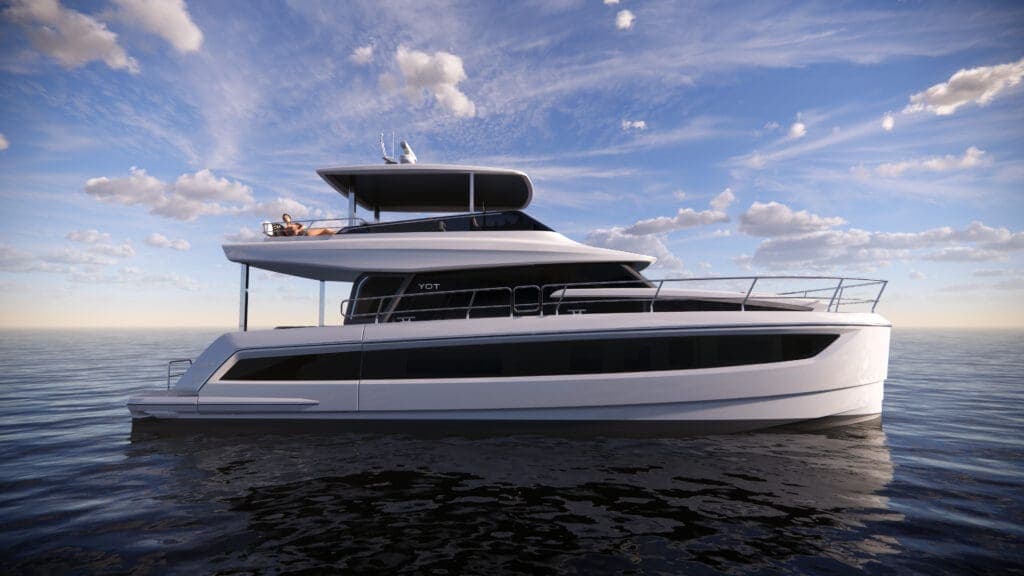
What makes it worth watching is not just pace. The TS40 is being pitched as a self-contained long-range platform, with the comfort, quietness, and onboard volume serious bluewater owners actually use. For anyone comparing expedition cats and larger multihulls, the real question is whether this is the shape of the next generation: faster, quieter, and far more liveable than the older “go far, but go basic” formula.
The specs that matter offshore
The headline numbers are the ones that matter when you are thinking about fuel stops, provisioning, and how hard the boat can work between ports. The TS40 is not a lightweight weekend toy. It carries real displacement, real tankage, and the kind of internal volume that starts to make sense for remote cruising, charter-style operation, or a private program built around extended stays.
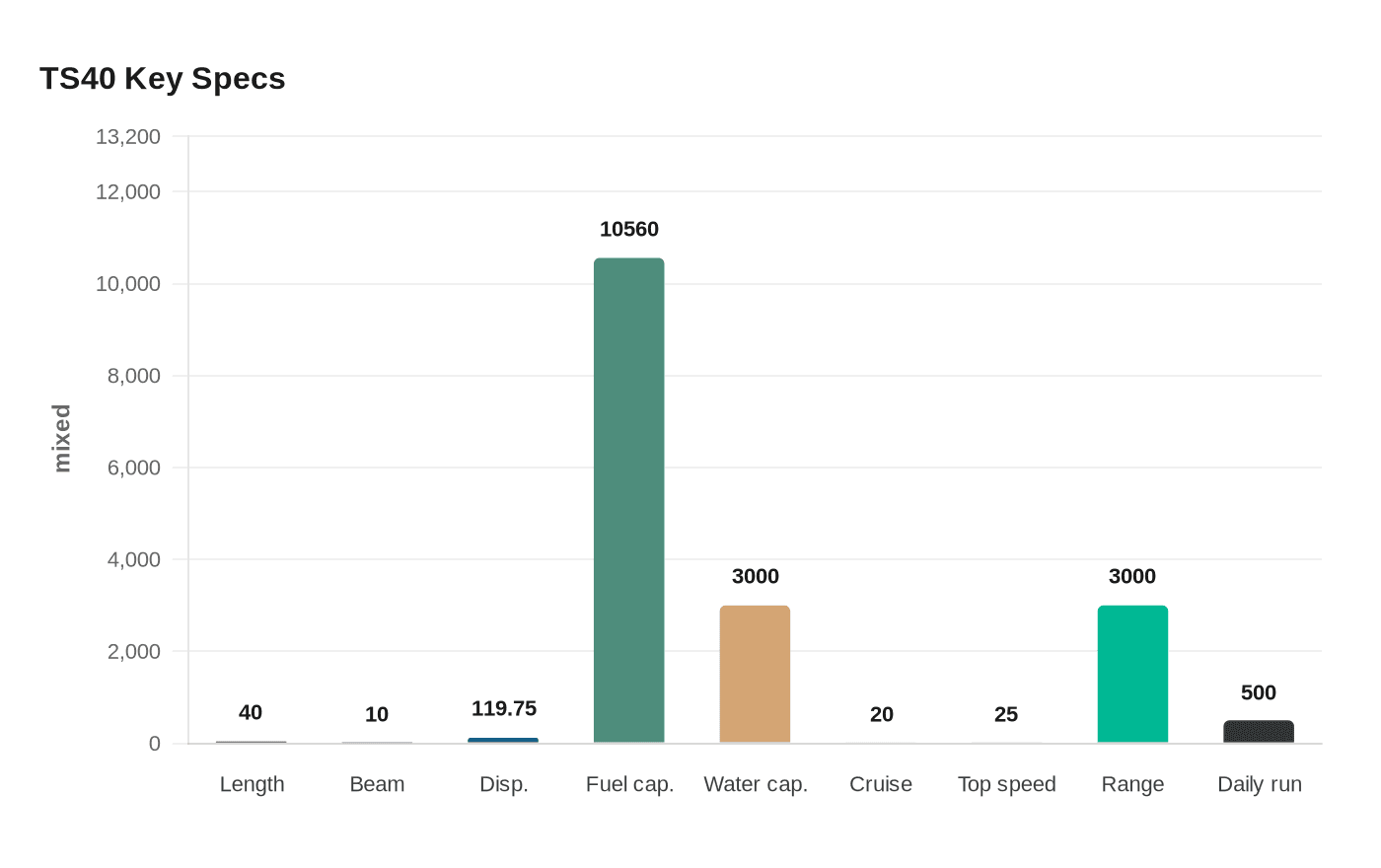
Here is the part that stands out most:
- Length: 40.00 metres
- Beam: 10.00 metres
- Displacement: 119.75 tonnes
- Fuel capacity: 10,560 US gallons, or 40,000 litres
- Water capacity: 3,000 litres
- Cabins: six
- Guests: 12 passengers
- Target cruising speed: 20 knots
- Maximum speed: 25 knots
- Range: more than 3,000 nautical miles
- Daily run expectation: roughly 500 nautical miles in 24 hours
Those figures matter because they tell you the TS40 is being built around autonomy, not just optics. Fuel capacity and range are what turn a high-end multihull into a real expedition machine, while cabin count and passenger capacity show that the design is meant to function as a home, not a glorified dayboat. The boat is also being described with optional helipad and expansive deck areas, which only reinforces how strongly it leans toward the superyacht side of the explorer market.
Why the layout matters
The TS40’s trimaran configuration is part of the story. Its outer hulls are set aft in an unusual arrangement, similar in some ways to the Leen concept, but the design is clearly chasing a higher cruising envelope and longer legs. That matters because the layout is doing more than creating a different silhouette; it is trying to deliver a combination of speed, stability, and usable space that serious owners increasingly expect from a large multihull.
This is also where the project becomes relevant to catamaran readers, even though it is not a catamaran. The wider multihull sector has been drifting toward expedition-yacht thinking for years, and the TS40 shows how far that trend can go when designers stop treating range and comfort as secondary to performance. If your next boat needs to carry gear, guests, and enough fuel to keep the itinerary flexible, the hull form becomes a business decision as much as a styling choice.
The design team behind it helps explain that direction. LOMOcean, the Auckland-based naval architecture studio involved in the project, works across monohulls, catamarans, trimarans, and wavepiercers for pleasure, commercial, defence, and superyacht use. That breadth shows in the TS40, which feels more like a technology-forward platform than a pure statement piece.
Liveaboard comfort is the real selling point
The most interesting part for owners is how hard the TS40 pushes beyond simple speed. The propulsion setup combines electric pods in the central hull with internal-combustion engines in the floats, a combination meant to reduce noise and vibration underway. For anyone who spends real time aboard, that matters as much as knots on paper, because long passages are easier when the boat stays quiet, steady, and civilized.
Inside, the layout is built for extended living. There are six cabins, room for 12 passengers, crew quarters, and a spacious owner’s suite, all of which point to a design that expects people to stay aboard for a while. That is where interior designer Kurt Wallaeys becomes central to the story, bringing more than 30 years of interior-architecture experience and a focus on timeless, durable, warm spaces rather than flashy one-season styling.
The liveaboard brief also connects back to the fuel and water figures. A boat with 10,560 US gallons of fuel and 3,000 litres of water is being set up to operate far from the dock, and that is the difference between a coastal luxury multihull and a true ocean-going private base. If you are planning remote cruising, this is the sort of boat that signals how far the segment has moved: more volume, more systems, and far more comfort without abandoning speed.
What expedition-cat buyers should take from it
The TS40 also fits into a broader brand direction. Deo Juvante is not treating this as a one-off fantasy project; it also promotes a 24-metre C24 catamaran and an M24 monohull explorer concept, which suggests a clear focus on long-range living at sea. That gives the TS40 a practical context, because it is part of a family of designs built around the same underlying idea: go farther, stay longer, and do it in comfort.
For catamaran buyers, the lesson is straightforward. The future of expedition multihulls is not just about endurance anymore. It is about blending 20-knot cruising, serious range, quiet propulsion, real cabin volume, and the kind of protected onboard life that makes extended ocean travel feel manageable instead of punishing.
That is why the TS40 matters. It shows where expedition cats and trimarans may be heading next, toward a multihull that can cross oceans fast, carry enough fuel and water to stay independent, and still feel like a proper home when the horizon takes days to reach.
This article was produced by Prism’s automated news system from verified source data, official records, and press releases, then run through automated quality and moderation checks before publishing. The system is built and supervised by the people who set the standards it runs under. Read our full AI policy.
Did this article answer your question?